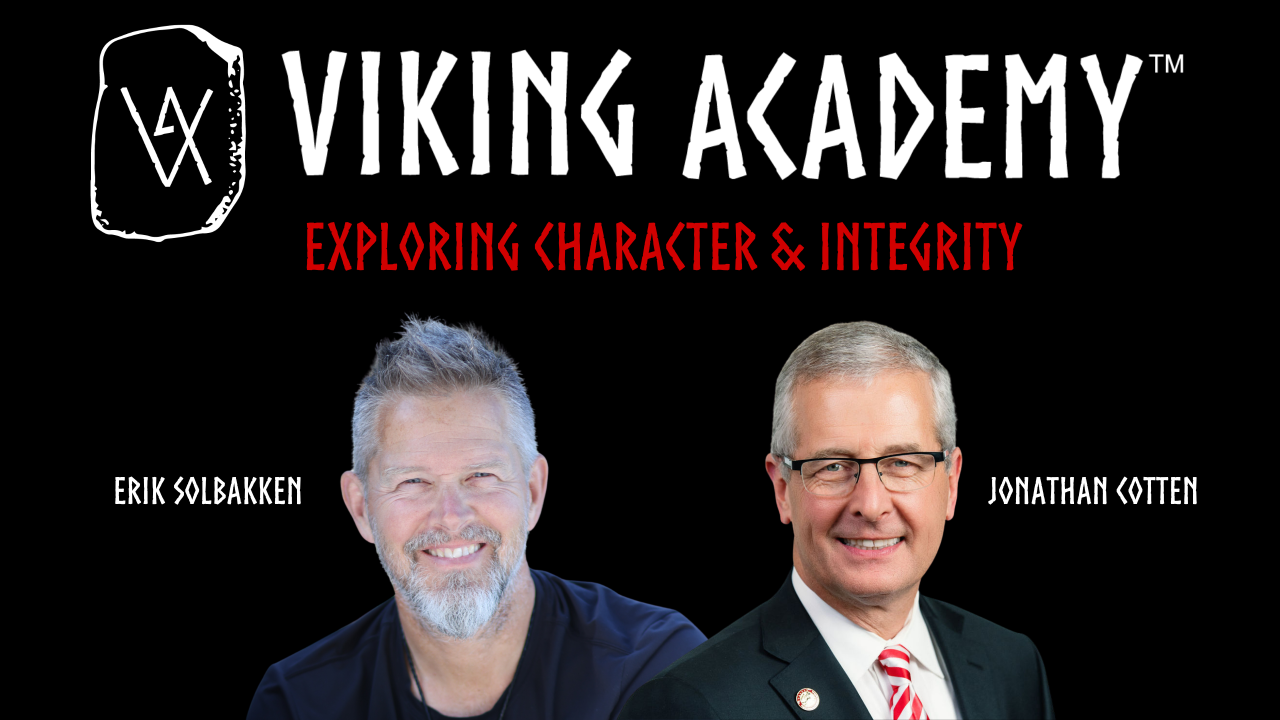
#48: Exploring Character & Integrity with Jonathan Cotten
What if business could become a vehicle for purpose, service, and personal transformation?
In this episode, we sit down with Jonathan Cotten to explore the intersection of faith, entrepreneurship, and character. From navigating his daughter's health journey to questioning long-held beliefs and stepping away from a controlling religious environment, Jonathan shares how adversity reshaped his understanding of leadership, purpose, and what it truly means to serve others.
Together, we dive into the idea of business as a mission field, the role character plays in leadership, and why integrity, empathy, and community matter more than ever. This isn't just a conversation about entrepreneurship, it's about discovering how our struggles, beliefs, and experiences can shape a life of greater meaning and impact.
Topics We Explore:
- The meaning behind The Business of Character
- Navigating faith, doubt, and personal transformation
- Leaving a controlling religious environment
- How adversity can deepen purpose and empathy
- Business as a vehicle for service and community
- Building cultures rooted in integrity and character
- Mission, vision, values, and leading with intention
Connect with Jonathan Cotten: https://www.linkedin.com/in/jonathan-cotten-a1511a1/
Check Out The Good Feet Store: https://www.goodfeet.com/
Learn More about The Viking Academy: https://www.vikingacademy.com
Episode Transcript:
This week on the podcast, we have Jonathan Cotten. Now, Jonathan and I met in the wellspring of all great places, strategic coach, and it's in a program called the free zone. Uh, it's put on by Dan Sullivan. Entrepreneurs from all over the world are there. And it's a competition, and I like to call it ego freezone. And I met so many great entrepreneurs there, but Jonathan was one that stood out a lot for me. He uh he wrote a book called The Business of Character. I'm showing it on the screen right now for those watching the video. Those aren't uh you'll understand what I'm doing there.
Um it's the business of character. And I I could sense that this was going to be a little bit of a different conversation because I do believe that our character and who we are is what and it's who we're who we are and what we're here to do. And so I just see this convergence of spirituality and entrepreneurialism, business all starting to come together. And I figured I'd have a conversation with Jonathan and it was fantastic. We went through um the definition of character, what it means to be in the business of character.
He gave us a complete outline of what his mission, his mission, vision, and values are in his company. He owns the Good Feet franchise store. So, he's opening and owns franchises for the Good Feet store, which helps people with their orthotics and um helps them live an active and healthy lifestyle. The interesting thing that you're going to come out of this is you're going to find out he's very he's very in touch with his spiritual connection and his purpose in life. But one of the things you won't realize is coming is that we talk about three things is community, character, and cults.
That's right. We're going to talk about a cult because he was in one. But he'll explain that a little bit later in the podcast as we get going. But the business of character, I thought it was beautifully uh articulated on his part. I love the conversation and I'm looking forward to hearing what you have to say about this podcast. So always please reach out, let me know how you what you think about the podcast. And without further ado, let's go explore. So, you and I met at the freezone. Yes. Yeah, that was that was awesome. I I that was my first free zone event. It was amazing.
Well, it's not often that you meet a Viking at freezone either, so that was pretty cool for me, too. So, yeah, that's true. It's the first the first Viking at the free zone. Yeah. Um, but you you and I uh you and I hit it off really quick and and when you told me about your book um the business of character, I was like I'm very intrigued and I was like, you know, I think we need to have a conversation on the Viking Academy and here we are. There we go. Thank you so much, Erik. I appreciate it that you're very gracious. Well, so thank you.
And and so I'm curious what what made you write the book? What was the impetus behind the book? the business of character. That that's a I'm not sure we have enough time on this podcast for that, but I I'll give you the real quick version. You know, the thing is I was a late blooming entrepreneur. All right. I was um 48 years old when I decided to become an entrepreneur and had been in corporate sales all my career and had worked for predominantly great companies, worked for a few that weren't quite so great.
Um, but throughout that experience, I think I saw what the impact that a company that did things with character, did things based on values and lived them out, how that could have such a dramatic impact on employees, on customers, on the community in a variety of different ways. and nothing really it just the thought of going into business and buying a franchise and selling burgers or cookies or something like that just didn't it didn't appeal to me you know I wanted something that was uh would make a difference and that I could really be passionate about and so the business of character is less about hey let me tell you my great story of you know how I went from rag riches or whatever that type of thing it's more about this is what I believe this is what we've been able to do.
We've had success with it. But really the the goal is I'd love to inspire more and more people and and if and if they're already engaged in something like this, how to encourage them and and if and if somebody doesn't have that mindset in a business, how can they maybe be uh persuaded to look at business through this lens?
It's not an eitheror of either we we do like you know we have to always make a choice between well I'm going to go into the nonprofit world where I can really make a difference in people's lives or I'll go into business and just make a bunch of money you know have to there doesn't have to be that divide I think the two can be um can be balanced very well so if I'm hearing you correctly that the so you came in you started you you felt you came in as a late entrepreneur late but budding entrepreneur right yeah Um, is this kind of your way of giving back to help someone who's at the front end to get it set up right like early stage?
I guess I don't think about it as giving back. I just think about it as just being, you know, to a certain degree. Um, in that I think that we, you know, as a Christian, I I look at things whatever you do, uh, do it hardily as unto the Lord and and not unto men. And so that's what I pray will be my attitude every day that I get up.
Uh but there was also a very definite uh profound personal uh aspect to it in that just prior to you know two years well actually I came into the good feet store because I had planner fascitis uh I got relief from my planner fasciitis with the art supports that we sell at the good feet store and it at that time I didn't realize it my our youngest we have five children our youngest Kayla was 15 at the time and she was actually in the process of of on a very difficult health journey. We hadn't really determined what it was yet.
So a few months after that she was first uh hospitalized for the first time and that began an an excruciating journey of uh trying to understand what had caused her to lose her ability to eat and that eventually they were you know uh pinned it down to that it was mitochondrial disease and the dysfunction of the cells had had created this along with other things and and there's a lot of complexity in that uh but it was something that in the process of walking that journey with her and being in proximity to a lot of people with a lot of needs and everything.
I think it caused me it was kind of like a a mid midlife crisis is kind of what I say in my book. uh that along with a significant faith crisis because I'd been raised in a in a religious group all my life and the being in the hospital with her and being separated from my normal routine just began to question a lot of things across the board and I you know we ended up leaving that religious group which I would describe now as a cult and then um you were in a cult. Dude, I had no idea about that. That's how that's how I would describe it.
Uh I didn't say that in the book because I didn't want I didn't want it to be a distraction. I felt like um and hopefully it won't be a distraction here, but um I think a lot of times things can start people can believe things and then over time if the trajectory is not centered correctly, it can really really get wacky.
And this was a uh a belief that looked at a culture and said, "Hey, our society has a lot of problems and so we're going to do X and we're going to find the biblical verses to back that up and put it all together and it becomes a very legalistic controlling type of environment." And uh literally it was it was being in the the hospital with Kayla that I remember talking to a doctor one time and the doctor feeling like you get this. He didn't literally pat me on the head, but it was kind of like I'm the doctor I know. Um you know, just don't worry about it. Go on with the program.
And I said, you know, that's that's kind of the way people have in our religious group have have approached things at the in times past, including me at times when people would question things. And uh and I said uh as I began to open my Bible, began to look at it, it's like, yeah, there there's there's some things that don't line up here. And so um so we began to make that exit. I ran my first marathon that year, Erik. Um, and I never thought I would do that, but that was a consequence of running longer mileages.
There's a verse that says, "Be still and know that I'm God." And I think I was maybe more like Forest Gump of Run Forest Run. You know, I'm not sure, you know. Then I ran my first marathon that year, then came in the next year, told the owner, "I've never had a product transform my life like these arch supports." She turned around, looked at me, she said, "You want to buy the place?" And four months later, I was in business. That that was my response to all the stuff going on into my life. It's like why not, right? Buy a business now. Just add up more more something else into it.
So that that is awesome. That is awesome. Okay. So just just so you know. So my dialing I've been dialing into my or dialing in. I've been on a journey of self-exloration and seeking a higher power for over 18 years. And so literally I'm getting God shots all over the place. Like literally yesterday I was just having the conversations with God and basically he said to me, "Be still and know that I am God." And so then you just say it here right on the podcast and I'm like, "Okay, gotcha. Okay, there's the there's there's the little tap on the shoulder, right?
He's he's just constantly trying to wake me up." But that was another shot right there. Um, so so let's Oh, man. There's so much to kind of dive into here. So I just backed up the dump truck and you know Well, that was a that was great. That was Oh, I love that. Okay. So, so let's go down the line of, you know, you you thought you found um you thought you found your group, your people, your your church that you were at and then you were in there and then it's following born into it. You born so you were born into it. Okay.
You're born into it and you're uh shall we say programmed conditioned to be part of that and then all of a sudden you start feeling a this dis almost like a a res like it's not resonating anymore like there's a dissonance that's happening inside you and you're experiencing this this event happening with your daughter and and she was getting sick and you didn't know how to deal with it and then you started feeling like things weren't quite right at the church but you had this wake up moment when you said the the the the the uh surgeon kind of or the doctor taps you on the head. Yeah. Yeah.
It's okay. I'll take care of this. And you're like, "Wait a second. That was like like a kind of a wakeup call to that you're going down the wrong way." But there must have been something resonating on the inside that had been going on for a while because it sounds more like a a like a the straw that broke the camel's back for you. Yeah, it it was. There's no question about it. And it was I I think these things they have to happen in that you can't do it all at once. But I think that and I would say this about the medical community.
We've had so many wonderful doctors, nurses, that kind of thing that have just their care and so no throwing shade at the medical community. In this particular case though, it was a condescending type of thing like I'm the doctor, you're the just, you know, just, you know, whatever. And I'm like, well, I and I and I told one doctor, I said, you know, I respect your education. I respect your expertise and your abilities.
What I would ask you to do is to respect me and my wife and our journey as mothers and fathers of our daughter and that we have a huge amount of information that you don't have about her. And so those both of those things need to be held in balance. And we had similar discussions, you know, at during the emergency room visits when Kayla has a sepsis infection and we know something's not right and the doctors says in one's case said, "No, she's good.
Send her back home." And one of her brothers literally carrying her out of the out of the emergency room and then we're back there 3 hours later thankfully because if we didn't come back and if she had she had gone to sleep that night, she probably wouldn't have woken up. And I think those experiences create um kind of hard to describe, but it's certainly when you when I look at it from a a life sense and just anybody that's charged with with leading people or influencing people, uh that whenever I see an abuse of that, it creates a visceral response.
Um it's a it's something that um it it just makes Yeah. it. And so what now when I think about it being in business is the opportunity to pursue something that can make money and be profitable and at the same time care for people and see each person as you know in that book primal intelligence Angus Fletcher talks about having seeing every person as unique and from a Christian perspective when we see every person as they're uniquely created by God and having the curiosity to understand their specific journey.
It's unlike anybody else and there's so much to learn from each person and I that's why I love being in the people business. Is it frustrating at times? Yes. But it's incredibly enriching. That's you you've touched on that ethos of the Viking Academy, which is that I believe every human every person was put on the planet for a reason, but we're the only species that doesn't know why we're here. And so the whole point is the the adventure is actually exploring the self, exploring who you are and what you're here to contribute.
And so I love hearing your story because I'm starting to I'm starting to tie the pieces together to going, okay, so this happened, then this happened.
So that that doctor patted you on the head and did the little condescending kind of dut which then shall we call it the straw that broke the camel's back to to say what I said before then makes you go boom that's not right changes the way you're you're not going to follow the church that you were conditioned in all your life because you could feel some a calling within you I almost call it like your soul calling it's like allowing your soul back into your life to guide and direct you which is your conduit to the creator or all source or the all father whatever and I've often said to people it doesn't really matter what I call it Allah Buddha Brahma baby Jesus it doesn't as long as I'm seeking a higher creator it responds to me right so but that that was your your soul was calling for you to do this and that's part of this like and I see that there was something about your book when I you showed it to me and I looked at it and I saw you we hadn't really talked much and I went I need to have a conversation with Jonathan because I could feel I could feel an a a positive spiritual energy from this book the minute you handed it to me.
I felt it like I could feel it, right? And so I'm I know for a fact that in my in the way I see it is that you were meant to write this book. This is what he wanted this is what the creator wanted you to actually deliver to the world.
Um, so I love seeing hearing the story in the background and going, "Here's some connective things that kind of showed you the the path of where you got to there." Um the the the interesting thing and I've I've done this too and I'm curious because you obviously probably have studied the Bible much deeper than I have, but I' I've read lots of different spiritual texts, but there's been a bunch of things that I've wr read read in the Bible where I'm like it doesn't resonate with what the shall we call it the institution that is talking about it. what they're saying that Jesus said and what Jesus actually said in the Bible are like two separate things.
Do you know what I mean? And I'm like going, he never said that. Ju just a little bit. Just a little bit. Just a little bit. Yeah. Yeah. No sarcasm included here at all. Right. Like holy crap. And it's just interesting how you said how they they they wanted to do this thing and then they took a couple verses from the Bible and then used that as backup to justify their their their their means. And it seems that that's happened over millennia or the last couple thousand years anyways since we've had Christianity on the on the planet, right? This like only two last 2,000 years.
And I think it probably happened even before that. I'm not just saying it's for Christianity. I'm saying with religion in general, they've taken it and you take the parts you want to back up the agenda that you have to go do some pretty crappy things. Some pretty heinous things, too, when you look at it. Well, exactly, Erik. And it's it's a terrible thing um when you have it weaponized. And anytime that you have any type of authority uh weaponized, but especially religious authority, you're doing something in the name of God, uh then that becomes a very very serious thing.
And so one of the things that has probably been the most difficult issue in my life to resolve has been the shame of that um of when you're involved in something and and if we're not talking about people drinking Kool-Aid or that kind of thing, you know, it's not that type of thing. But still, it's almost more insidious in a way because it's when it when it's your beliefs and that type of thing, then it can be really hard to, you know, unwire all that. And but the but the thing of like why didn't I why didn't I see this sooner?
Why wasn't I listening maybe the people but really ultimately more to the to the spirit of God to the voice of God, you know, why was that not something that I I wasn't more highly attuned to?
And and this is where this is where all the threads do come together because what I find in business is that I believe that we're tested in in three significant ways and there could be more but I but I believe for most people these three areas create the the most challenge and that is if you're married you know how you treat your spouse and that that relationship. um if you're not married, how you treat those that are the closest to you. Maybe it's your parents or your neighbor or whoever else it may be. Um second is how do you function when you have influence or power over someone else?
What does that look like? What does that feel like um to to those people? So, if you're a parent, then how do the children feel? Or if you're a teacher, how do the kids feel? Or if you're an employer, how do how do the employees feel? You know, those types of things. And then uh the next area I believe in business in the workplace we're tested in a way because it has this thing called money involved and you tend to see a different side of people that you often don't see even in the other areas.
I I've seen people that were, you know, their marriage seem to be great and maybe in the home they they seem to be really great, but then all of a sudden you get this money stuff involved and all of a sudden it they start behaving differently.
So when we think about so you think about the business of character uh then I think the that's one aspect of the opportunity in a business is to truly live out what you believe in a way that's consistent that people see and they see it tested from a lot of different angles and that there's a verse in Psalm 15 that says blessed is the man who swears to his own hurt and doesn't change. Blessed is the man who swears to his own hurt and doesn't change. So just think about that one principle in business. It's tested all the time. So explain that explain that one a little bit more for Okay. Yeah.
So, so you make you make an agreement with someone and uh you know that it may be that um you're going to put a bonus structure in and in your mind the bonus is going to be difficult to reach and actually they they find that it's easy to reach and now you got to pay out this money and I've seen business owners who had a real problem let's say paying salespeople when they maxed out their their their commission opportunities and then they want to change the commission plan because uh you know they don't they don't like And that's just as one example.
Um, so could you say the phrase again, the the quote or the verse? Yeah. Yeah. Blessed is the man who swears to his own hurt and changes nothing. Oh, sorry cuz I miss I misheard you there because I may have I may have missed a word. Yeah. Okay. So, let his own hurt. Okay. Change not. Okay. So, blessed is the man. Is the man swears to his own hurt. Who swears to his own hurt and changes not and changes not. Yeah. Right. Okay. Got it. Now that makes sense. Yeah.
Now you sell a piece of property and and it has mineral rights and maybe when you sell it, you don't you don't think that the minimum rights are worth anything and then all of a sudden uh you realize that oh there's you know that there's there's tons of you know and uh uh you just you just made a bad deal. You hurt yourself. But hey, if you've made the deal, then live with it, you know, type thing, right? Right. It's it's live that and that's part of that live living in character, right? Yeah. Yeah. And um so anyway, that that was uh that's just that's just an example.
And so after coming through all these things, what I saw I I just I wouldn't say that the decision to get into business was like some really well researched. Didn't have a business plan. I didn't do you know I'd spent an hour and a half in a good F feet store before I walked in and as owner and but there was something I just I knew what it had done for me.
I believe that it could be something that could be help a lot of other people and it was an operationally uh simple business which was an appeal to me primarily it was solving it on the sales and marketing side and and I just saw it as an opportunity to to be engaged in my community in a way that I hadn't been um at that time but as time went on and meaning not a long time but a few months I got the vision that you know what you're like at a mission outpost so if you think about the frontier of somebody having like a fork.
Here's something that that in a community, a business has that presence that you're a you're a mission outpost and as people engage with that business, either you're going to be a blessing to people or they're going to not feel so kindly about you and you know, obviously some degrees in between, but uh that was the thing. And so it's like, okay, well, this is my ministry now. This is my mission now. And that's how I want to approach it.
I I'll I want to get into the book in a little bit, but I just kind of want to come back to something you said there is when you were in this other organization uh that you'd been brought up all your your life and so you were been conditioned and uh programmed to be involved in.
And then you you said that thing is you you look at it backwards, you say, "Well, why didn't I see it sooner?" It sounded to me like you almost said you you do you understand do you know the reasons why you didn't see it sooner like can you see that as a 20 like can you look back on it and go see with 2020 and go oh well that's why I didn't see it because I was supposed to see it there or how did how did it impact you that way? Well, I think that um when you see clearly that it was wrong, then I think it's a natural thing to say, why did I say it sooner?
You know, if I could have gotten, you know, got but but then yes, when you look back on it and you see the way things like that work is it creates all kinds of of ties to it.
So if your family is involved with it, if you're if you um have friends there, if it's what you've known, if it's if it creates a degree of familiarity and comfort and if it's reinforced that this is the right thing and this is there's all kinds of ways to how that's communicated that has influence and you know can affect your mind. uh that that's why that's why you don't um leave sooner or that's why you don't uh see it for what it is. Is that for you as well? Is this we're talking about what for this is why you saw you didn't see it sooner. Yeah.
But did you see the timing of you seeing it being the right time that you saw it? Yeah, that's that's a question I think that um I would say, you know, maybe Erik on that one a bit undecided as to um that I I tend to feel like that there's it's not always, you know, because this happened at this date, that was the exact date that it should have happened. It couldn't have happened any other time and it could have gotten maybe a different outcome. So, I I don't believe that. I do see that there was a convergence of things that allowed it to happen.
This goes back again to that to Angus Fletcher's book when he talks about your past and it really resonated with me when I saw that and he saw the different threads when they're not when they're fragmented then it really impacts your future and your future tends to be more singular because you feel your options are this is my way of expressing it your options are limited whereas if your past is is not fragment mented but it's really syn synthesized and it's and it's integrated then it's becomes your story and and it's not you're not trying to distance yourself from one aspect of your story or anything like that and that's how I feel about all of us now it's my story could it have been different what what if what you know yeah I don't know but I just know that I know what happened and now that's a part of my story and I believe that God can use because Romans 8:28 says that uh all things work together for good to those who love God and they're called according to his purpose.
So he can take even the bad things in our life. Who's the best person to to counsel somebody who has or or to give encouragement to somebody who has dealt with drug addiction? Somebody who has also struggled with drug addiction. you know, who's the person that they can maybe sometimes be an incredible encouragement to somebody who's going through a divorce, somebody who's also experienced that.
So those things can be even though they're in and of themselves, they're not good things, they can be worked and used for good depending on our ability to allow them to to to allow God to use that in our lives. So Right. So you you see and I'm just asking so from your past you see being involved in that and and now you've experienced that. So now that was the time for you to be so you could help someone else who may be caught in the same kind of conundrum where they're going I don't quite feel like I'm resonating over here and you could say I get it.
I understand it because I've been there before.
Yeah. even you know if it's that it doesn't necessarily to me have to be exactly that but I can tell you that I have sat in a jail cell with somebody of another race with a an incredibly different life experience than mine and had mutual I'll say fellowship okay with that person life fellowship because they have pain in their life and they may look at me and say I can't see any way possible how there could be any real any significant pain in his life but the reality is it is it's true it is it does exist and so I believe going through those times it creates capacity one of the things that I I will say about Um, when you go through like caring for a loved one as an example that who's sick and you see the suffering and it gives you a capacity and and a degree of of leaning into it and empathy for that and and just of saying, "If we only knew as we walk down a street, if we only knew all that the different people were carrying, it would it would change how we relate to, you know, our fellow man in so many ways.
I thought you were going to go into, you know, this given that you're you're you're an owner of a Good Feed store, you were going to go walk a mile in a man another man's shoes. I thought you were going to do I thought you were going to because literally we could have that served that one up on a platter. Like literally, don't judge another don't judge another person until you've walked a mile in their shoes. But it's it's having that empathy. Um and and I was going to say when you were explaining the person I was like are you you were basically explaining me.
I'm a recovered alcoholic drug addict and also um I've went through a divorce. So it was interesting as you were explaining all those things I'm going Jonathan you're talking about me like what are you doing?
But there's a reason Erik that that you know we sit beside each other and we connect you know um if you if you come at me like you've got it all together and life is all great and everything like that you don't have to say those words but if that's just a sense you know it doesn't it's a little bit hard for me to get started with somebody on that basis and I think the same thing and so the part of that aspect of clicking I think there's that element of that you that you see what I'm saying? Yeah. Yeah.
It's not it I can't remember where the the quote was, but it's that we're all wearing masks, right? Everyone's wearing these we wear these masks. The less mask I see someone wearing, the more I'm I'm interested in having a conversation with them. But if I can see this as solid mask and it's just there's no it's this outer shell that they're projecting to the world, I I don't really have a lot of interest in having that conversation with them because I know I'm not going to have a conversation with that person that's actually there. So I I completely understand what you're talking about.
Is that so is that also part of and I want to dive into the book now in terms of you know the business of character which I love the title by the way the title's so great it's like the business of character right it's like um it's it is so poignant when you're when in business is like showing a leader that has some vulnerability that isn't that perfect one right when I first started in business I was and I had a bit of I what we call it ivory tower syndrome because I started as a CPA and we actually called it CADitis.
Chartered accountant is what we used to be called but we called it CA was the acronym and we called it CA itis and they created that acronym because of me because soon as I got my designation all of a sudden I was I knew everything and I was so smart.
So they called it citis you know they get it you know ego to the brain and um but you know we have these these personas that we think we have to project as a leader or as a person once I got my designation I thought now I'm important now I have to project this thing but I found that that's like it's so it's such a fake shell and like most people now and I'm finding more and more people can read through it like every like it either that or I'm just getting older and wiser but my daughter sees through through things like she's 12 now.
There's something with the new generation of kid that's coming in. They're they're they're open. Their eyes are they see things clearer than we did. Do you know what I mean? Like there's there's some clarity there. And maybe could that be Erik that they're they're living in a world of social media of mask of airbrush this and that and stories and that kind of thing. And so, you know, when you're getting a steady diet of that, you don't need anymore. And so when somebody presents as a real person, then there's that magnetism to that. Maybe that's the I don't know. That's just a thought.
I think, you know, that's it could be quite true that they have to they've actually developed the meter. They can just see it right away. It's the meter. They're like, "Oh, yeah, that that's crap." I was like, "How do you know that?" Oh, you can just see it. I was like, "I could have never seen that at 12." Like, "How did you see that?" Right. Yeah.
Yeah. every day my every day my daughter came home from school and does come home from school um that she's had a um a difficult day or dealing with it seems tends to be with teachers she's like she comes home and she's like oh you won't believe what the teacher said today and I'm like oh this is going to be good okay tell me what and so she says something and I'm like well how does that resonate with you and she goes it didn't make any sense so I argued with them and I said did you were you respectful she said totally I said and what did they do she said they stopped stopped saying what they were saying, looked at me and quickly tried to backpedal out of where they were stepping and so you watched them step into a big pile of and you called them out on it.
She goes, "Yeah, pretty well." And I went, "So proud of you, right?" So because but just do it in a respectful way, right? I don't want to do that. But it's these, you know, see being able to see the truth behind it is is so and I think that's what you're looking and you know, correct me if I'm wrong with the business of character. people are seeing through it. It's even more and more important for a leader to have that character because they're going to be called out on it now. Even more so. Not that that's a reason to do what we're doing as a leader, but that that people are going to see it.
Yeah. Well, and and I'll I'll give you an example. So, publish a book and then uh 2025, the most challenging year we've had. Didn't go well. Lost money. And so and I I when we had our annual team meeting I said one of the privileges of a CEO is when things go well the CEO gets disproportionate credit and when things don't go well the CEO also needs to say you know what it's on me and yeah you can make all kinds of excuses about well there's AI there's there's a lot of disruption and marketing and everything else. Uh, okay.
But that's just and we'll get to our core value uh when we when we talk about that, but um that's just what everybody has to face and that's the hand you're dealt and you have to deal with that. And so that's the business of character is not a statement of accomplishment. It's an aspirational, it's a commitment of saying, you know what, I I know that I'm give me enough time and it usually won't take too long and I'm going to disappoint somebody and so I just need to always make sure that I can own it and not excuse it or anything else.
So the the one thing that again drew me to the book and it still draws me to the book is the thought that this is not just about leaders, it's about every it's a it's for everyone.
You know what I mean? like it's a way of being for all for all of us as opposed to and that's just been my sense of direction that that this having character and I want to ask you this question because I think having character what that word really means like what does it mean to you because I see it as as it's it's it's not only how you behave but it's who you are at your core and allowing that to come through which again I we're completely in alignment in in our in our vision on this is allowing uh the what the creator made us for to come forth like once you you actually my experience has been when I open up and I have an you know conscious contact with my creator and I'm asking my soul or my guide whatever I'm going to call it for the day please work through me so that I can express your will you know uh god's will thy will not mine be done that's when things go that's when it feels congruent And that's my and I feel that's part of my character.
It's my true character as opposed to, you know, I'm being a character. So, but what do you see as character in your in your in your thinking? So, I'll give you another verse and I hope uh you understand that's just kind of how how I think. But, uh, Proverbs 4:23, guard your heart, for out of it are the issues of life. Guard your heart or out of it are the issues of life. Meaning that it's like a lif stream. So whatever whatever is here, it's going to be evidenced down the road.
I loved we were on a Zoom call with Dan uh Sullivan back last year and we were talking about AI and he said we want need to be in the wisdom business and somebody said well what does that mean? What does that mean to be in the wisdom business? And he said well I'll give you an example. If you have sex with somebody else's wife, it never works out. That's wisdom. That's a given. That's wisdom. Yep. That's wisdom, right? Yeah. It does. It just I don't care. It doesn't matter. Doesn't matter any of the other, you know, factors involved. It just comes down to that.
So, if you know that, then back up from that and guard your heart. So if the end of the destination is it never works out. So on step one, not on step 1,360, think about where step one is going. Guard your heart and understand why you're doing what you're doing and understand what's what's the motivation behind it. And and it can be and you're right, it can be tricky with that because um you know we can get uh I think that's where that that's that regular calibration and it's daily and it's maybe it needs to be multi- times in the day.
There's times Erik well I'll sit there and I I have you know started my mornings with prayer and reading the Bible and that kind of thing and then I'll find myself at you know 10 o'clock in the morning reacting to something in a way it's like where did that come from? like I just, you know, we just went over this two hours before and three hours before, four hours before, however long it was, and and now I'm already, you know, boom, doing this. And so, all right, step back, own it, ask for this, move forward, you know, kind of thing. Yeah.
I've I I start every morning with a very reg with a ritual. I call it and I've named it the Viking rise ritual. So, I take every letter of the word Viking and I and I do something. The first one's vigilance. I'm every morning is vigilant. I is in invocation. So I I invite the creator into my heart. I invite the all father. I invite my soul in. And to be a that's I believe the ultimate collaborator is God. And that we were at the last free zone workshop. Um it was the 10X day prior too and Chad had said hey picture your perfect collaborator right in business.
And so everybody's figuring out these collaborators and all of a sudden I have this my bell gets rung and I'm like, "Oh, God's my perfect collaborator. That's my ultimate collaborator in life." It's like I'm like, "Oh, let that one in." Okay. Boom. Right. So that to me is the most important thing. But I go through that. Then I go through K is knowledge. I do a little spiritual reading and I do AA literature because I'm in recovery movement. So I do a little bit of that and something in a spiritual text. Then I is inspiration. So I start looking for feedback from the creator.
I come up with an inspiring thought for the day. N is nutrition and G is growth. So I do a little bit of workout and have good food. So I'm dealing with my mind, body, and spirit. Bang on 100% beside you on that one. I'll do all those readings. I'll have myself. I'll meditate. I'll be in touch with with the all father. Okay, let's go forward in the day. And you know, halfway through I stub my toe and I start swearing like a trucker and I start freaking out things and then I go, "Okay, where did that come from? Didn't we just we just set the stage over here?
Now I turn into a total over there." Like it's like, "How does that work?" Right? Well, it just does.
And I find but I find that the more I practice and I guess this is what you're getting back to is practicing the business of character. you're practice the more you ingrain it in you the more it can become see we call it subconscious programming which is where I think 90% of our behavior is is through unconscious or subconscious programming that we can actually actively reprogram and in your and I in our case is we do that through the collaboration and and connecting to spirit right we go and and that's the conduit and that understanding but we still end up stubbing our toe and swearing at Yeah, that's right.
We're human. I, you know, I think that's the problem with me, Jonathan, is I keep forgetting every once in a while that I'm actually human because I keep trying to want to be It's It isn't the drive. It's I think it's an overriding drive for an entrepreneur as well is always wanting to improve and make things better. It's that drive that's in just to keep growing and and excelling. So there's always almost a little bit of dissatisfaction with the way things are and wanting them to make them better, right? Um but uh so yeah, I tend to forget that I'm human.
So in the in a business of character, so give me the the your synopsis of of some of the principles that you cover off in the book. Sure. We all talk about many people in business talk about vision, mission and values, right? And um and sometimes I have again have been seen it both ways. I've seen it where it was expressed by an organization and it was felt all the way through the organization. Other times it was like somebody came up with an idea of like we need to do this so let's let's write these and they go on the wall and then that's about the end of it.
Um what it was an effort to do was to really to put into words philosophies and mindset as to how we you know approach it and how we think about it and and how we're going to behave ultimately. So it starts off with our vision statement that uh Easystep Enterprises as an employer Easyep Enterprises is committed to the well-being of our employees by providing a safe respectful environment full of opportunity for anyone willing to embrace our mission and values. And so the the first thing is we start with employees. We start with our team members.
And that came from reading a book called The Ten Commandments of Business and How to Break Them, ironically. Uh and the first commandment was the customer's king. Uh and you know the the whole thing that if you treat the customers king often you're going to run over your employees to try to to worship at the at the customer. Uh instead if you treat your employees as royalty as you treat your employees as kings and queens they're going to treat your customers as royalty. And again that's an aspirational thing. Safe, respectful, full of opportunity. There's a lot loaded into those words.
To be safe and respectful means that we need to see each person as a human being that's viable that their story, their who they are, that there's there's no conditions on that really as to uh whether it's safe or respectful or not. Even if we're terminating somebody, we can be do it in a safe respectful way, you know. Um and so the the drive part of that drive for growth is to create that full of opportunity. And what's the qualifier on that? The qualifier on that is embrace our mission and values. You don't have to talk like me. You don't have to believe like me.
You don't have to look like me. You don't have to do embrace our mission and values. So that's that's key. Then the second part of that is as a retail companies, as a retail company, uh we're not offering just uh solutions and comfort. our customers are buying hope.
So if we think about if our customers are buying hope and they truly are often they're coming in just we're doing this from a one of our stores and met a customer that come in was talking about how long he had dealt with uh you know pain and everything else and finally to be able to to to get a solution was a big deal to it. uh another another one a fireman uh who had come in 30 years as a fireman and now you know wants to and and often they've been on that very very long journey. So because they're buying hope we have to be very relationally adept at what we do. It's not transactional.
And actually, we've gone through a process recently where we've named the moment when something truly goes from transactional to transformational where somebody came in, thought they were buying shoes and then as we walk them through in the whole system of art supports and they stand up and start walking and they say, "Oh my word, I cannot believe that that pain is gone or I can't believe how I feel or whatever else it may be." All the different things. That's a transformational effect.
Or maybe they they they leave and they have them for 3 weeks and then they come in and say, you know, the first few days I wasn't sure exactly because it, you know, the adjustment and everything, but but now I'm I'm fully bought in. So they're buying hope. So if we get the first two right, employees, customers, then we get to the community. As members of our community, we walk beside uh our neighbors on their journey because sorry, as members of our community, we walk beside people on their journey because we love our neighbors. Uh I'll say it one more time.
I'm still can't get I've said this a million times. I'm still messing it up. As members of our community, we walk beside people on their journey regardless of their need because we are people who love our neighbors and we believe it is more blessed to give than to receive. So to have a profitable business, you have to take care of customers. I take care of employees. Those employees take care of the customers. If those things, you know, are done properly, then you'll have the money to then be able to make an impact on the community.
And when we do that, and when we engage our team members and do that, then it becomes it's no longer just a job. It's like they're finding purpose. Not just me, but when people come into the store and they're able to help somebody and they go through the whole process and they find out that they they cannot afford it, they can't qualify for financing and they have an opportunity to bless that person with something called good feet, good hearts, and they walk away uh with not having spent anything on it.
We don't advertise this, but but it's an incredibly meaningful experience for our teammates to be able to to engage with that and to have that. So, you give your you give your employees the ability to actually give the people the the the the product without even paying for it if it's the right if it's the right scenario. So, it's kind of Yes. Then they just have to go through the sequence. So, they file the process. File the process. Say here's a person. This is why. Yeah. And if they get if they get denied and and because often when they get denied there's no other option.
They don't they they can't have any access to it then they're really crestfallen because their their hopes are up. Yeah. So there's they going through medical or whatever they can do. Yeah. Yeah. Yeah. They don't have to they don't have to contact anybody. They can they can leave with uh with the product. So that that's just kind of an example. It's one of those examples of that last part of that that um so then that's our vision statement. So the mission, so hold on. So let's just encapsulate that again.
So you say the mission, vision, and values is often often stuff that and I know this because I've I've got tons of businesses that I've been involved in. Lots of startups that didn't go anywhere and they didn't have a clear mission, vision, value statement. Like they weren't clear on what they were doing, especially startups because they end up going all over the map and you're trying to figure your fit and your and that's the way they are. they need to be nimble and figure out where it is, but they they never had an overarching here's who I want to support.
Here's the impact I want to have in the world and they failed. But then I also had companies that had a you know mission, vision and value statement and it was like it was up on the door like you said someone did it or I've I'm coaching in a businesses right so I coaching businesses all over the world and they said I said do you have a mission vision and value statement? Yeah, I do. I said what is it? They're like, "Oh, well, we can find it." I'm like, "Where?
On your website?" And I said, "You you you don't know it." They're like, "No." I'm like, "Well, then if you don't know it, you can't live it. You can't bring it." Right. Right. Like it's just it's just not there. That with the mission, vision, and values. Do you see the difference between the ones that actually it works and for which ones don't? Well, I think it's like anything else.
It's like we can all say you know I'm an honest person and well how often do you practice it you know so um you know it's just so we have to practice it has to be emphasized I think the words matter how how the words fit together and and are they do they follow a logical sequence and are they telling the story it's really storytelling Erik really more than anything else with to me that's that's what uh the the vision mission values should do it should be conjuring up in somebody's mind you know images of of of things.
And so that's that sequence, that very intentional sequence of starting with employees, then customers, and then community is uh you know, you should be point to things and to say, you know, when you're in the back room and that's an opportunity and you're engaging with another teammate, safe, respectful should be there. It should it should again guard your heart because out of it are the issues of life. Uh what you think is funny may not be funny to someone else and it's not respectful.
Um as an example, you know, um so so that it it should be a code that that then shapes because the vision is aspirational. You never reach it. It's a GPS setting. It's saying we're heading in this direction. The mission is the fuel on the tank and the values are are the guide rails. They're they're the flanges on the track. Yeah. I love what you said there that the that mission, vision, and value should it should tell a story and and story is how humans I've heard this said before that this is how humans actually we actually experience life is through a story.
We're that's what we're doing all the time. So, and stories are the thing that actually can stick with us. So it's if you're you're telling the story, then it actually sticks. So I I love that. So I'm taking that to the bank myself because that's a beautiful um frame around that. So your vision is employee, customer, community. And now we're moving on to your vision or your mission, right? Mission. Mission. Yeah. What's mission? Helping helping our community live an active and healthy lifestyle one step at a time. Okay.
So if you think about having a mission, if you apply that, helping our community live an active and healthy lifestyle, if you stop right there and you apply that to the Fortune 500, how many of them could authentically say that? Oh, outcome their business is to do that. Uh that's not the business of social media. I'll tell you that much. It's got wonderful parts to it, but I mean they they're like, yeah, that's a whole another conversation. So, helping our community have a healthy and active active act live an active and healthy lifestyle one step at a time.
What do we know that unites the medical community? There's there's a concept that unites the United medical uh community and there's not very many that do and that is that activity is directly connected to health that when we feel pain and we become less active it has a domino effect on our health. So if we can be in the business of helping people stay active do do all those things then it's then then it's a great business to be in.
We can wake up and be energized. we can go to sleep with a clear conscience of not having to worry about that there were side effects or there were other things that we created you know as a result of it and um that's to me what I love about being in that type of business you know uh donuts are great I just if it having a donut shop just wouldn't do it for me because I would know that there's a lot of people be coming in that probably shouldn't be eating you know, I totally get it. Totally get it. You know, and uh so, you know, that there's there's that aspect of it.
That's that I think is um it's a there's a simplicity there uh with the mission and but it it really but when you think about that and you think about that if we are saying hey let's hit our sales targets for this month let's hit make sure we hit our metrics let's do this that and the other all the process then what's the overarching why what's that fuel in the tank the fuel in the tank is we want to do those things somebody says Um, I want to help people. Awesome. Love that. I I love to hear somebody say that more so than I just want to sell something to somebody. I I I I want to help people.
And the way to help people is when they leave with a white bag that says the Goodfeed store because no one has ever written a fivestar review that I'm aware of that says when they gave me their business card and a brochure, it just changed my life. you know um there there has to be that aspect of commerce take place that's what we do and uh and but it's it's a cool thing to be involved. So that's the mission.
So we've got you did your vision the mission and your do you have a separate value statement or is that oh no no no values are are the values are critical and in some ways the values have to be um probably reiterated the most in in a lot of ways. So we start off with radical integrity and radical integrity is wholeness consistent as wholeness alignment consistency it's the courage to truly see ourselves relate to others and to face the demands of reality. So what do we mean by wholeness?
Wholeness is what we talked about in the earlier part of this and we talked about just the fact that we are human. It's ability to get up and look in the mirror and and see ourselves honestly. Not to go into despondency about how bad we are, not to be filled with arrogance about how good we are. We're actually pretty normal. We have our good days and bad days. We have we've had our wins and we have have our losses. Okay, take that take that out into the world. Just remember that. CS Lewis said that uh humility it is to not uh I'm sorry let me get it right now.
He said humility is not thinking less of self but to think of self less right it's not it's not a disparagement of yourself just don't don't think that the you know the universe is revolving around you uh and and as I think about it sometimes you know if we became the most successful uh you know art support store chain of stores ever in country. Who cares? You know, if you if you make a $100 million, who cares? There's somebody else that's made 200. There's somebody else that's made 500, a billion, you know, just go on from there.
And you know, so, so just think about things like your why and be connected to truly who you are. So there's that wholeness aspect of it. And if we're not whole, it's very difficult for us to have relationships with other people. Oh, very much so. Very much so. My daughter, the again, I got to come back to the stories of my daughter. She'll come home from school and say, "Oh, so and so was being really mean and this and that or they said something really nasty to her." And then I'll ask her the question. I'll say, "Do you think they like them?
Do you think that person likes themselves?" and if they act poorly towards her. And I said, "Do you think they're comfortable in their own skin and they like themselves?" And she goes, "No, they don't. There's no way, Dad." I said, "Cuz if you were comfortable in your own skin and you loved yourself, would you ever take it out? Would you ever hurt others that way?" She goes, "Why would I need to? Why would I bother? Why? There wouldn't be any need for it." Right. So, um, you're raising you're raising an exceptional young woman there. Yeah. I feel blessed to have that kid in my life.
She every time I talk to her about stuff and she picks it up so quick I'm like yeah like and I think there's you know and um being a parent is such a blessing because my kids have taught me so much and um I I see you know how they come to things and and I just certainly I'm proud from a parent standpoint but it's taught me so much about this and actually I think about this in relation to being an entrepreneur starting on the entrepreneur journey at 48. 8. Um, raising five kids will kind of be a good, you know, a good course to to to learn how to uh learn a few things about people, right?
And uh and so uh you and my focus was always I wanted to be able to spend time with my kids and so I involved my boys. I'll talk about that some in the uh in my book, but uh they worked with me. You know, I I had uh when I was in the relocation business, I worked with vice president, Mrs. Cheney, and and uh I would take my boys when they were teenagers, and they would come and help out, and they got to sit there and do stuff with the vice president of the United States, you know, in his kitchen and and you know, the and you know, this kind of thing. And and Vice President Miss Cheney loved it.
They loved, you know, having them there at 15 years old or whatever. But that was an opportunity to give them exposure to the world through business and uh and it was and it was really cool. So Okay, hold on. Back up. Back up. What are you talk What you're doing what were you doing with the vice president? So we I was in the relocation business. What does that mean? Relocation business moving moving people. Okay.
So when when you you know for corporations or governments or whatever and so then the 2000 election boss said all right who's going who's going to work on the Democrats this remember the the prolonged hanging chads and all that kind of stuff was the recount and all that in 2000 with that. So I said well I'll I'll pursue Republicans and made a bunch of calls and uh the finally one day I was like I'm done with this. this is getting me nowhere. So, I stopped. I wasn't going to make any of it. We were calling the transition offices or the the of the uh within the Republican administration.
And um and I got a call back and said, you know, you left a message for uh in and Vice President Alex Cheny's uh you know, voicemail and we'd like to talk to you about you know, moving them from Dallas to DC. And because of the the way the elections came, it created a very truncated type of process from because this was like December 23rd and then you have inauguration day. So very much shorter than normal, about a month shorter than it would normally be. So typically there was one company in BC that handled all the moves of all the people.
But in this particular I just happened to make the call and happened to get the right person. So anyway, I ended up uh working with them and it was just a a very incredibly unique experience to uh just handle that for them and and um they were very kind and later on would invite me to functions at their uh their Christmas.
Every year they have a big Christmas party at their home at the vice president's residence and I get this invite and you're there with all of the you know I mean you're talking cabinet officials everything else and here's the moving guy showing up you know literally it wasn't but that's because of your character that's because of who you were too and how you engaged and how you like the energy that he picked up from you like which is I picked up on you right away when we met and that's what I I I I I think that was a big reason right there too.
Well, it you know, and so whatever that is, I I will I will just say it was an incredible uh it was incredible experience, but it was fun. And the point was um one time we were working with them, they they needed to have something moved from out to to St. Michael's out of Maryland. And so um I my at that point in time, I've got a picture of my son Gentry and he's He he may have been 15, but if he was, he was I think he may have been 14. So, he's standing there in a uniform. Uh you got a couple other people on the crew.
Then you have Donald Rumsfeld, uh who was a neighbor of the Cheney out there. And then you have Vice President Cheney. And then you have my other son, Jennings, who was about 15 or 16, somewhere in there. uh and and they're there uh you know just just having a chance to meet some of at the time some of the most powerful people in the world and and they're teenagers and that kind of thing. Meanwhile, their buddies are out uh doing whatever you know.
So those types of experiences I think have always been something that um with but they learned a lot and I told them when they were 15 years old, hey, you're going to be having a car here in about a you need a car in about a year and I'm not going to loan you money and you're not going to get a loan, so you need to do some work. And um so I can remember taking my son Gentry to go buy a truck and he had already worked. He was 15, had already worked, and pulls out $4,000 in cash to get with this guy. And the guy says, "Well, you're going to take it for a test drive." And he said, "Well, I can't.
I don't have my license." So, what are you going to do with the truck? And he said, "Well, I'm going to I'm going to I'm going to buy it and then I'm going to pay my brothers to take me around to jobs and that kind of thing, which is what he did." I remember you told me that he started up his own business and then he didn't have but he didn't have his license, but he bought the truck and got people and then he hired people to drive him around to go do the work. Exactly. That was a rabbit trail. That was a rabbit trail. Yeah. But uh so but let's go back to radical integrity. Yeah.
So wholeness uh wholeness, alignment, consistency. So we talk about wholeness, alignment. Um you know there's this inconvenient truth out there and it's called that that there is objective truth actually that you if you slam your fist into a brick wall, the laws of physics are not something that are malleable. That they just they just work. and uh alignment. If you don't believe that, then you shouldn't be in business.
You shouldn't go work for a business because there are things called metrics and metrics don't move and they have to be aligned with um for all of us and we have to we have to be able to look in the mirror and and to see a fixed standard and say, did you adhere to the standard or did you not? Did you tell the truth or did you not? Um, and so that's very important. And then consistency is if you think about often we don't think cons of consistency as an expression of integrity until you deal with somebody who's inconsistent. You we kind of tend to take it for granted.
But if you make an appointment to meet somebody, you're going out for dinner and you meet you're supposed to meet at 7:00 and you know 7 o'clock comes and goes and then 710 and then 7:20 and finally you call the person. It's like, "Oh, well, oh, I'm sorry. I forgot, you know, and this may be fine one time, but let that happen more than once and see how it works out relationally." Uh, well, the same thing is true in business. Consistency is such a simple thing, but it can be so easy.
So, thing, another thing that I love about Dan Sullivan is his emphasis on just simple things like, "How about just show up on time? How about I do that?" You know, uh, so wholeness, uh, alignment, consistency is the courage to truly see ourselves. And it takes courage. It takes courage to see ourselves and then to relate to others. We can speak the truth in love if we see ourselves and then see others. And if there's something to address, we can still speak the truth love. It's the courage to really see ourselves, relate to others, and to face the demands of reality.
The world and everything that's happened in the world. Nobody knocked on our door and said, "Hey, um, how about if we deploy this thing called AI and just have it change your lives?" How about that? You know, nobody we we don't we're not at the gate of giving those things permission. So, we have to respond and we can think that, oh, it's going to destroy the world. And who knows, maybe it will, but um, we just need to deal with it. And that radical integrity that is the bedrock. There's two conditions that somebody needs to have when they come to work for for for us.
One is they have to have baseline integrity and they have to have desire. Those two things assuming that they're you know qualified for the job of course. But baseline integrity is different than radical integrity. Radical integrity is something that is really we is like a you know being an athlete and being an Olympic athlete. Uh it's something that tests us in a way that we never say, "Yeah, I I totally got that nailed. It's it's always aspirational what we do." So let's I just want to clarify this because I got a little bit turned around.
So the values of your company, if you were to comment, your values of your company are radical integrity and desire or radical no radical integrity. Yeah. So yeah. And radical integ radical inside of radical integrity is whack. Right? The descriptor, the descriptor is wholeness, alignment, consistency. It's the courage to truly see ourselves, relate to others, and to face the demands of reality. That's radical integrity. Now, let's go to unwavering posit I'm sorry, passionate persuasion. So, when I wrote our vision, mission, and values, I actually didn't have this in there.
And then I was like, um, business got to survive. So what what connects to sales? All right. Uh sell more. How about that as a value? How about that? You know that that didn't work too much. Well, what we want is really want it to come from the inside. So passionate persuasion goes like this. Passion persuasion, believing to the core in the value of our products and services. We participate in transforming lives, achieving dreams, and realizing potential. We're unabashed advocates for the health and well-being of our customers. So, it starts with to the core.
If you don't buy, if you're not bought in, you're going to the only way that you're going to sell somebody is be disingenuous. If you're bought in, you can do it in a very sincere in just organic way just flows out of you. And then when you realize that not only do I believe in it, but oh, this helped somebody not have surgery or this helped somebody that they didn't think they were going to be able to to run again and now they can run a race or this helped this athlete uh perform the level that they didn't think they could that they could do it.
Uh that's that's the part of how it relates to the customers and then that gives you that confidence to be unabashed advocates for the health and well-being of our customers which means that when someone gives you an objection it doesn't it doesn't make you fold your cards and go home. No, you just calmly respond with a question as to so tell me more about that Erik you know is it the the price that you're concerned about or is it how well it's going to work for you as an example. So it's that again it's that sequence leaving to the core to the value of our products and services.
We participate in transforming lives, achieving dream, realizing potential. And we're unabashed advocates for the health and well-being of our customers. That's passion, persuasion. Got it. So, value one, radical integrity. Value two, passionate persuasion. Third is unwavering positivity. Unwavering positivity. When you say the word positive, it's going to sound as though we're talking about polyianish type of thing.
Unwavering positivity. of positivity, expressing joy and being a problem solver, a collaborator of wellness, a proponent of enjoying life in a world weary with anxiety, we choose to be messengers of hope. So the first part of that expressing joy in being a problem solver when the alarm went off in bedrooms around the United States this morning, how many of them said, "Man, I hope we have problems today." Yeah. Yeah. Zero. Like almost nobody except for the entrepreneurs because they know that the problems is why they have they create value. That's how they create value in the world. Yeah.
And for our teams, it's a condition them to say, look at every problem the same way. Express joy in being a problem solver. A collaborator in wellness, a proponent of joy in life, a proponent of a joy in life means don't let people be resigned to sitting on the couch and waving the white flag that is over. You know, in a world weirded with anxiety which unresolved issues, pain, limitations that creates anxiety, especially if you've tried other things that didn't work in a world weary with anxiety, we choose to be messengers of hope and uh and again to be in the hope business.
That that's that's powerful. All right, so that's three. The last one is persistent diligence having a champions commitment to excellence. We embrace the truth of the timeless proverb that slack habits and sloppy work are as bad as vandalism. Proverbs 18:9. Say that last thing again. Okay. So, having a champions commitment excellence, we embrace the truth of the timeless proverb that slack habits and sloppy work are as bad as vandalism. Slack habits and sloppy work are as bad as vandalism are as bad as vandalism. So I'll give an example. Oh yeah, that's that's no I I I got you there.
But but but our reactions to the two are very different. If somebody very much so throws a brick through the front window of the Goodfeed store. What you have is you have you would have a collection of people coming out of other stores. People in the parking lot, hey, what happened? We're sorry. How can we help? will tell people to come support you all. They don't do that if our work is characterized by slack habits and sloppy work. They tell people don't go to the goody store, right?
So just the simple things at times how we were had an issue coming up the other day with you know we needed to work on how things are wrapped up in the point of sale and so the discussion was um how do how do we deal with it and I said well how would we respond if somebody was vandalizing something you'd rush to their aid but in but in this case what the what it needs to be seen as it's as serious as that because in business on the on the liability side there's never a line that says missed opportunities. You never see that in a financial statement, right? But there's lots of it there.
There's a ton there, right? I mean, how many business lost opportunities because it was the work was sloppy or the habits were slack. we didn't think this through enough or we didn't follow the process or we didn't follow up with the customer, you know, all all those things. So, so within each one of those values is tons of just it's like creating a capsule and then out of that can just be all kinds of different ways that it has to be integrated into people's thinking. So, you take a concept and make it real and like Chad Jenkins, right? vision, uh, capability, reach.
Well, you've got the vision. Here's a concept. You put the concept there. Capability, you have to make it real. And then to make it recur, you have to emphasize and you have to create accountability over and over again. You know what I love is on the back of your book, it says that character is contagious. You know that your charact your character is contagious. And I I love that because that's like being a a beacon of light, right? Think of character of an entire businesses, right? Yeah. I mean, when you think about, you know, Chick-fil-A, what comes to mind? Family.
Family ser I was just, actually, I was just in Chick-fil-A. We were down at Palm Springs having a vacation and the kids were all like, "We want to go to Chick-fil-A." And I'm like, "Okay, greatest." And I told them about the business model and how what they believe in. Said, "Never open on Sundays.
They're always closed on Sundays." So their f their everyone can go to to church like that is that's that's where you know and good wholesome family vet like it's clean easy food delivered on time and I don't know what their actual statement is but it's just and we talked to a bunch of the people that worked there and asked them how they liked it and they loved it. They loved working and and you go to Palm Beach that's your experience. You can go to Dallas, you can go to LA, you can go to New York City and and the consistency is the same. You see the same and that that to me is it's amazing.
We, you know, we we work on that. We've got um that's what I probably there's there's there's not too many organizations that I would aspire to be more than that, you know, but it's definitely it's hard. It's really hard to get that, you know. Yeah. I love to know what they stand for. I I think it's really important that if you don't stand for something, you'll fall for anything. Like, what do you stand for?
What do you not stand for? the fact that they keep that they're they're closed on Sundays and that's just part of they will always be that way and I you can feel it that'll be that way till the end of time with that company as long as it stays in that family lineage and they keep true to their values their core their character right that's their character if you start look at go ahead I'm sorry no no I interrupt you go ahead well I was going to say that in the minute you break character then you become untrustworthy and people then don't trust you because they don't know where you stand like don't know where you you you you you sit, you know.
And I think that's one of the things that I was like I was doing a coaching call earlier just before I got on this and I was doing a group coaching call and um and one of them we were I was talking about their future. I said, "What is the bigger brighter future?" And I was saying your your decisions today are really easy if you put them through this filter that I created. It's like either your decision you're making today is taking you closer or farther away from your future vision of yourself or the future what you have this goal in the future. And the one participant was having a hard time.
Well, I don't really know blah blah blah. And I said, well, the problem is is you haven't defined what you want your future to be. You don't know who you want to be in the future. So, there was no goal to achieve. So, I'm like, so of course you're going to make all these decisions. You're going to be battling around all over the place because you don't know who what you're going for. or you don't know what the destination is, right? But if once you know what the destination is, you pretty quickly know if you're on track or off track, right?
You know, and if you know that you're here for the highest good and that you're here to serve people in this manner, your decisions become pretty quick and easy. Am I is this going to serve the person at the highest level that I've I've said I've set my sights on doing or isn't it? And if it isn't, you tell right away, you know, and if you don't follow that, people will know that you no longer that's not what you stand for anymore. Your character has been broken. Right. Right. No, you're absolutely right. And that that influenced me a lot in the early days when we had one store.
We made the decision to be closed on Sunday from the start. And then as we've grown and and it's becomes harder when you get into big metropolitan areas like DC where the the metro DC Baltimore areas where I am today and um but people adjust and it's amazing when you look at KFC they're open 7 days a week almost maybe 363 days a year probably and I think the average KFC is about maybe a million in revenue and Chick-fil-A you're talking out 6 days a week and some of those are 12 $13 million in revenue per location. It is unbelievable.
It It's just the that there's no comparison that there's no comp in the fast food industry or their sales really. And you would attribute that to again your book here and I'm showing it on the screen for those who are not watching the uh the video version of it. Um this that is the business of character because they have Chick-fil-A is they envelop that their character. You know who they are and who what they stand for. John Bordon uh former Chick-fil-A owner manager joined us in 2018.
He's a uh he's a partner with me and and in and what we're doing and uh he's been a great person to kind of lean on and and to and to have his counsel and uh various things, but his background with Chick-fil-A and meeting the Cathy's and and having that, you know, it's uh it's really good. And John's the type of person that he will drop everything at the at the, you know, in a heartbeat and go to a store that's having difficulty or an employee that's having difficulty or that kind of thing.
It's almost like that pastorial type of care, which I I believe that to do well, I believe that as an entrepreneur, you need to have that, you know. So, yeah. Um, I have I have a parting question for you. Yeah. What is your vision of your what's the vision for your future for you for Jonathan? Yeah. So when I think about the the future um I don't see I don't see myself retiring. Um I have third we have 13 grandchildren and I love to be a part of their life um however I can and I tend to I I just don't know what the opportunities will be um to express myself down the road.
There's probably a time where you know I will exit from this business. Uh but what that looks like I I always want to be in the business of character. You know, we have a small farm, we have cows, that kind of thing. If I if I um do something there, I still want that to be part of it. It can just be expressed in a different way. But the overall goal is to stay in the business of character and to remember that by grace are you saved through faith, not of yourselves. It is the gift of God. So if I've received that gift, then I can be in the giftgiving business.
The degree that I have opportunity, whether that's creating opportunity for others, it's helping other ways, it's coming along beside people, that's what I want to be. So the vision for your future is to always be in the business of character. Yeah, that would be it. That is beautiful. And I'm going to stick a pin in it because that's perfect spot to end. Stay in the business of character. Jonathan, that's what I want to encourage people to do, Erik. I love it, brother. I love it. Thank you for being on the podcast. You You've been very gracious. Thank you very much.
We had a lot of rabbit trails, but it's been a lot of fun and it's been uh great to just to visit with you. Awesome. Thanks again. Thanks for listening to the Viking Academy podcast. Make sure to leave us your honest feedback by leaving a review on Apple or Spotify and hit subscribe so you never miss an episode.