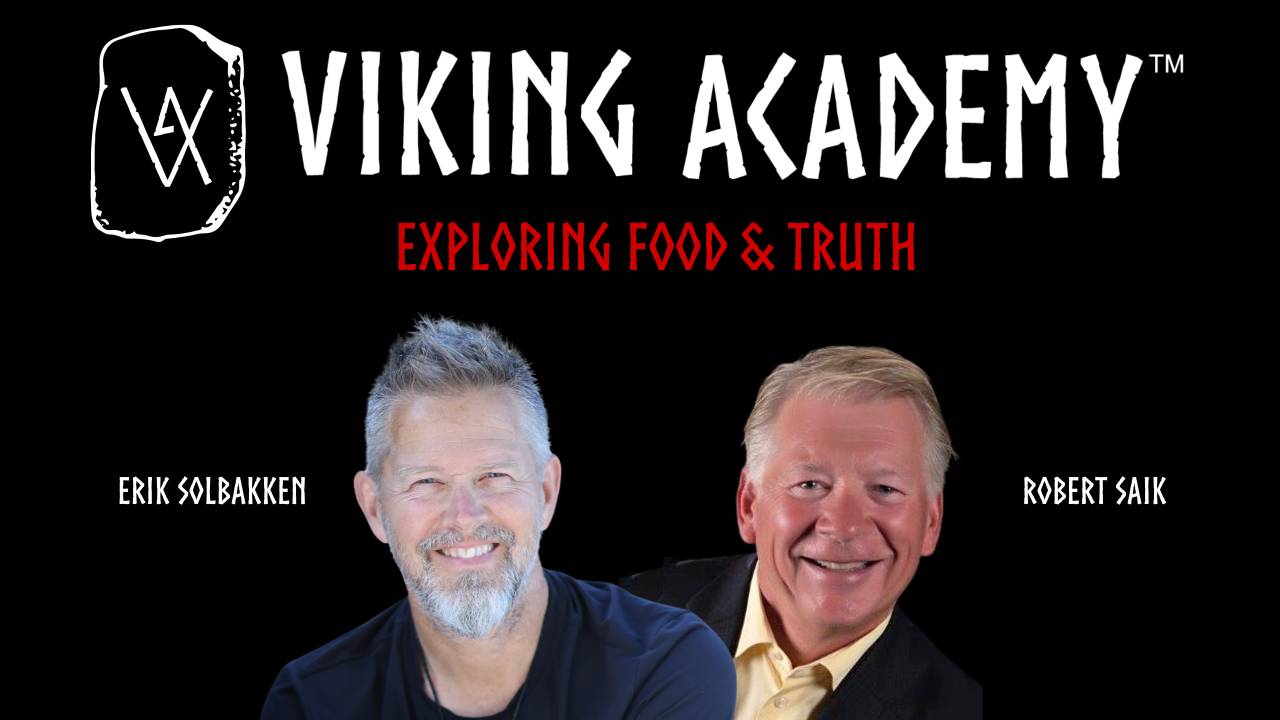
#41: Exploring Food & Truth with Robert Saik
What if everything you thought you knew about food… was wrong?
In this episode, we sit down with Robert Saik: agrologist, entrepreneur, and global agriculture expert, to uncover the truth behind the modern food system and the myths shaping how we eat.
With over four decades in agriculture and as the author of Food 5.0: How We Feed the Future, Robert breaks down the reality behind organic labels, GMOs, and the fear-driven narratives that dominate today’s food conversation. What emerges is a perspective that challenges conventional beliefs, and reveals how little most of us actually understand about where our food comes from.
From the role of technology and AI in farming to the future of feeding a growing population, Robert offers a grounded, fact-based lens on one of the most important systems in our lives.
This isn’t about fear: it’s about clarity. Because once you understand the truth about food, you can’t unsee it.
Topics We Explore:
- How fear and misinformation shape our perception of food
- The truth about GMOs, organic labels, and food marketing
- The real challenges of feeding a growing global population
- How AI, robotics, and technology are transforming agriculture
- How to think critically about what you eat
Connect with Robert Saik: https://www.robertsaik.com/
Learn More about The Viking Academy: https://www.vikingacademy.com
Episode Transcript:
Hi everyone, welcome back to the Viking Academy podcast. So this week on the podcast I have a good friend of mine, Robert Psych. It's S A I K. Robert is uh an aologist. He's also an entrepreneur and somebody that I know through strategic coach seems to be the wellspring of all great uh conversations that I have with people. Um first of all, it tells us he explains what a neurologist is. Um, and it's uh, so I won't I won't explain it here. I'll let I'll let let him explain it to you. But this guy, he's not only he's also a former comedian. Um, he did a lot of standup in the past. I never talked to
Him about it actually on the podcast, but you're going to listen to him do a couple of his impersonations were [ __ ] bang on. They're awesome. Um, but we go deep into the body. Okay, so in the mind, body, spirit for the Viking Academy. This one I wanted to talk to him about the body and I wanted to go into food and I wanted to talk about the there's a bunch of of of myths and false uh information out there about the food supply and literally I I normally take notes when I'm doing a podcast. I've got seven pages of notes here from the conversation with with Rob. Um it's
Insane. Um, I didn't realize that GMO is not what GMO is. When you're looking and look, not genetically modified, right? It's a genetically modified um, food. Um, it's not what I thought and uh, there's a lot of false information out there about the food supply and about what's going on. We also talk about what's going on in the future, what the future of food and feeding feeding the um, feeding the future is. Actually he's got a book out called Food 5.0 um how we feed the future. He wrote this 10 years
Ago and it is so relevant today. Um he he mentioned that it's a little Nostradamus on him. He had a vision of the future um that is pretty well bang on. And the thing is uh I'm going to go back and listen to this one again because again I had no idea. And it's this preface of once you know you can't unknow. Okay. Once you see, you can't unsee. Once you hear, you can't unhear. When you listen to this podcast or you hear, you see what he has to say and you're watching the video, you will never look at the food supply chain the
Same again cuz I know I won't. He is pretty well, in a good way, [ __ ] up my perception of it because I want to know what the truth is and he shone a big light onto the truth and the fables that is going on in our food supply. So, there you go. And it's fun guy with some impersonations that I'm looking forward to you listening to. So there you go. Without further ado, let's go explore.
Hey Rob, welcome to the podcast. Thanks Eric. Uh it was great to have this opportunity to chat with you. You and I have got to know each other through strategic coach both in Toronto and LA and we got talking about some of the work I've done globally in the field of agriculture. You said it would be interesting and so good to be on Eric the Viking podcast. Yeah. And the best part is um for the listeners out there this is actually take two because the power just like we were started the podcast and the thing the power went completely out and so we
Had to do this is retake. So, this is take two. It's almost like we need a blooper reel or something here to to uh to do it. I had asked you though in round one when I first started recording. Um that you have aologist behind your name. Like what is an aologist? Well, I'm Canadian. Agologist is a Canadian term like biologist, sociologist, uh psychologist. Uh aologist is a um a designation given to somebody who has a degree in agriculture and works in the science of agriculture. So, I work in the science of agriculture. In fact, I just got back
From Tiller, California last night where I was at a a show uh in Taller and got a bit of a chill. So, if I cough a little bit, I apologize. I've got some coffee here and I'll uh try to keep my hacking down to a minimum. But to to uh to summarize, I've worked in the field of agriculture for over four decades and my background is plant physiology, soil chemistry, crop nutrition and um yeah uh you know whether it's uh robotics or data or remote sensing or growing crops, I've been involved in a lot of sectors
Around the world. So good to talk to you. Everybody eats uh everybody's got an opinion about agriculture, but there's a lot of facts that are are missing. I yeah I'm look I'm looking forward to exploring that because um you know in the Viking Academy we explore the mind and body and spirit and so this is right right in the wheelhouse of the body because everything you take in for your body for fuel becomes your body like that's one of the things that I um I heard from a spiritual teacher Sad Guru he goes you are a collection of all the food you've eaten you're a collection of all the thoughts you've thought you're a collection of all the
Experiences and I'm like no that's quite true so when you were talking about that. Um, I'm like, "Wow, I'd really like to get into into that because you also said there's a whole bunch of misnomers and I'm sure I'm completely daffed when it comes to how the food supply works and what we're actually consuming and what what's good for us and what's not, you know." Yeah. And and for the listeners, this uh this is unscripted. We have not uh Eric and I have not discussed where this conversation is going to go. So he's as naive uh about the topic as as any
Anybody else. So this is going to be a good conversation. Yeah. What is So let's And also I I want to get into your personal side too. We're going to talk about your personal stuff in a little bit and I'm sure that's it's going to come out anyways because you're going to you're going to hear the the sense of humor that I know Rob has. We've had spent a lot of time uh you know do workshops together and and you're the other thing that I really love is your uh is your impersonations man you nail those your impersonations so I don't know what you're talking about Eric okay Canada is Canada United States
Is America somehow we understand each other okay so I just think I just think you should be part of us okay thank you Donald I appreciate that I apprei appreciate that message. Okay, so Rob, let's uh let me start with this. What is what would be the biggest biggest myth about the food supply or the biggest like uh misnomer about the the where our food come from and and and what we we don't know like what's the biggest one that would pop into your mind? Well, I think the biggest one is that there is a lot of false information
In social media and the thing that bothers me the most is uh the fear that uh a lot of groups try to put into the minds of the consumer. If you're a single mom with a couple kids trying to get by and you listen to the environmental working group Dirty Dozen and stuff like this, you get really really scared of the food that you're buying and and it's absolutely uh it's it's it's a it's ridiculous. The foods that we consume is very safe for a lot of reasons and there are u you know um and I've written two books on agriculture. Uh the second one being food 5.0 how we feed the future released
In 2019 and the agriculture manifesto uh 10 key drivers that will shape a in the next decade um that was released in 2014. And the thing that bothers me a lot is that uh there's a lot of fear propagated around food and uh and how it's grown. Uh without peeling back the layer of the onion and really understanding it. So um you know categorically I don't sell fertilizer chemical seed. I I'm not involved in the sale uh of any products. I'm very very neutral when it comes to agriculture. I am running a technology company right now called T1 technology corporation that's leveraging AI in the heavy
Equipment sector. Uh and and I and I have built many companies in agriculture that covered a wide swath of the of the thing. But if you ask me why do I give a [ __ ] Uh mainly it's because a lot of people are are running on fear instead of facts. So, what is, you know, it is interesting because of, of course, uh, you know, coming back to Donald's running mate, or shall we call it his his dream team, you know, you've got, uh, Bobby Kennedy that's been like really pushing on on cleaning up the what he said is is cleaning up the the
Problem with their food supply. And to hear you say that it's actually safer than what he's druming, beating the drum, or am I missing the mark there? Is he talking about something different than what you're talking about? Well, I'm I'm not saying that the food supply was bad or anything like that. What I'm saying is we need to rethink.
And if you look at the way I redid the food guide, I'm putting protein on. So, so this is actually a really interesting thing when you look at the the rejigging of the the food guide in in America. I don't disagree with it. I think that we've got uh a u an inversion now where um you've got uh proteins and and uh essential fats at near the top of the food guide. Fruits and vegetables are still really really up there and carbohydrates are down near the bottom.
I mean a person uh needs carbohydrates but excessive carbohydrates, excessive sugars u probably something that we should uh reduce. So I don't think that what's just happened is all bad. Okay. So So do you have any Well, I don't know conspiracy theory here, but do you have any theories on why it was that inverted like that to begin with? Like do you have any thoughts?
Have you watched Land Man? Oh, dude, I love that. I love that show. It's fantastic. So, so there's a there's a scene there's a scene uh in the second uh second season when she comes up to him. He's lighting a cigarette at breakfast time. She said, "Do you want any breakfast?" And he said, "No, just a coffee." And she says, "Uh, well, breakfast the most important part of the meal, most important meal of the day."
And he goes, "Who says so?" You know, and so uh he says, "Do you think our Neanderthalss got up in the morning and and wanted a day goes first thing in the morning?" Don't. So there's, you know, there's there's there's marketing being done like, you know, just all over the place and it's it's really really interesting.
So I would ask, you know, u and I'm not going to put you on the spot, but do you know of people who buy organic food? Oh, yeah. My wife's all over that. She just she's all organic. Okay. So why? Because she's worried about pesticides and and Yeah. Pesticides and additives and chemicals and that sort of thing.
Okay. She's she's worried about ingesting all of that. Yeah. Okay. So, how do organic farmers control diseases and insects on their crops? Um, that's where the ignoramus in me comes out and I have no [ __ ] clue. Right. So, just just think about this, Eric. Yeah. If it was as simple as putting a sign up on the edge of your field saying this is an organic field, all insects and diseases stay, please stay away. It's an organic field. Wouldn't all farmers put those signs up on the edge of the field? So, back to you again. How do organic
Farmers uh control insects and diseases in their field? And the answer is they they they use organic pesticides, right? And then you would go, WTF? What's an organic pesticide? Well, there are lots of organic pesticides. Copper sulfate and uh is as an example of a compound that was used in France still used, although they're actually arguing over this today. Uh but on the on the road to Paris, you had all these farmers growing grapes. And uh one of the first pesticides was a humicide actually. It was uh designed to keep the humans from
Eating the grapes because so you're a farmer and and you're growing these grapes along the road to Paris. And all of the people walking along the road say, "Oh, grapes. I'm just going to pick some and eat them." Well, they've just eaten your crop. So Bordeaux mixture is uh is lime is lime and copper sulfate. And they sprayed that on the grapes because it made the grapes taste bad so the humans wouldn't eat the grapes. Well, what they discovered is that uh the copper sulfate and and lime uh controlled a disease in the grapes called betritis. And so it began it was one of the first uh one of the first
Fungicides in the world was or was uh copper sulfate and lime called Bordeaux mixture and that's an organic fungicide still used in copious amounts today and um is arguably as toxic or more toxic than many of the fungicides that are synthetically derived used to control betritis on on grapes. But your wife buys organic because no pesticides. That's not true.
Yeah. Okay. That that's that's actually going to really help my uh my food bill, too, because the organic as soon as there's an organic on it, it's like they they have the opportunity to double the price on it. If you got a family of four you're feeding, by the time you graduate the kids at a high school, that organic label's cost you a quart million dollars more. Oh, yeah. Yeah. Yeah. A4 million dollars more. Yep. I you the one thing I've just I just can't get my head wrapped around when they call it organic. Well, it's like organic food. I'm like what is all the
Rest of the food synthetic? Like when we when someone's coming up with a label, they haven't they don't really think about it too much. I'm like, would you like an organic apple or a synthetic apple? Let me uh yeah, I'd rather have an inorganic apple. So the uh the thing about it is that I'm not I'm not saying that the uh see this is the thing that we've crossed over is food has become religion. Yeah. Yeah. Yeah. Yes. Food has become religion. If you you know you have your you have your your vegans uh you have your pescatarians which is a thing uh you have your meditarians you have the keto people.
You you got all these people with food has become religion. And then you have inside of agriculture you have farming denominations. So organic is a denomination of farming. I'm not saying it's good or bad. There's a lot that we learn from the uh from the organic farming um from the organic farming management systems. Something called integrated pest management which is IPM which is very important. Uh we're learning a lot because organic farmers don't have as many tools. So they have to rely more on on management skills and
Things like that that can be adopted into what's now the big buzzword is regenerative agriculture which is I think just code word for good aronomy but nonetheless you've got food is religion and then you've got these farming denominations and I would just like to try to level set people that it's really uh around a few things. It's it's really around the um the health of the soil. Uh it's around the um the input versus output because farming has to be profitable. It has to be around the nutrient density of the food. You
Want to throw uh you know carbon footprint into it. We could do that. And it's got to be around what again a very um buzzword sustainability. But you know, if I told you, Eric, that my business has been around for 120 years, you would say, "Well, that's a pretty sustainable business." Well, there are lots of farms out there that have been around 120 years. A lot of farms that are third, fourth, fifth generation farming families. And so, don't tell me that these farmers don't understand the word sustainable. And don't under don't tell me that they
Don't know how to learn, unlearn, and relearn because that's what they've been doing for generations, right? Um there's so much in here, man. Okay, so there's so much to unpack. I knew this one was going to be fun. Yeah, it's I'm just looking at this. I said food has become religion is so like that is that is that is so bang on. Like it's so bang on. Like I I and I never looked at it that way because you know like I I will sit down and I'll be like having a steak and the person sitting across from me is they're like oh you're
Just a cannibal. I can't believe you're doing that. It's like what I you're eating that steak and they're you know they're high and mighty on their vegan or they're I learned a long time vegetarian or whatever. I used to I used to be at those dinners I used to preach. Now I what I now what I do is I I learn over time to ask questions. So, like why are you so against steak?
Oh, because it's awful. Because Well, we you know um we had uh as a uh as a foundational or anchor species in in North America, bison and buffalo that roam the prairies in the millions. And uh one of the most fragile ecosystems on the planet earth is the grasslands of the foothills of the Rocky Mountains extending from Canada down through Colorado. And you need to have a anchor species to keep the vegetation down so that prairie grass that that foothills grass will still grow. And buffalo are gone. So cattle actually keep that all
Lined up. And I know I'm going to get lots of people saying, "What about cowberts?" And all this kind of stuff. We should talk about that. But anyways, there there's I the the the best way to approach that is to be able to ask good questions. And I I love sitting down with people and asking them why do you feel like that? Because I I think that's good. So, so when they when you when you're asking them the question and then they have to start explaining is that when you when you because when you ask questions and they have to start
Explaining themselves, they end up digging their own holes so to speak or they or the logic in their thinking becomes exposed. It's it's when it's when you scratch the paint and you realize that the paint isn't real thick. So if I if I throw out the word uh you know GMO genetically modified uh genetically modified organism there's all those butterfly stickers GMO project GMO free. What the hell does that mean? Like and uh like when you see a GMO sticker on on spinach, that's a lie because there is
No genetically modified spinach. So, all they're doing is putting a sticker on something that's never been genetically modified. Well, it has been through conventional breeding systems, but they're they're making like when you see a GMO sticker on on uh pasta, there's no no there's no such thing as genetically modified wheat. There isn't. Well, that's not true. There actually is one in Argentina we can talk about, but the point of it is there's no Durham wheat that is genetically modified. So, when
You see a sticker G non-GMO pasta, it's [ __ ] they're they're marketing fear to you. So this is it's the fear marketing behind it as opposed to well that's that's coming back to the the number one thing that I asked you. I said, "Well, like what is the number one kind of fallacy in there is is that is that it's we're being fear marketed to?" So, what is the truth? What's so where how do you diss how do we disseminate the truth?
Like, here's the thing. You're an urologist. You understand this stuff super deep. And so, for uh for the listener and for myself and going, I just want to eat food that's going to nourish my body. Like, I've actually, it's interesting. I've le recently, probably in the last year or two, had a totally different shift when it comes to my food intake. I've become super sensitive to not eating good foods for my body. Like, my body's telling me what it really wants, maybe I'm just finally waking up and paying attention, but I've looked at it at food differently. Now, instead of looking at food as something to comfort
Me, which it does sometime because, you know, I have that kind of emotional food comfort thing, but it's like I'm looking at it as this is the fuel for the machine. The machine is the body that the shell of Eric and so I want to put the right fuel into the machine. So, I want to have this good relationship with the food. Well, how where's the good fuel to put into the machine because there's so much information out there. Like, how the hell do we disseminate it all?
Yeah. I I you know I I think again there's uh not too much uh that I would argue with about uh um about whole uh foods that are whole. In other words, uh you know, drinking orange juice is loading your body up with a whole bunch of sugar. However, eating an orange is really good for you. So, right, you know, so there's there's a there's a good example of of of it.
So, eating foods that are whole. Uh, and I'm not I'm not endorsing Whole Foods that was bought by Amazon because there's a lot of mismarketing there in that. I love I love going into Whole Foods and and I have a I have a a green t-shirt uh that says I heart GMOs. I love wearing that t-shirt into Whole Foods and people. Uh, so, you know, getting back, I'll give you I'll give everybody another example. Um, so, um, uh, let's see here. I'm thinking about, uh, one of the, uh, veh one of the fruits that's grown in Hawai papaya. Uh, did you know that the
Hawaiian papaya industry would not exist if it were not for genetic engineering? Because, uh, there's a virus that infected the crop. And scientists discovered that by doing a uh an insertion of uh of some genetics from another plant into papaya, they saved the papaya industry. There was there was no papayas left on the planet. Um and and people say, well, you know, that's that's manipulation.
Well, if I told you that you took you take some seeds and put seeds in a lab and then expose those seeds to nuclear radiation or carcinogenic chemicals, how would you feel about that breeding process, Eric? How would I feel about that? That Yeah. Um I I don't know because is that the natural breeding process for those things or is it something that we created or is there any negative impacts of us actually ingesting whatever grows out of that breeding process? So it's a uh so uh the exposure of seeds
To nuclear radiation or carcinogenic chemicals in a lab um is deemed to be organically approved. Now that's really strange. It's in a lab and it's nuclear and it's carcinogenic chemicals and that is because uh you actually clicked on it. Uh they say that you're really not introducing anything. You're just speeding up the natural evolutionary process of uh the plants being exposed to carcinogenic chemicals or nuclear radiation. And that is a 100% organically certified breeding process. Are you serious?
Yeah. But if you take a gene from one plant and put it into another plant, a specific place, that's genetically engineered GMOs and that's bad. Now we are moving forward now and that that technology is pretty old now because now we've moved ahead with uh crisper technology and now you have gene editing technology. So when you bite an apple or you slice an apple up, it turns brown in a in a very short period of time.
Yes. Yes. That that oxidative process is what turns it brown. Well, they figured out how to flick off a couple genes, and I'm probably going to get uh I'm probably going to get the enzyme wrong, but they they've they've flicked off a couple genes to reduce the oxidative reductase enzyme in the apples, so the apples will stay fresh longer, so you don't have to spray u lemon juice on the apples so that the apples stay white. That gene editing didn't introduce any uh any new genetics into the apple. It just flicked off those genes in the in the apple itself.
So, this is where we're actually headed. If we're if we're talking about a safe, reliable, profitable, nutritious, sustainable food supply for humanity, we're going to have to embrace the technologies that we're embracing in all other areas of society, including well, if if you know anybody who's diabetic, insulin is a GMO. If you don't have anybody who is hemophiliac, who's got hem hemophilia, they be they're being kept alive with genetically modified drugs. So you can say, you know, I'm a diabetic and I'm injecting myself with insulin, but I won't eat a GMO food.
Well, that's stupid because your insulin is genetically modified. That's that's how they that's how they derive it. So this is the part that I get all wound up. You can tell that I get wound up this, right? Well, yeah. So, this Yeah. So, all of a sudden, I see these labels on there and it says non-GMO, all good for you, blah, blah, blah, blah. It's like marketing. It's almost like marketing to ignorant people because I'm ignorant to it because I don't understand it. But I look, but it's like it's like a marketing. There's a lot of money to be made if if if you So, the non-GMO on on on on
Pasta, for example, I'll use that example. The non-GMO sticker and pasta makes you feel, oh, this is good. I'm buying something that's not genetically modified. But it's a lie because there is no genetically modified Durham wheat. So, what they're doing is they're doing two things. They're capturing value with a label that's creating a good feeling inside of you because I'm not eating genetically modified wheat, but it's a lie because there is no genetically modified Durham. So, um and and and um
Another negative hit is they're saying to you that if there was a genetically modified derm wheat that that would be bad for you and and that and it's not true. It's not proven. That wouldn't be true. Yeah. So right now we're using uh like in Argentina right now they've I and I met the scientists that found this gene that confers drought tolerance and saline resistance to wheat. So you could grow wheat in the face of climate change. You'd be able to grow wheat that is more drought tolerant, more water efficient and more saline resistant than
Non-GMO wheat. And that gene is called the HP4 gene, I believe. And it was discovered by a company uh called Bioseries in Argentina. And they're growing it in Argentina and uh and Brazil now. And we would like to have that wheat in uh in North America, especially uh when we're facing droughts now in the wheat growing areas. So these are these are things I love to talk about. So So here's it's okay. So I just it kind of trigger it it twigged on me here now. So here's the first question. So the fact that it's genet Well, we can go into the wise, but a genetically modified food
Is is it more fear-based that it genetically modified food is bad for us or have that we have in the past seen that a genetically modified food is actually has negative impacts. And then what they did is they extrapolated that one one instance of a genetically modified food to all genetically modified food is bad. So I'm going to say something that your your re your listeners are going to have to research on their own, but there's never been one case of documented health uh damage to human beings because of a GMO food. Not one. And this this is categoric across
The European Union that actually doesn't let their farmers grow um genetically modified food. But imports it from Brazil and and Argentina and the United States to keep their whole agricultural sector alive. Um, you know, it's really really interesting because uh if uh the first GMO crops would have been uh bred in Basil, Switzerland, uh there wouldn't have been the negative reaction to uh those crops that there is because uh the European companies, the big companies were behind the American companies in this area. So why did okay that logically doesn't
Make any sense. So if there's never been a negative implication from a human health perspective on a GMO product, GMO grown food, right? Then why are we freaking why is it how has it become such a big thing then? Well, you you gota you've got to go uh you got to dig pretty deep here. So, um, I mentioned American company. So, let's let's run down the rabbit hole a little bit here. So, Monsanto was based out of St. Louis. Uh, there's a herbicide out there called glyphosate. It's a one in aundred year molecule. It's very, very safe. It does a wonderful job at
Controlling weeds. And what Monsanto did was they were able to uh take uh some genes and they were able to put them into uh corn and cotton, soybeans, and now canola. And so you make the crops resistant to glyphosate, but it allows the farmers to take out the weeds out of the crop. So this was the beginning of it changed everything. It it changed agriculture in so many ways because what it did was it contrary to popular opinion. It allowed us to drop and decrease the amount of herbicide we were using to control weeds on crops because all we had to do now was use glyphosate
And it cleaned up all the weeds as opposed to spraying two or three or four different herbicide cocktails to control the weeds. Um so uh the WH has a offshoot uh that said that glyphosate is possibly a carcinogen. There's been no documented research work in the world that definitively defines glyphosate as a carcinogen. But when you have a ruling like that, you open things up for class action lawsuits. And so what happens is you have all these groups out there that are negative towards genetically engineered uh corn, soybeans, cotton, canola. Um
And then you open up class action lawsuits uh against which has now been purchased by Bayer Corporation. So, the fear, uh, Eric, the fear is that, oo, I'm eating, um, some soybeans that are GMO soybeans, therefore um, that's got to be bad. And glyphosate is bad because farmers use glyphosate on GMO soybeans.
So, therefore, I'm getting all of this bad stuff. What they don't know is that non-GMO soybeans would have a much higher pesticide load than GMO. Soybeans. Um, and so all of this spin happens. Um, all this spin happens and there's money behind it all. And I'm not saying there's not money behind genetically mod uh genetically engineered crops because there is. Um, and then they say, well, farmers have to buy this seed every year. Well, that's true. Has nothing to do with genetic engineering. It has to do with the fact that we buy hybrid seeds, and hybrid
Seeds have to be bred every year. So there's lots to unpack in that story, but at the end of the day, um you are Eric, you are being sold a fear uh from one side or the other. And what I think that we should do is we should have more education and understanding around this whole concept.
The I I can't shake the thing that you said there that there's never been one case of negative health impact from a GMO product research. So, yeah, that that's that's uh that's a fact. And uh and if there was, then that whole technology would be ground to a halt, but it's not. In fact, slowly slowly uh we're seeing loosening up like golden rice. You know, there's half a million people in the world that go blind. 300,000 and a half a million people go blind every year uh due to vitamin A deficiency. Over 20 years ago, they figured out how
To genetically modify rice to be yellow in color called golden rice, which would reduce which would increase the amount of vitamin A you consumed with golden rice. This is not a pesticide, nothing. This is just um a modification of rice. And that product has yet to come to market. Uh Greenpeace has been just absolutely uh making millions of dollars by selling the fear of golden rice while every year a quarter million people go blind due to vitamin A deficiency. Uh this is a technology that would be made
Essentially free to the world but has been locked up uh because of this uh uh negative uh you know the negative push from organizations like Greenpeace. So these are the kind of things you you you understand where I'm coming from where I get emotionally and I don't like I'm working in AI now in the equipment sector so I'm not even involved in crops anymore per se but but my my understanding of it is very deep.
I I'm still having a hard time wrapping my head around it given that I'm such a lo like I'm I have such a logical thinking brain that if there's never been a human never been a health issue from GMO and you telling me that GMO products will not only increase the nutritional value of the food eaten Yeah. And reduce and in some cases, if not both, reduce the need for pesticides, call it the chemicals that potentially could really harm us to maintain the crops.
Y what the [ __ ] Like seriously, what the [ __ ] Like this is really this is really interesting because um again, this is this is stuff that that uh people don't understand. Um glyphosate um and I won't use the word Roundup because if you go to a store today that that isn't even close to what farmers use, but glyphosate is a one in aundred year molecule. It is one of the safest and most tested it's the most tested herbicide on the planet by a long shot. I was just recently in um Almaria, Spain at a company called Kimitech and they're isolating biological molecules from uh
Algae and plants and bacteria so on and so forth. And I saw in their lab the potential for us to have a biological uh Roundup, a biological glyphosate. So, at the end of the day, what we're after as farmers is we're trying to control the weeds with as low environmental footprint as possible. Because if you compare the uh load, the herbicide load of non- GMO soybeans to GMO soybeans, I I I know that non GMO cotton to GMO cotton, I laugh like hell when I see organic non-GMO cotton bed sheets. Like freaking it's bed sheets and you're
Gonna pay what a third more for that label fre that just astounds me. So, uh yeah, there's a lot of marketing going on. You you've said this a couple times and I want a little bit of clarity on this because I don't understand what it means. You said one in a hundredyear molecule. What do you mean by that?
Um it means that it was such a uh uh such a wonderful discovery uh that to find a molecule like that again it would it's like one in a 100 years. Now, if we get into AI here, we'll talk about that because if we could leverage AI uh in um in chemistry or AI in metabolic pathway uh um mapping out the metabolic pathways inside plants, we may find ourselves with another or many one in aundred year molecules. But but glyphosate is is a is a really really really good product. And um and you know the the amount you you buy uh you buy your vegetables um your
Wife buys organic vegetables, you buy you buy organic lettuce. I buy non-organic lettuce. Just wash the lettuce. Just wash it. Just wash it. It'll get off 99.99999% of anything that could do any harm to you. Just wash it. I think that is a big takeaway here, folks. I pay attention to that.
Just wash just wash it. Yeah, just wash it. Hey, there's so there's a couple couple things here that I wanted to kind of dive into. Um I want to come back to the I want to come back to the book that you you wrote, the 5.0, how we feed the future, but I I want to go to something more personal on on my side. So, I've So, hang on. I I just put this into perplexity. Has there ever been a documented ne negative case due to GMO breeding and crops? No, there has never been a clearly documented causal proof between human illness or death from eating approved GMO crops or food made
From it. Uh, current evidence does not show unique uh health harms from commercialization of GMO crops compared with conventional crops. I mean, just do your research, right? Put it right. Yeah. Yeah. Yeah. Well, but we would just That's just a funny thing is like as humans, we just we follow the herd, right? Because we're herd animals. We're we're instinctual that way. And so everybody's like, "Oh, it's GMO and stay away from GMO and get organic." And it's like my wife's really concerned about this. She's like, uh, almonds for one,
One thing for almonds. She's like, "Oh my god, make sure it's organic almonds because she says almonds that aren't organic are that they have so many bad things in them and you shouldn't eat them." I'm like, "Okay." Like what? I don't know. I just I would ask I would I would I would ask like what? And so I just came back from California. I drove nine hours Monday, nine hours yesterday. Came back from the a show in California and of course I went past all of these almond farms. A lot of them are being ripped up right now because it's nonprofitable and uh
And water is starting to be a increasing issue. Uh almonds uh consume quite a bit of water. So um uh organic farmer uh organic almond farmer has to control the diseases and insects on those almonds. So you know I just this is you you don't want to go into this conversation with your wife Eric because this will cause a problem in the family. You're way better off to have somebody like me do it. Just for the sake of your marriage, just let her keep buying the organic almonds and just say, "Yes, dear." And stroke the
There's you. Yeah, but I'm [ __ ] now because once you know, you can't unknow. I know, right? Like because once you know you can't unknow because it's so so the Okay, almonds is one thing. Here's another thing that that hits me personally. So, and I've watched this happen. Is this gluten intolerance that's been going on. It's gluten intolerance. And the interesting thing is um I've noticed that I've become sensitive to to that as well. Like if I eat a lot of pasta or if I had a lot of bread, I just feel like [ __ ] And so
I've just been cutting it out. But then I go to Europe and then I eat bread and pasta in Europe and it doesn't seem to bother me. Is that psychosomatic or is there something in it? Like what is the truth on when it comes down to gluten? And because I've had some people tell me that it's not the gluten that's causing the problems, it's all of the okay pesticides and crap that's on top of it. Or that our wheat Oh, this you're going to love this. Our wheat is genetically modified in British in North America. There's no genetically modified wheat. Um well, other than like I said, the
Argentinians are working on something, but it's not commercially available uh in our country our countries yet. Um so the first thing I would say is uh the wheat in bread um and the wheat in pasta are two different wheats. So so you I mean to say that if I have pasta and bread in North America I get bloated and yet in Europe I don't. Well is it really do you really have the same reaction to pasta and and bread?
Secondly, I'll say that uh celiac disease is a real serious disease. That's a real thing that uh people have gluten intolerance. Um, now a lot more people, a lot probably, and I'm going to use the word probably as a as a couch phrase, but probably a lot more people had have celiac disease than we first thought of. So, we're diagnosing it better now than we did before. However, this uh gluten intolerance is is probably much blown out of proportion and uh I don't have enough uh there's a lot of areas where uh I I can go pretty deep. Uh but I I don't have
Enough information to say whether you, Eric, are gluten intolerant. Uh if you were a celiac, you would get violently sick if you ate uh gluten foods. Um however uh I I and and I cannot comment on there there are different different wheats grown different varieties of wheat grown in Europe than uh North America. Uh but there are all kinds of wheats. You have soft white, you have hard red, you have winter wheat, you have all different kinds of wheats and all different kinds of of varieties of wheat. So again, you
Would need to slice and dice this a lot more before you could get an accurate answer. Okay, I'll leave it there. Yeah. Okay, fair enough. Because it's I I I've been just always trying to figure it out is whether it's psychosomatic or if there's something else that's happening. But I that's more me. I have to do more research for me. I mean, I I I I think that, you know, from a from a standpoint of our diet, and again, if you look at the new food guys, I'm trying to make the point here that um but if you look at the if you look at diet, um it it makes sense
Uh to I think it makes sense to reduce our consumption of carbohydrates and um and I mean, I think it's just common sense. It's just if if you're going to eat um pro if you're in the morning, you're going to have uh processed uh uh processed cereal in the morning and for lunch you're going to have a bunch of um you know processed food and then a bunch of carbohydrates and stuff like I mean if you have a look at the average uh at the trade show I was laughing because I I uh I ordered a uh I ordered a u a
Ribeye sandwich at the trade show And uh I got this this beautiful ribeye strips in, but geez, the bread was about that freaking thick. And I'm going I just I just don't need that much bread. I just give me a thin slice and I'd be fine. So I think it's about everything in moderation, you know? I think Yeah. Um again, I'm not qualified to go deep into that rabbit hole. Okay, fair enough. Fair enough. Okay, so I want to come back. I want to circle back to um the book that you wrote. You said food food 5.0 how we feed the future. Yeah.
Right. So food 5.0 how we feed the future. Um yeah. Oh perfect. Okay. So for those who are watching the video here uh we get it. There we go. Food 5.0 how we feed the future. Um yeah. What what is the what is the through line and takeaway from that from your book? Like what is the over like the overarching takeaway on how we feed the future. This is going this can be fascinating. So um I divided the book into two parts.
Uh the first part is the five iterations of agriculture and the second part deals with the fifth. So the eras of agriculture are the era of muscle. So that is the exchange of of uh calories by oxen or by horse or by human beings pulling a plow for food. The era of muscle uh transferring muscle into crops uh or livestock. The machine era uh began with the industrialization. So think steam engines and stuff like that. And we're still in the machine era. Then came the chemistry era. The chemistry era really
Began like I said it began with organic chemistry like the Bordeaux mixture I talked about but it really really uh changed uh with the hobbos process. This is the most important invention in human history today which is the conversion of um the conversion of air uh with natural gas and temperature and catalysts into uh ammonia fertilizer. Um, so the Hobbos process is kind of the really defining moment when chemistry really made a difference in agriculture because we were able to take when you breathe in uh you're breathing in 78% inert gas. It's
Is called uh well it's it's inert nitrogen. Um but the the thing that grows crops is fixed nitrogen. Fixed nitrogen comes from lightning strikes. It comes from legume crops. It comes from organic matter and it comes from fertilizer. And the human population was on the on the on the it was it was very very dangerous at that time at the turn of the uh 18th and 1900s um because there wasn't enough uh nitrogen to feed the population and the population was very small back then. That led to the guano war. So, if you study history, you'll understand the war
That was fought over birdshit between Peru and and and Bolivia. And that was all over birdshit. And um they were harvesting that off of the islands there and shipping that birdshit to uh Europe and and North America as fertilizer. And Hobber which is u a Nobel u chemistry u by two German scientists really was the precursor of uh the invention of ammonia and ammonia lends itself to ura fertilizer and it's been you know in the book um the alchemy of air by Thomas Hager he says that uh 50% of the protein
In every man, woman and child on the planet earth today comes from fertilizer. So think about that 50% of the protein in your body comes from fertilizer. So people say we'll just wipe out fertilizer and my question would be what half of the pop world do we want to kill because that's how important. So the chemistry era was uh not only fertilizer but it was uh it was uh 24D it was the herbicides that came along and and and and now you know one day at one point we're putting pounds on ground of active ingredient today it's just grams uh per acre of active
Ingredient then came along genetic engineering which you and I have talked about that's the fourth agriculture and I argue so It's muscle, machine, chemistry, genetic engineering, and the fifth one we living right now, which is called convergence. And convergence is where all the technologies are coming together. And you got to remember that when I wrote this book was 2019.
And so I released it in August. And the first line of the book, Eric, is when you woke up this morning, did you worry about a plague? Really? This is 2019. Second line of the book is did you worry about war? And third line of the book is did you worry about famine? Those are the first three lines of the book. So this was precoid. This was pre-Russia's illegal invasion of Ukraine. My background is 100% Ukrainian. So I've got passion about that.
Yeah. And this was before the Sudin and and the the famines that are geopolitically generated artwork. So in 2019 I wrote, did you worry about a play? Did you worry about war? Did you worry about famine? People ask me, why did you write start the book that way? And I said, because we've always dealt with plague and and there's always been worse and there's always going to be a famine somewhere. So um the real uh the real drift of the book is to give you an understanding of where agriculture has come from but more importantly where
Agriculture is going especially with convergence and AI layered on top of agriculture. It's it's it's a that's my speech right now. I'm giving a speech here in Arizona on Monday. Where is agriculture headed? And you cannot divorce where is agriculture headed from AI because those things are inextricably linked and it's going to affect everything from molecular synthesis through to production agriculture to robotics all of that stuff will be impacted. So then from from from there from the convergence and you said did it's 5.0 and then from there that is where the future 5.0 know comes from is that fifth
Convergencing and then saying this is how we feed the this is how we feed the future feed the future. Yeah. Yeah. Is by recognizing and saying we need it's a convergence of all these correct less once we instead of pointing that one's bad and one's good and this it's like what you said it's been it's been um rel what was it you you said food has become a religion.
Yeah. Like and and and and that there's farming denominations that are and are the farming denominations within those five sections or within the first four like is that what you mean by the denominations or they more like aligned with so for example if you were uh like again you you have to put everything into context so if I'm a a relatively small uh farmer but I'm living next to a urban center how am I going to make money off my farm? Well, I'm going to grow a crop that I can sell at the farmers market to
You and your wife, Eric. And how am I going to extract a higher price for that product versus what you could pay at the grocery store? The story. Yeah. The story. And and and the story is that our family is growing this crop and we're not using any synthetic. They they won't use any they won't use the word synthetic. They say we're not using any pesticides, but the reality is they may be and so it's safe for you. So pay I so so pay $8 for a dozen of eggs. So here's an exercise for you in a grocery store. And I love doing this. I love watching people in front of the eggs to
Make a decision because you could you could buy eggs for $2.99 a dozen and you can buy eggs for $12 a dozen and in between there's all the different pricing of all the different it all comes from one part of the chicken from the ass end of the chicken. Yeah. Yeah. And you know, and they say, "Well, our these chickens are are are free range."
Have you ever watched chickens? They don't want I mean, they're free range, but as soon as something happens, they clump together in a corner all over each other. Um, chickens will cannibalize each other, freerange chickens, and they'll eat their own [ __ ] So, when people say that these chickens are, you know, vegan chickens, well, whatever. It's it's it's just such a bunch of [ __ ] Uh so, um if you watch people making decisions on on a dozen of eggs, uh you watch the mom, single mom with two kids trying to ek out a living for herself. She's she's
She's buying the 299 dozen and probably feeling bad about it. Right. You have uh a person who's got this ethos that I'm going to feel for the chicken. I want the chickens to be happy and I'm willing to pay 12 bucks for an organic, non-GMO, pesticidefree, freerange, cage-free chicken and I'm willing to pay 12 bucks for those eggs.
That makes me feel better. And in between that, there's all sorts of feeling ranges in the egg department. So, I'll reach for the 299 because it all comes from the same part of the chicken. And, you know, and I, you know, you could get into a pedantic discussion on whether there's any differences between grass-fed chickens and cornfed chickens. Probably uh probably minute amounts of something that won't make a difference to your diet. So again, um that's that's kind of where where I was at with that that first part of the book.
You're I think you're right. I think I need to not have this conversation with my wife. I'm But I can't. But but here's the thing. I my my first coach um and again you you know I you and I met at Strategic Coach and Dan's Dan's my coach um and I always say to people if you have a coach who doesn't have a coach you need a new coach right um but I my first coach told me something and it's always stuck with me and he goes once you see something you can't unsee it.
Yeah. Once you hear something you can't unhear it. And this is this whole conversation that we've had is like now that I've heard it, I can't un and I can't I see it and I can't unsee it. So when I go in to buy eggs next time, I'm going to be cursing your name going I hope my wife doesn't see me grabbing for the $2, you know, the the $2 plain jane eggs and she's been like, "No, we need the free range." It's like, why? It's it's just but it's a story. I like how you've tied that in because it really is like I I I did a lot I do a lot of reading on the psychology of humans and have you read
Have you read uh Angus Fletcher's books Primal Intelligence yet? Uh no. Oh dude, get on this one. It's this is incredible. Primal Intelligence by Angus Fletcher. I'm writing it my I'm actually in communications with his uh assistant right now about getting him on the podcast. He's going to be a speaker at uh con coach con in or in Florida in okay Orlando in June. He'll be there. Um his his teaching but you look at Angus Fletcher and you listen to what Jordan Peterson said and all the psychologist humans think in terms of
Story and and what you just said there just really resonated with me. It's when you look at the food, it's the story behind the food that makes us feel good about it. But the fact of the matter is you've opened up the kimono here and showed me that the reality on the back end isn't the fact like the fact that there's been I still can't get my head wrapped around this that there has not been a single health issue with a GMO related product yet somehow we've we've we've vilified it. We've it's been vilified and makes it sound like oh it's
Genetically modified because that's what I honestly thought. Someone told me that that I thought the reason why I react the way I do to again pasta and bread and that I know that's a whole issue now, but let's call it car like wheat in North America versus wheat in in in Europe was because of genetically because it's genetically modified here in Canada. No. Or in the United States. Yeah. No, no, that's not true. So, you know, if we're thinking and let's move the conversation into the future here. Yeah. Yes. Uh so if we're if we're
Thinking about trying to um trying to feed the planet and we're trying to do it so that we we don't further degrade the thin epidermis that keeps us all alive which is the top soil that we grow our crops in. And we have to do it assuming that, you know, climate change is going to impact uh us and that, you know, maybe in many areas there going to be more drought. And we want to have uh food that's nutritious. And and and we need to understand that it's getting increasingly more difficult for farmers to find labor on the farm to do the work
That needs to be done because agriculture is quite labor intensive. And you got to understand that farmer farming and farmers are less than 1% of the population of of you know of of certainly of North America. When you think about the United States of America, you probably could take one of the big uh college stadiums that seats 100 110,000 and you fill that stadium up with farmers of consequence. And I and I'm I'm going use that term very deliberately, farmers of consequence.
You probably have 80 to 90% of the production of food in America in that football stadium. In other words, 110,000 farming families, and most most farms are still farming families. Uh over 97% of farms are still farming families. They may be incorporated, but they're still run by families. Um that football stadium would feed uh produce 80 to 90% of the produce. Now you may have millions of farms in America and Canada uh combined but only a small slice are really farmers of consequence.
The rest you have um you have a large number of smaller landholders that hopefully are close to urban centers so they can sell the story and have a lifestyle. Uh the middle swath are getting squeezed really really hard because land prices and machinery prices are really really high and then you've got the larger farming operations that are expanding but is bringing down the total number of farms. So you got to remember that one of the real constraints in agriculture is labor. And as we look towards the future, uh you
Know there are very few Canadian or US citizens that want to go and pick strawberries all day long. So we this the uh you know the the pushing out of the nonpapered immigrants from America is really hitting uh the United States farmers quite hard and and and so what they're having to do is they're paying a lot more money for labor right now which is driving up the cost of food um from from those fruits and vegetable farms. So you got to think about holistically about where society is going and do we really want do you
Really want you know your children Eric to work in a mushroom factory where they work in the dark and they pick mushrooms in humid and cold conditions day after day. Do you really want that for your children? And the answer is no. So we have to invent robots that will pick the mushrooms in this cold environment.
And this is where the convergence is coming in. And that's where you're saying this is where the future goes for. Yeah. For that. It would seem to me also part of the future is not so you're talking about the the future the supply side on the future but also on the demand side on the future is I I just can see this clearly that the educational side to let the so the public understands what the truth is because that's the problem is it's the it's the spinning of the fear and the story which is not the truth and that's the that I'm taking the most from this. Yeah. If your wife agrees that she wants
Safe, healthy food grown in an environmentally sustainable manner and is profitable for farmers, you can't do that without employing genetic engineering technology. Whether that genetic engineering technology is is uh is gene editing, whether it's crisper, whether it's the uh it's the evolution of crisper, whether it's new molecules that are being discovered because of AI synthesis. You you can't unseparate these two. You can't feed the population of the future on the farming of the past or the story that we've been telling
Ourselves about the past. Like that's the story that that for me has been the real the eye opener is the fact that we're we're we're buying into a story because it makes us feel good, but it's it's [ __ ] A lot of it is. A lot of it is. I'm not saying I'm not saying there aren't some bad actors. Yeah. And you do occasionally see bad actors, but God, it's pretty small. It doesn't make economic sense for farmers to get up in the morning and beat their cattle. Is stupid. Yeah. I I I it was So I So we um we had
A small farm. My parents are first year, our first um generation. So they came over from Norway. We ended up uh finally getting a piece of acreage about five acres. And so we've we had a farm. So, we've had we've run through chickens. So, we've had the chickens, we've had the pigs, we've and we slaughtered them ourselves, and then we've had some sheep. Um, never trust the sheep, by the way. They all lie. Um, and and and then also would be the neighbors were nearby and when they would go away on holidays, I'd go and show up and I'd collect eggs
For them or I would because we only raised broilers. We never did the layers. So, I'd go to the neighbors and I'd help pick the eggs and take care of the cattle and and and the pigs or whatever. So, I've been on a farm and and I've done that farming at that level. Um, and so I understand how a lot of that works and but to get it to the scale that you're talking about to feed everybody and the GMO like I just can't I still can't get my head wrapped around the fact that I've been sold the story on the GMO. So, the the u the as we look to the
Future, there are uh a number of things that are interesting to think about. Um, we're, you know, we we talk a lot about, um, I have a TEDex talk, by the way. It's, uh, that that may be a way for you to bridge the gap with your wife. There's a TEDex talk by Robert Sych uh, called um, will agriculture be allowed to feed 9 billion people. And, uh, that TEDex talk has been seen 180 some thousand times. So, the TEDex talk is quite good. And it's as pertinent today as it was when I when I filmed it. Um the um the the point is as we stare into
The future whether or not you think the population is going to get 9 10 11 billion people it's relatively small when you consider the capacity of the planet the footprint etc. Most of it is is uh dense around water is dense around the oceans and you have density of population but globally there's lots of room for people um but the question would be is the population actually going to get that big because there are several areas in the world uh Japan now China uh Germany where the demographics are showing a slowing down or a
Declining uh population because birth rates are declining below repopulation levels in many areas. So you have one factor which is will will the population actually increase? Um and if the population doesn't increase and yet we can produce more food because farmers are good at producing food, where is the market? Where's the market for food? Where's the market for corn?
Because the average corn yield this year was I think 272 bushels an acre. Like it's huge. So where is the demand for all of this? Like most of the corn goes into cattle feed, goes into chicken feed and stuff. There is sweet corn that you eat, but that's different than than feed corn. And a lot of a lot of corn now is starting to go into ethanol. And you know, you could argue that if you want to reduce hydrocarbons, ethanol is a good way to go. And maybe going to 15% across the board. Ethanol is good. Sustainable aviation fuels that what is
It uh S S45 legislation just passed in the United States that allows for recognition of crops to go into sustainable aviation fuel. You could argue that's good. We're going to need that because the supply of of food could outstrip the population demand. The second thing is that as countries become more affluent, Eric, their dietary uh their their diets change. They want more more chicken. They want more beef. They want higher levels of more variety of vegetables. So there's an opportunity, but it may not come down to strict
Quantity. It may be a combination of quantity and quality and maybe a third would be environmental sustainability. However you measure that, but those may be the metrics that we need to think about going forward in agriculture. You've opened my eyes huge to this. I I knew I knew we were going to have a good conversation because I knew there there was a whole bunch of stuff I didn't know. And now that I know, I can't unknow. So I I again, man, when I go in to buy eggs next time, I'm going to be thinking about you and I'm going to be and and hopefully I'm going to be looking over
My shoulder and my won't my wife will not be there watching me pick the eggs or won't see actually what I'm going to do is I'm gonna get the eggs. I'm gonna come home. I'm gonna take them out of the carton and put them in a bowl so she doesn't know what the carton says. So the story is not there. I think that's what I'm gonna do. Of course, this is this is all now recorded, so she'll be able to Yeah. Yeah. Yeah. She'll never She'll be able She'll She'll have evidence of of our deceit. Yeah. Yeah. I'm basically You're saying
I'm [ __ ] either way. Really? Yeah. You are because now you know things. U But like I said, in the interest of preservation of your marriage, you might just let her buy the $8 a dozen eggs. So So yeah. So anyways, where you know where we're we're kind of headed. I want to I want to touch on this but u so I just came back from Teraryi California the world a expo in Teraryi California and I was astonished at the amount of robotics I was CEO of robotics company um so I uh over a 20-year journey I built Agra trend and
Agra data which was a consulting um organization for farmers we never sold anything we never sold fertilizer chem seed grain we didn't buy grain we didn't sell farm equipment but we consulted with farmers from as far north as you can farm in Canada all the way down to the Mississippi Delta and I had a company incorporated in Australia and I sold that to Trimble from Silicon Valley. I was retired for eight days and then I became CEO of a robotics company and we sold that to Raven from South Dakota and then after that I took my
Money right around co and started to build the company now where we're working on AI integration in agriculture and construction and rental and u it's fascinating to me um listening to the likes of Peter Diamandis and if through abundance 360 uh I was at the very first one when Dan and Babs from Coach uh invited us to Mountain View, California and it was Peter Demandis and Ray Kerszswhile and I took 83 pages of notes in two days and never slept. Uh it was just mind-blowing like this this conversation here and my
Life has never been the same because I became aware of the speed of Moore's law. Um and then at abundance Peter in had on stage and I met briefly Dr. Kai Fu Lee of Taiwan who wrote the book U AI uh Silicon Valley China Silicon Valley and the upcoming AI wars. Great book. It's several years old now. But when I when I saw that all coming down the pipe, I said I had to get the sales set because the wind of AI is coming and I want to be in a position where we can harness AI uh to do good things in agriculture etc. And what I what I'm
Seeing right now is uh when we were when I was CEO of the robotics company, Eric, we had to do something called algorithmic programming. In other words, we had to think about what the robot was going to do in the field and program that as we as we uh evolve with AI, you don't need to think about the algorithmic programming. You can let the AI. So, a funny story, we seeded a crop in Canada with the robot, came back to spray it with a robot, and somewhere between seeding and spraying, a moose had died in the field. Okay, so moose died. They have to die. A moose died in the field. So, the robot is coming along
Spraying and it sees something and it stops and it just shuts down because there's an object in the field. Well, we had to go out there and of course, you have to back up. You go, "Haha, moose dead in the field." You have to go. Very Canadian. Yeah. Very Canadian.
Yeah. M move the move the sprayer around the moose. Take the moose off the field. But um with AI, it would go, "Oh, there's a there's something in the field. Is it moving? Not moving. Okay, I'm going to go and I'm going to back up and I'm going to go around this obstacle." So therefore, uh you can't predict what you're going to encounter in a field, but AI would be able to rethink the logic around what to do. That's a good example of where we're headed. So I see a lot of robotics, a lot of small robots coming into agriculture uh to do a lot
Of jobs that are dirty, dull and dangerous. Those are the 3Ds. Um and so um AI is going to impact agriculture in a whole lot of ways whether it's on the research side, whether it's on the production side, whether it's the u even the tracking and traceability of the product from the field. AI is going to play a real huge role in logistics as well.
And your business is is is poised to be part of that solution. Yeah, we're building uh VI Visor Pro VI. She's an AI that works inside of the service department of equipment dealerships. So service, parts, warranty, that sort of thing. So when you come in, you say got a transmission problem, something that would take a researcher 30 minutes, an hour and a half to research, we can do that in 30 seconds with VI. Um, so that's what we're doing. Cool. See, that's why I love being around entrepreneurs, man. We're always seeing
Opportunities in in the in the uh the obstacles are the way. Like so the Ryan Holiday book, obstacle is the way. It's the stoicism, right? It's the obstacle is always the way for entrepreneurs. And that's what I noticed when I was down in La Hoya for the Freezone Summit. There's all these great entrepreneurs that just see these obstacles and see opportunities, right? And and and creating totally new ways of taking care of the creating more value in the world, right? Yeah. And and so that's what I that's what I
Love. I love that. And I love it's just it's a constant exploration. Like that's the thing. It comes back. So, we're going to come back to the Viking Academy ethos. It's about exploring. Go and explore. See, here's the thing. If I wasn't curious and didn't want to explore the conversation with you, I would never have any of this information. If the listeners didn't listen to the podcast, they would never have heard and understood what about GMO farce is. And [ __ ] the whole thing is a farce. Well, I mean, yeah, just peel back the layers of the understand the truth, get
The facts. Uh, so and ask ask good questions. So at Strategic Coach, you know, you look around the room that we're when when we're in U Santa Monica and I'm I'm one of the older guys in strategic coach. I've been going for 32 years. So my strategic coach stuff is right here, right there. So I've been going for 32 years. Dan says I'm a slow learner with money, which he he likes those kind of people. But why why do I keep going back to strategic coach and why? If you looked at my 2018 bank account and you look at today's bank
Account, you said, "What are you doing?" Like, "What are you doing?" Because I've shoved millions of dollars into into what I'm building right now of my own capital. And the the the fact of the matter is entrepreneurs are curious. We see things. We want to fix things. Um, and I look around at so many of uh folks that retire. You know, I I look at a lot of farmers that sell their farm and three years later they're dead because they've lost their sense of purpose. And I I think that uh human beings need a sense of purpose. One of the things that concerns me about AI in the future is
What is the definition of human purpose going forward uh as we as we look at that. But um everywhere I turn, I see more and more opportunity to leverage AI to enhance my creativity, not to take away from it. So I think the future is I think we're going to go through a rough patch uh as we sort this stuff out. Um if you think about um the who will be disintermediated by AI um well the decision makers who are synthesizing all the information and then using judgment to make a decision. Those are the two sides of a decision.
Prediction and judgment. Um decision makers, whether they're politicians, lawmakers, or executives and stuff, probably not going to go away anytime soon, although you can argue that a lot of them should. Um the the trades if if your wife has a problem with the sink and and it's she's not calling you, and maybe she is, and but but there's no way a robot's going to get up underneath there in the in the near future and have the dexterity to to fix things. So, the trades are pretty good. Whether it's welding, construction, uh whether it's
Uh all of the electrical, plumbing, carpentry, all that stuff, that that's pretty pretty good. Trades are solid, but in the the information flow in the center um that that's an area that will be disintermediated. I mean, it will be disintermediated. And so, what does that do for that those people in the middle? And as we get more autonomy, I drove back on the I 10 yesterday from Los Angeles all the way through to Phoenix and I just passed hundreds and hundreds of semis. Those those trucks are are driving predicted routes and and
And I'm thinking why couldn't all these trucks be autonomous just driving at 55 miles an hour? All of them spaced out evenly. Nobody passing. Just driving in a train at 55 miles an hour. And I think that will happen. So, what are those guys going to do? So, those are things that are kind of going through my head.
Yeah, totally. I'm I'm I'm right there with you. That it's um the I've got the book sitting here u ready to be read is Victor Frankle's Man's Search for Meaning, you know, like the the C meaning and purpose is is a human it's we're we're meaning makers, right? We're creating meaning out of life. So, I'm I'm totally beside you on that one going, what is it? What is the what is me? What is the purpose of humans? What is our purpose and our meaning where when we have this big chunk of of of the world that doesn't need us working in it anymore,
Right? And so maybe maybe the universe is already smart on that because it's reducing our population because we're not going to need as many of us to do what we're here to do. You know what I mean? Like because the numbers are dropping. I'm going to spin this back to to farming. The pre the negative the negativity uh the negativity projected at commercial farms today is so tremendous. So tremendous that farmers and I want to tell your listeners this farmers feel bad because they're being so persecuted
Right now. Um the the one thing about farming is for one thing it's not easy. You're at the vagaries of the weather, the market, all kinds of stuff. And the at the heart of farming is that I've always farmed. No matter what happens, I'm doing good work. I'm helping to feed the world, right? Helping to feed the world. It is noble work. But when you get the likes of Food Babe going on social media absolutely chastising everything about what I do as a farmer and you hear it everywhere on on social media, it goes at the heart of my purpose. And so this is another reason
That I feel conversations like this are important because people need to understand that uh farming is hard and agriculture is changing and there's a lot of pressure and at the end of the day uh I don't need to thank a farmer. I don't think all that's important but at least we should have a a a a level of sensibility in the schools with respect to being what's being taught to our kids and that uh farming is very very complex. Yes. And without farming we don't have food. Without food we're dead.
Well simple simple equation. Yeah. Yeah. Well I like the simple thought simplify things down. Okay. So, to cap off the podcast, I want you to grab another one of your um impersonations to sign off. And you can pick anyone you want. We've we've heard from Donald, we've heard from Bobby.
We need one last one to sign off. All right, we'll do Australian. Australian people slightly nisely when you're Western Australian, mate. We don't have any rain here growing crops with no rain. Uh, it's royally really dry. That's so strong in accent. So, there's there's the there's there you go. Give us some rain. Give us some rain. Yeah, let's make it rain.
Some rain. Yeah, Rob, this was awesome. Thank you so much for being on the podcast. You've opened my eyes and again, I can never buy eggs the same way again. Thanks for that. All right. Well, if folks want to look me up, uh, Robertsych s ak.com. Uh, you can't have psych without the AI. S A I K. Get it? And, uh, the books are on Amazon. Um, the Agriculture Manifesto and Food 5.0. And the TEDex talk is, uh, on TEDex on YouTube. I love it. Thank you for Thank you for completing my job on doing the rest of
Those pieces. Perfect. All right. Thanks for being on the podcast, brother. Uh, pleasure. Talk to you soon. See you at coach. You bet you, pal. Thanks for listening to the Viking Academy podcast. Make sure to leave us your honest feedback by leaving a review on Apple or Spotify and hit subscribe so you never miss an episode.