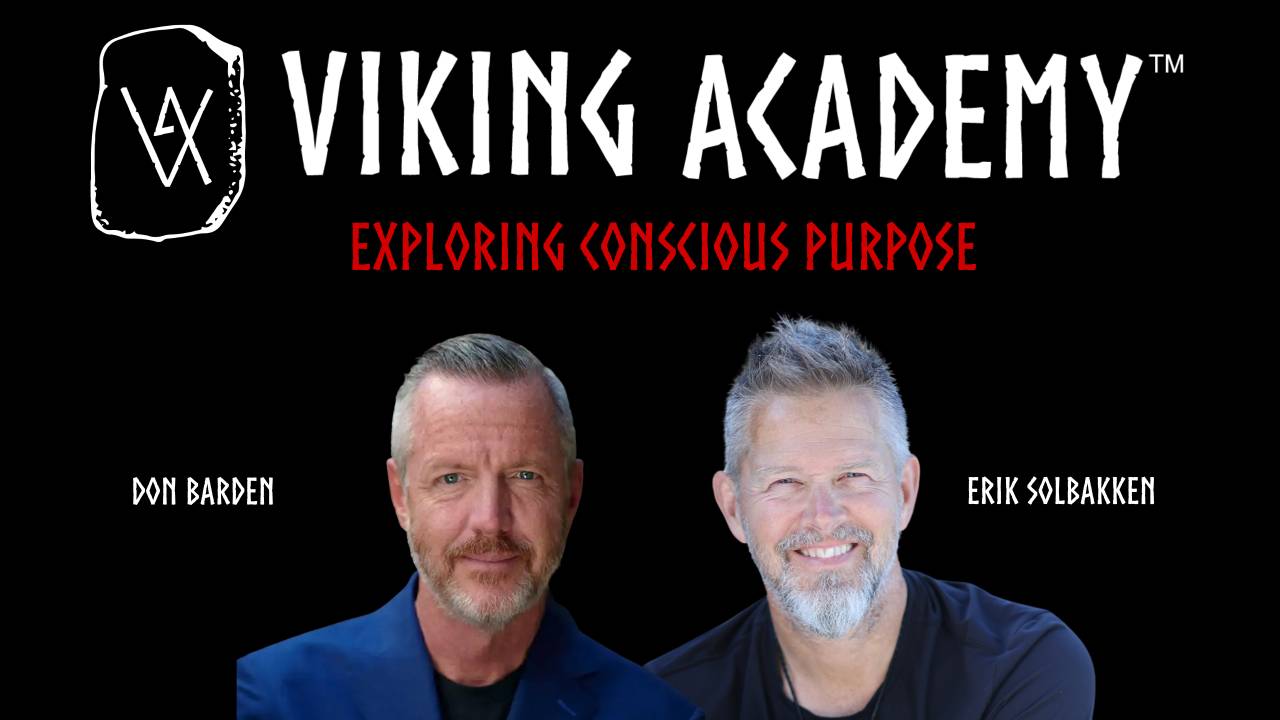
#33: Exploring Conscious Purpose with Don Barden
What if understanding human nature could unlock the future of our species?
In this episode, I sit down once again with Don Barden, a classically trained economist with an M.B.A. in Global Technology Management and International Business, and a Ph.D. in Organizational Leadership with a focus on behavioral economics and international finance. With a career spanning global business, leadership research, and economic strategy, Don brings a rare blend of academic depth and real-world insight.
Together, we explore the timeless patterns of human behavior, why ambition and purpose are built into our DNA, and how our morality shifts while our core nature never does. From innovation to spirituality, from economic evolution to cosmic possibility, Don breaks down what he believes is humanity’s next major leap, and why it might happen sooner than we think.
This isn’t theory. It’s a raw, expansive conversation about purpose, consciousness, and what it truly means to live as a human being in a world on the edge of change.
Topics We Explore:
- Why human nature hasn’t changed, and why that matters
- The real relationship between purpose, ambition & innovation
- How social constructs limit our evolution (and how to break free)
- Why consciousness may shift dramatically in the next 20 years
- The role of spirituality, science, and “the divine spark”
- How understanding purpose can reshape society, economics & humanity's future
Connect with Don Barden: https://donbarden.com/
Learn More about The Viking Academy: https://www.vikingacademy.com
Episode Transcript:
Erik Solbakken: Hi everyone, and welcome back to the Viking Academy Podcast. Now, on this episode, I am shooting this from my hotel room in downtown Toronto. That's right. I'm here, doing a full week of coaching workshops for a bunch of entrepreneurs. And, but I didn't wanna stop the Viking Academy podcast from happening. So for those of you watching the YouTube channel, you'll notice that the background's a little different beside that point, I'm on the call today and I do a podcast with Dr. Don Barden. Now, Don Barden has been on the podcast before. He's a great friend of mine. Him and I get into a big conversation around purpose, and as with e, every conversation I ever have with him, it ends up going down different avenues and he enlightens areas that I never even thought about. And he's talked about how humans have really never changed. He's a behavioral economics, specialist in this. He's also got, full work in seminary. He's got all the different pieces to pull together, and he, he, so he understands. the way humans interact and the way they work. And, and he said something that really kind of struck me. He said, humans have never changed. We've never changed our morality changes, but who we are deep down inside, it never changes. We're always trying to get bigger, better, stronger. There's always some sort of ambition inside of, so we're the only species that tries to continually evolve purposefully. And we go down, some other roads that I really wanna share with you, but I'm not gonna, I'm not gonna tell you exactly what those are yet because I want you to go explore this episode yourself. it was fantastic getting to connect with Dawn again, go down the road of purpose, which is what I am very passionate about, is helping you find your purpose. And I'm still discovering my own being that explorer. So without further ado, let's go. Explore. Hey Dawn, welcome back to the podcast.
Don Barden: Hey man, thanks. I love being here and I love every one of your episodes. I'm listening to all of 'em. I've shared it all over the world. So I had a guy in Kenya, I sent it to the other day, so you're now officially in Africa. So thank you Per awesome. Thanks for what you're doing, man. That's awesome.
Erik Solbakken: That's killer. Thank you so much. That's great. Yeah, I was just like, your backdrop is so killer, man. Your new place that you have is awesome. Like, for those of you that aren't watching the video, you can go to YouTube and check that out, but what do you got? You got jerseys in the background and you got
Don Barden: Yeah,
Erik Solbakken: the pool table. That's that man cave from
Don Barden: Oh yeah. That's not creative room. Yeah. My office is technical over there. That's where why I'm very, very focused when I'm in there. It's got all the screens, it's, it's work whiteboards, rolling whiteboards, a little area over there. But when I need to be creative or I just need A-A-D-H-D break, I walk into this part of my office and it's got the pool table. It's got a little Peloton and I can ride for a minute if I need to clear my head. But, yeah, it's sort of, Sort of my life, I love it. What you can't see over here behind, is a lot of pictures of really, really cool people. I've had the honor meeting, over the years and, it is funny way before selfies, way before selfies we a thing. I was with a guy and, an older gentleman and, he told me, he said, Hey, did you bring a camera? And I'm like, this is before cell phones had cameras, And I was like, why? And he goes, it's more important to have a picture of you. In an event or with somebody to create a memory for future generations than it is to have an autograph or a text or something like that. He said, think about it, if your great-great grandkids can see you, let's say at the Masters' tournament and, Arnold Palmer's in the background, how cool is that to say, Hey, that's great. Great grandfather, one of the greatest golfers ever. He said, always take pictures. So before a selfies I started taking pictures. So there's some pretty cool stuff on the wall, with some people I've been honored to, meet and do some work with and kind of get to know over the years. So it's, it's kind of a fun place.
Erik Solbakken: Who said who's, who's your, if you were to look up there right now, which of would be the most memorable one for you?
Don Barden: Oh, you're, you're best Canadian. William Shatner over there.
Erik Solbakken: Oh, really?
Don Barden: Yeah. So Captain Kirk himself, I gotta meet him a couple times and, lovely man. Kind. Nice. Very, very present. And, I think he's 94 or nine five now, and I probably met him, five or 10 years ago. so, but great, great, great guy. So he's, and he's finally his God's sake. What? What's
Erik Solbakken: that?
Don Barden: I said he is Captain Kirk. that's, that's a pretty cool thing. And, I just saw something he's on tour with, Neil Degra Tyson, the astrophysicist now. And if you think about it, I thought that's really pretty cool because this is a guy who motivated more people in aeronautics and astrophysics than anybody. And he's been to space. He went to space on the Bezos, thing. And then you got Tyson, who's a brilliant astrophysicist. He's never been to space. I don't know how many people he's inspired. he's inspiring. But, there was this thing a few years ago to MIT where they interviewed all the, engineers in the aeronautics and, and and division. And over 50% of 'em were inspired by William Shatner and James Han, which was Scotty on Star Trek. So they were all like, yeah, when I was a little kid I used to watch this and think I can do that. I want to do that. So, for the guy who's been an actor, nice, good solid Canadian, who's been to space, but he is not an astrophysicist. He's not a pilot, he's just a storyteller. And I think that's brilliant. And so he inspired me when I was little and, I think he's number one's cool. And that trumps a couple presidents and some other things, that are around here. So, it's pretty neat,
Erik Solbakken: , that that kind of, spurs me on to. Why I wanted to have you back on the podcast again. Not only because you got incredible stories and thought, you're a deep, deep thinker of, of, of, of life, man. Yeah. Like, the last podcast, if anybody hasn't gone back and listened to it, it's one of the first ones we ever did on the biking academy, and it's awesome, man. It was just, you went deep. We went deep into so many areas. Yeah. But the, the thing that's just been kind of rattling around in my head, which is more the ethos of the Vik Academy is purpose, like living life on purpose. And like, like you and I have seen, personally on a personal side, you and I have gone through a bunch of stuff together and we've been friends and we've, helped each other through things. But what do I, I just see kind of like a, a rudderless, there's a lot of people that are rudderless, purposeless. Do what? Going on right now? Yeah. And, and I'm just, I just wanted to talk to you a little bit about what your personally, what your purpose is, what do you think it is, and, and how you've kind. What you do to find your purpose and what motivates you because, I think there's a lot of people that are just, we're kind of missing that
Don Barden: Yeah.
Erik Solbakken: That rudder, what? Yeah. A lot of people are.
Don Barden: Yeah, a hundred percent. I think we're living in a world that we should be very grateful for because we've created a world through a lot of hard work. People did a lot of hard things to help get us to where we are. And, and people will talk about the younger generation. They're just flowing through. They don't have purpose or they don't have a goal, they don't have anything. And half my brain, or probably more than half wants to say, isn't that great that we've worked so hard To get to a world where you can just exist is, is is amazing. That is amazing. fear for most of the western world is gone. There's ups and downs, there's highs and lows. There's some moments where you wish you didn't have to deal with it, but at the end of the day, you're not that worried about it. And that took a lot of hard work from a lot of people, but. If you look ahead and say, well, wait a minute, what is this gonna create? There's a big question there, because I think the thing that people lack the most is purpose. As you're flowing through things, that's fine, but step back for a second and say, but why, why am I here And, and what am I willing to do? And I think that is the missing ingredient. So, you're onto something there. I think that's, it's, it's needed now more than ever.
Erik Solbakken: , it, it, it's interesting because like, you, you've hit something on the head there, which is that we've created such abundance. There's so much abundance that it's caused, it's, it, it's a great thing, but we don't stop to, be grateful for it. what? Right. Like, you don't know what you, you don't know what you got till it's gone. It's because you just, we get so used to having so much, and then when any little bit of it gets taken away, we throw a temper tantrum. Do what? Oh, yeah. Instead of just being grateful for the fact that it's all, that it's all sitting there. And so, but I, I also, I can't, and, and I keep, forgetting what the actual, scientific, experiment was. But do you remember the mice experiment where they brought in six mice and they started six mice and they gave them absolutely everything they needed? Yeah. Like all the food, all the water, all the, everything they needed with no predators. And they just let 'em exist. Yeah. And they started, and then they added more, and they added more, and they added more. And they just, it, it got to the point and there was no, there was no hardship, there was no difficulty. There was unlimited food and abundance. And Do you remember what happened?
Don Barden: Oh yeah. They all died. They got fat and died. the one who made it was the one who moved my cheese is the name of the study, where the one off to the side, they kept moving around and making 'em work a little bit. So his purpose was to find the cheese to keep moving to, to, to look and to see a better tomorrow thrived the ones who just sat around and ate and were happy, didn't work out so well.
Erik Solbakken: Yeah. That Debbie was the book. That was the book. That's a fantastic book. Who Moved By Cheese. But I'm talking about the, there was an actual real life study that they did where they put in the, the mice and then it was a, this expansion of the, the mice got to about 600 and what happened was that there was a bunch that just would stop, the males stopped reproducing with the females. They would just sit there and groom themselves, oh, look at how pretty I am and the rest of it. And people have, I've had some conversations with people. They're like, they're seeing the world right now. Kind of like that. Yeah. Like that things are starting to look like that where people, it's coming back to the selfies. Right. And, oh, let's post and just, it's all pretty and I don't need anything. Yeah. it, it's good and bad at the same time. 'cause like we need. We need, con like there needs to be some friction. There needs to be some obstacle. There needs to be, but the only way there's an obstacle is if there's something purposeful to get to do. what? Right. Like that's where this purpose comes in. Like what is the purpose?
Don Barden: Yeah. Yeah. I agree. And that's where innovation comes from, right? If your purpose is to make a better life for yourself, your family, the people around you, then you're constantly looking at innovation. If you're fat and happy and not doing anything, then we, we bogged down, we slow down. I saw an interview with Bernie Sanders who I like a lot. I don't agree with him at all. I don't know how much Canadians keep up with Bernie, but Bernie would be the guy that you would love to have as your next door neighbor, and you'll want him to come over for some hamburgers and fries on a Saturday night and just shoot the ball. Bernie's great. Yeah. But he's a far, far left socialist and, he came out this week talking about that there are people like Elon Musk and these super hyper performers who have created enormous amounts of wealth. from it. And he's like, we need to limit them. And I almost fell outta my chair. I'm like, limit what? And they're like, they shouldn't have that much money now though. Keep in mind, Bernie's an extraordinarily wealthy man. Very, very wealthy man. So I guess he's talking about everybody more wealthy than him. I don't know how he gets to this logic, but he is like, no, they shouldn't have that much money. And I'm like, but wait a minute. That much money is because they have a purpose. he wants to go to Mars. He wants to create Interstellar. He knows that's what his purpose is. Now, is he gonna make a few bucks along the way? Absolutely. No doubt about it. But he is catapulting us through innovation into things that is beyond what we can even comprehend right now. Same for Jeff Bezos. Jeff Bezos, I saw the other day, they said. do you feel guilty about being worth like 200 billion or whatever it was? And he said, I think you're missing the point. He said, in my purpose, which was to get people stuff faster and easier to make their lives better. Okay. That's really what I wanted to do. I have been awarded great wealth from it, but I only own like, now don't quote me, but I only own like 20% of Amazon. So if I'm worth 200 billion, that means 800 billion or close to a trillion dollars of wealth has been created for other people. So your purpose allows you to continue innovation and continue to look for stuff. Yeah. You're gonna make some money on the way Hope so, that'd be cool, if you did. But people who are laser focused on their purpose achieve great, great things. Those mice that get fat. Yeah. It's not gonna work out, for 'em. So, yeah. Yeah. I'm favor of innovation and seeking your purpose. 'cause I think that's how we, I think that's how we survive. That's what we do.
Erik Solbakken: You and I are completely in alignment on that. I was at a, I was at a business, function, that I got invited to. And I was sitting around the table with all these entrepreneurs and this one guy turned in and he said, he said that. He goes, I think there should be a cap on how much money someone can make. And I was like, I almost fell off my chair. I was like, oh, and who decides how much that number is? He goes, oh, well we do. And I said, who are we? Oh, the collective. We decide that there's a cap on how much, so you're saying there's, you wanna put a cap on people's ambition. You want to tell people what they can, how much, so in other words, you can only have so much happiness. You can only have so much joy. You can only have someone like who, how do we artificially put that on there? It's like, if someone. Now, I think there's a line that we all cross or that governments are good for, which is if it becomes a monopoly, if it becomes too overbearing, and then there's no more co there's no room for competition, right? Like, so we call it the purely capitalist way, then you need to, you need to curtail that,
Don Barden: right?
Erik Solbakken: But to say that you can't let people make more money because you're, and that's just, I think it's just, I think that's just, jealousy and greed on that. But if there was no, if there was a cap on how much success one person could have, that c certainly smells to me like a totalitarian way of thinking.
Don Barden: Oh, it's exactly. And that's exactly what it, their purpose is power. People who say that their purpose is power. It's not social change. And, I'm a behavioral economist. That's what I do. I look at the future and say, and, and I'm not knocking my peers, but my, my buddies in my industry that are classical economists, they love to look at what happened yesterday and tell you why it. That's easy. Yeah. You're looking back in time. I dare you to turn the lens forward and say, but this is what is probably gonna happen. This is what we believe is what's gonna happen, and that's what we focus on. But the irony is to look forward. You do have to look back. So I spent enormous amounts of time studying history and, and looking back on human behavior and noting change and seeing how we change and how we adapt. And I've got this, after 40 years of doing this, I have a singular conclusion on human behavior. and it's real simple. We don't change. We're the same now as we've been forever. We are wired to be innovative. We are wired for growth. We are wired to seek a better tomorrow. That is what separates us from every other species on the planet. We're not the strongest. We think we're pretty smart, but we really don't know. the dolphins might be smarter than us. Nobody ever told us, but operating in what we do. We thrive in our ability to innovate and move toward purpose. We are the only species out there that has purpose other than the survival and, and replication, having baby species or whatever it is, right? Most organisms around the world just wanna reproduce and survive. We wanna reproduce and survive, but seek a better tomorrow, grow, be driven. And that's cause a purpose. But if you go back through history, and I just did this incredible, oh God, I spent a long time, looking at, pre, Columbus history in North America, Canada, the United States, and Mexico, and really, really studying it. There was no difference in how people behave then as they behave. Now it's all about what are we doing? What is my purpose and how can I create a better tomorrow? Now, our morality changes a lot. Our morality can swing all over the place. So there's some things that happened in the past that we probably wouldn't do today, but if you go back to the motivation, it's gonna come down to purpose. In innovation and anybody who tries to curtail that and says, oh no, you shouldn't make that much or you shouldn't do it, that's like saying, well, I know you'd make a lot of money doing, solving cancer, but I think it's more important for you not to make money than it is for you to cure cancer. No, I think if somebody cures cancer that we should build them the biggest castle, in the world if they want to do that. If we made our lives better, what's the problem with that? So when you hear people like Bernie, who again, I like Bernie, I wish he was my neighbor, I think he'd be a fricking riot to hang out with. I just grossly disagree with the guy when it comes to that. and I don't know what his purpose is other than to get elected, and to, to kind of feed off, the population, if that's his purpose. He's doing a decent job. He is, been there for a long time and he's made a lot of money, by preaching rhetoric. At the end of the day, we don't change. and we need to grow. We need to innovate, we need to have a purpose. And when you see hyper performers like Elon Musk and Jeff Bezos or anybody else saying, my purpose is to make us interstellar, my purpose is to deliver things and give everybody access to things that they never thought they might have, and in the way I might make a few bucks. Okay, I'm fine with that. I think it's great because again, look at the trillions of dollars that's being created that allows other people to be innovative. Maybe Jeff Bezos shipped a part to somebody and they saw it and they're like, oh my God, I got this great new idea, and then they figured out how to do something and did it. Just the interconnectivity of all of our purposes is probably bigger than any conversation we can. It's like talking about astrophysics really big, right? Well, you take all of our purposes and you try to connect 'em together. I don't know what to do. I don't even know where to begin. other than, and we haven't changed. And anybody who tries to tell the entrepreneurial mindset, or people who do find their purpose, that they have to limit it, it's not a good formula. Not a good formula at all. So I, that's why I appreciate guys like you who are out there saying, Hey, it's okay to be entrepreneurial. It's okay to have a big dream. It's okay to go for something. You're free. Go do it. And, that's where great things happen.
Erik Solbakken: what? There, I read, I was been just, you, you just triggered a thought in my head. So I've been reading, poor Charlie's, RR Almanac, you, Charlie Munger. Oh yeah. And there's a quote on the back of the book. It's lovely. It said, there's, there's a, there's an overriding, principle in all science, political, financial matters that makes everything happen. He says, one is take a very simple idea, and number two, take it very seriously.
Don Barden: Yeah.
Erik Solbakken: And I think what you're talking about right now is a very simple idea that humans are ambitious, innovative creatures.
Don Barden: Yeah.
Erik Solbakken: That's the simple basic. And we don't change. That's who we are at our core, right? Yeah. That's what differentiates for us from the other species. Let's just take it very seriously. So in other words, let's do everything we can to protect, enhance, and, support it.
Don Barden: Yeah. Yeah.
Erik Solbakken: Right?
Don Barden: Oh, yeah. Yeah.
Erik Solbakken: And so that's it. That's, it's so beau like, and, and it's, it's interesting because you see the person that, right, so everybody loves the underdog, right? You love the other underdog story. You come from nothing. You build up and you become successful, but don't become too successful because if you do, they'll want to tear you down. Yeah. It's like that scene between the Joker and Batman. Remember Heath Ledger, the Joker and the Batman? Oh, yeah. And he goes, just wait. He goes, you and I are very much the same. They'll build you up and then tear you down. Oh, yeah. Right. And there's some, there's some incredible one-liners in that show. Oh, yeah, yeah. But C Fledger was brilliant in that spot. Right? Oh,
Don Barden: yeah.
Erik Solbakken: But that's psychologically, that's, we want, we cheer for the underdog to become, become something, but then when they become something, we tear 'em down.
Don Barden: Oh, yeah. Well, the, the cool thing to me about that analogy is the bat, Batman and Joker are the same person. Just one of them takes one path and the other takes another path. And, but they're the same person, the same needs, the same d desire, the same drive. One person took a moral stance for justice that was Batman, hopefully. And, the whatever warped brain, that the Joker had didn't fit our morality scheme of, of today. But they clashed. But they were the same person. They had a purpose and they were innovative and drove toward it. And if you think about it, Bruce Wayne had a lot of money, right? Batman did. And, that allowed him to go out and do things. It made other people's lives better. So, yeah, that's a deep conversation, man, to get into purpose. But, I will tell you something interesting. So I finished this pre-Columbian Columbus study and I started looking back at the American, history, the originators of the United States, the Constitutional con or the Continental Congress, the constitution, everything they did that was so innovative. It was probably the single biggest turning point in the world as we know it today. It was when those guys got together and they said, we're gonna, we're gonna try something new. But here's what's fascinating about it. If you think the United States about to celebrate next year, yeah, next year, I don't know when this is gonna air, but in, in 2026, it'll be the 250th anniversary of the United States. Okay? Now, if a generation is 60 years, that's only five people ago, right? So that's five great, great greats ago. There are people who knew somebody who knew somebody. Who knew somebody. In other words, if you're, if you were a little kid and you met your great-grandfather and your great-grandfather says, oh, I knew this old guy when I was your age, and he knew a guy that was old that that, that was there when that happened. That's very, very possible. And if you go back and look at what they wanted, what do they want? They wanted freedom. They wanted opportunity. They had to deal with a moral construct that was going around, but they were willing to risk everything for their purpose, and they wanted it to happen. As I'm studying this and looking at it, I'm like, there is, again, there is no difference between the way they thought. Then they just applied it to a situation that was critical. It worked out. it was fine, it was good. But plenty of other times people will say, well, this is my purpose and it doesn't work out. But that's okay too. It's just a matter of you being available when the time comes, that when you seek your purpose, are you prepared? And I think that's the great thing about the entrepreneurial mindset. You're prepared with your mind, how things work out. I don't know. A lot of stuff happens, right? But, I don't know. It's just such a great thing to sit there and know that your life is deeper than just clocking in and clocking out. Now, your purpose might be to provide a safe environment for a child. Now what you don't know is that child might be the person who cures cancer or creates interstellar, travel or whatever. I don't know. But you're, we're all part of a big machine and a big puzzle that's going on. And all we have to do is continue to advance the field, keep moving forward. And all of our purposes, although they might seem trivial to some people, they might seem unrelated. They're not trivial, and they are related. Every single purpose on this planet is related in one way or the other. And we're just little bitty pieces that trigger something, maybe a generation or two from now, or maybe while we're alive if we're lucky enough to see it happen. But purpose is, is literally what separates us from every other species on the planet.
Erik Solbakken: And so this, and you and I have talked about this
Don Barden: yeah.
Erik Solbakken: Many times before, but I, I think I, I can reframe it even, even more so now, is that like I, for me, I look around and I'm, I'm, IM in Toronto right now, and I'm gonna be coaching at, strategic Coach this week to a bunch of entrepreneurs who are ambitious and they're growth minded. And I love entrepreneurs, right? Because they're, that's in the world. They, I innovate and I want to help them with their thinking. And that's the whole thing, strategic Coach is about changing your thinking. And when you change your thinking, it changes your behavior. And your behavior changes your results, right? Yep. So that's the chain of events. And I'm, but I'm looking out over this, this city right now, and I'm looking, I can see out the lare and I'm, I'm, I'm looking out on the street and I see everybody there, but I think of the world as a giant jigsaw puzzle. Yeah. Right. And every piece has its spot. And so every person, everything here has its spot in the picture.
Don Barden: Yeah.
Erik Solbakken: Without every single person. If one of that person, like there's one walking down there, he is, got a bag right there. It looks like he's carrying like an Uber Eats right now. Yeah. I'm watching him. And so he is doing an Uber Eats and he goes, yeah, well, what's the purpose of my life? I'm taking food to somebody that's like, there's no purpose in that. I'm like, no, if that piece is missing, you take it out of the jigsaw puzzle. The, the picture's incomplete.
Don Barden: Yeah. Yeah.
Erik Solbakken: Like the fact that the fact that anybody is alive and on the planet means you are here for a purpose. Yeah. And the interesting thing is purpose in its core. Has embedded inside it, and this is gonna be a bit of a shaker for those atheists and agnostics is faith in a higher power.
Don Barden: Yeah. The
Erik Solbakken: spirituality follow, like there is a spirit because, because you can't have to say, well, my purpose is this without saying, oh, so you believe in God? They'll be like, well, fuck off. I don't believe in God. I'm like, well, no. If you think if there, like, do what? There has to be some, there's a creator behind the scenes creating you for a purpose.
Don Barden: Yeah, yeah, yeah.
Erik Solbakken: Right. How can you
Don Barden: Yeah.
Erik Solbakken: Like
Don Barden: we're here for a reason, right? There's a purpose behind our very existence and, yeah. I'm a, I tell you what, I'm a big fan of Professor Brian Cox out of, outta the uk, right now, brilliant physicist. And he starts every conversation by saying, look, there are things that we just don't know. We don't know what happened before the big bank. We don't know what would happen if we did accelerate beyond the speed of light. We got some theories, but these theories are only a hundred years old and are tens of thousands or millions of years worth of existence. These are relatively new, so we don't know. But the purpose is to think through these things so that we can see it. But even he comes back as a physicist and says, beyond everything we know, there has to be something greater. There just has to be. Now, are we irrelevant in the universe? Maybe. Maybe. seriously, think about that. If you look where we're, and you talk to every astronaut of, oh my gosh, I just forgot the famous Canadian, guy outta Toronto, astronaut. But anyway, you talk to those guys and, and women who've been in space, and they look down and there's a, a, a, a humbling that happens when they look down and see how small the earth is and how fragile it is. And then they look back out the universe and go, wait a minute, there's. 400 trillion galaxies each having 400 trillion stars each having, say our solar systems average 10, 12, 15 planets around it. That's 400 trillion times 400 trillion times 10 or 12. There's some pretty good odds, that something else has happened out there. But what if we were the first? What if would everything happen that our species seeking purpose, seeking identity, seeking the ability to communicate and express ourselves? What if we are the consciousness of the universe? What if we're the first ones that the uni, that we're able, as part of this grand scheme from the creator to look back and say, I got an idea. And, and if you think about the concept of an idea. That will blow your boom. Well, what do you mean you have an idea? I don't know how many chickens have ideas. I don't know how many cats have ideas. I don't know. We're special and the thing that made us special is something bigger than us, but we don't know what it is. But that thing, that spark is there. Whether we're relevant or not, I don't know. That's not of our generation. I don't, I don't think to know. But at the end of the day, we have purpose. And that purpose is a gift that's given to us uniquely over every other life form that we know. And I think that's the creator Spark. I think that's the thing in there that separates us. And it, the, the challenge, I think Eric, is belief verse No. what do you believe versus what do? And I think I, I, I, a big proponent of this, when somebody says they believe in the creator, they believe in something, they believe in whatever. If you say believe, that means you're admitting that there's a little bit of doubt in your head, right? There's just a little bit of doubt on it. If you say, I know that to be factual. I know what the ratio of the gravitational pull around the moon is. That's fact. It's not gonna change. Okay. I know that. But if you say, I believe, then there's a little bit of doubt in your mind. Like, I believe in Santa Claus, but that reindeer part, man, that's a little, I'm struggling with the reindeer thing. Okay? But, but I'm good with the, the, the big fat guy with the jelly belly and wanting to come, bring me presents. I'm good with that. But boy, there's just something about this flying reindeer that I'm not grasping. That's how we look, unfortunately. the creator, I, I believe, I believe, I believe, I think the great innovators, the people with purpose, they don't believe they know. They just know. And the first part of knowledge is admitting that you might not know all of it, but that that's a part of who we are. So the people that go through without any spark, without any, vibe or connectivity to that, I think you might miss your purpose on it a bit. and I'm not being religious about it. I'm not saying that anyone's right or wrong, but there's something, there's just something that sparks and that changes the belief into the, I know, part of it. So when you see these people that are super successful and you say, well, they manifested it, or, they're so confident, they're cocky. No, they, that's not true. They know and they know 'cause they tapped into that higher thing, what, whatever it is. and so I've always loved how you, you bring that back in. 'cause it's, it's very, very real. Whether we understand it or not, it's real. And that's separates us in our purpose from everything else. And,
Erik Solbakken: and that's, so there's, sad Guru, have you listened to? Sad Guru. Okay. Sad Guru. is a big spiritual teacher. Oh yeah. And he would think he would refer back to a guy named Krishnamurti. Krishnamurti was way back before, I think I introduced you to Krish. Yeah. Did about Christian Erti before? Oh yeah. Oh yeah. Okay.
Don Barden: No, no, no. You opened me up to that.
Erik Solbakken: Okay. So, but you go to Christian Erti and he was like a spiritual teacher, but he was the most direct, like, he just cut like a knife. When he talks, he's like rips it apart and doesn't talk in airy fairy, like, so we call it the woo woo stuff and belief and stuff. Yeah. He just goes, boom. He goes, listen, he goes, do not believe or disbelieve anything I say. He said, do not believe. Or the minute you say, I believe, or I don't believe you have, just shut yourself off from the truth. Yeah. Which is exactly what you're saying. It's just like, yep. Like, faith is good, but it can block you from truth. Do what? Like believing in something. Believing in it. And it's weird because I, I don't know if you felt this, but I do, I feel it all the time. Like if I ever make a comment or make a, declaration to anybody or anything about this is, this is true or this is going to happen. If I have any doubt in my mind, I get this feeling when I, when I, when I, when I speak it, right? Yeah. When I speak it, I can feel that unease because I'm not sure. Instead of going, like the Dalai Lama starts every, if you ask him a question, everything he starts with, he goes, they'll ask him a question, he'll go, well, I don't know.
Don Barden: Yeah.
Erik Solbakken: And he starts every, that's the answer. The beginning of every answer is, well, I don't know, but this is my experience. And then he says something profound that blows your mind up, right? Yeah. But, so, so, but it's that, it's that. Being very clear. Oh, fucking, what just is connected to another thing, another strategic coach, concept. Dan. Dan is so tapped in, in spiritual, but he never talks about being spiritual. Yeah. But he's a, he's a tapped in spiritual dude. Yeah. He talks about understanding where certainty and uncertainty, the line where uncertainty and uncertainty mix. So he says, as an entrepreneur, your confidence is based on what you're certain about and knowing where uncertainty starts. And that's that line between no and believe. Yeah. Do what? So there's that, there's, there's that line there, right? So, oh yeah. But just being okay with something is inspiring me. I don't know where it comes from, but it, it's not, didn't come from me. I'm gonna go chase it and then once I chase it, maybe I will end up knowing
Don Barden: Yeah.
Erik Solbakken: Why that thing inspired me. But having, so it's like having. It's like having your feet on the ground, but you're head in the clouds. Like you're doing, you're on both, both, both parts, right. As that human being, we're, we're searching for meaning. And as the going through it, you will know or not know.
Don Barden: Yeah. Yeah. And that is the meaning by the way. We're searching for something that's right in front of us. You just described the meaning of life. It's going into something knowing or not knowing, but moving ahead and doing something for generations in the past. Like seriously, this is a fun economic statistic. So this is the year 2025 for another month, right? Yeah.
Erik Solbakken: Yeah.
Don Barden: 100 years ago. That's two people ago. So just two people ago. Like, I forgot the exact number. Don't somebody. Oh, you said 45%, essentially. 43%. But anyway, 40 something percent a hundred years ago of people who existed in North America, Toronto, the United States anywhere did not have indoor plumbing. They went outside to pee and poop. That was two people ago. But somebody's purpose was, Hey, how can we design a civil engineering model to make people's lives better? And we don't even think about that now. None is, is so second nature to us, but we've, somebody's purpose, somebody's idea, somebody's belief that was beyond doubt, that it became knowledge. And they said, I know I can fix this problem. And by the way, the Romans already had running water in toilets. Okay. If it wasn't for the plague, think about where we'd be. But if you look at these people and what they're doing, we, it, it sort of resets the bar, I guess is what I'm saying. That our purpose in life can be reset because somebody else's purpose just made your life better. But the, the core of our humanity, the core of who we are. Eric, I don't believe has changed since day one. That's why you can look back at, Buddha. You can look back at the Dalai Lama, you can look back at the Christ figure. You can look back at all these people and, and read their work and go, wow, there's nothing like, take the Bible for instance. There's nothing. And I, I went to seminary, so full disclosure, you wanna screw up your faith, go to seminary. That will mess you up because you start going, huh? That's not what my fifth grade Sunday school teacher told me. Well, yeah, but guess what? They were doing the best they could. you were fifth grade, they were just giving you a Pop-Tart and trying to get you out of there, but it's okay. But you start looking at this and you realize throughout all of history, all of the great spiritual leaders have said the same thing over and over and over. And it starts with just believe in something greater than yourself. And understand that as you're finding your purpose, the only absolute, the only construct that we can say that we can bet on is that love wins. And we're the only ones who can do that, that we know of. Certainly on this planet, and maybe in the universe, we're the only ones that can say yeah, but within our inherent wiring, there's this thing called love. And love will always win. There's gonna be good times and bad times. There's gonna be some times where we think there is no love. the God is dead. what? It just happened here. But at the end of the day, we always pull ourselves back out and we always get back on that track. And I think that is the creator, that is that thing inside of us that separates us. So while we're seeking purpose, it might be self, afflicted. We might say, I'm just doing this selfishly 'cause I want a trillion dollars and I want to be king of the world. All right, go for it. we'll see how that works out for you. But the ones who are out there saying, I have my purpose and it's wrapped with this intensity of knowledge, that love will win. And if I love myself, I love the people around me. I love the opportunities that life has given me. I love the chance that I live in a world where I can seek my purpose. 'cause you go back three people ago, four people ago, five people ago, look at Toronto, then, when it was part of the Quebec, situation, in, in Eastern Canada, the French were there. You go back to Toronto. And what I love about Toronto is there's still some of those old buildings. You can walk down Queen Street and go. Wow, that building's been here a minute. that's, that's that, that's what it looked like back then. Right? But you see those beautiful big giant skyscrapers and across from, large German main there on Mercer Street in Toronto, they built that, the Nobu Hotel, Nobu, but Nobu, whatever it is, it's gigantic. You look up at it, you're like, oh my God. Well, I remember 10 years ago when that was a little factory warehouse that had an old comedy store and the old Gretzkys in it. And now you look at it and you think, wait a minute. These young kids who were growing up now will have a part of their life where they will never know what it looked like in the past. But that was only 10 years ago. So look at how fast we're changing, but the inherent nature of ourselves never changes. So going back to what you said, you wanna limit that? No. You can't build that new building there. You can't make people's lives better. You've got enough. Well, you're killing the concept of love. You're killing the concept of knowledge. You're killing the gift that we've been given by the creator, and that is to move forward, that our purpose drives us forward. And I think that's the touch. I think that's the, the thing that, that we've gotten the gift that separates us from everybody else, but we're all the same. We haven't changed. We're not going to change. So trying to put a cage around us, that's not gonna work.
Erik Solbakken: Well, there's so there, and brings me to the other part of the question that I wanted to talk to you about is now that we know that we're, we haven't really changed and I, and I, I look back on that and I think human condition, fighting for survival, I call it the lizard brain. We've talked about a lot of this. Oh yeah. The lizard brain kicks in and all of a sudden, you're looking on a social media post. And, and your brain can't decide, d determine the difference between what's just a fake, attack on you and a real one. So, yeah. Yeah. You, we have all these, lizard brain responses and all the chemicals in our body and that's why everybody's so stressed out and tension wise is 'cause they keep looking at the screen thinking there's a saber tooth tiger trying to kill them. Right?
Don Barden: Yeah.
Erik Solbakken: Like it's rushing at you and gonna kill you, so your body's going, ah,
Don Barden: yeah.
Erik Solbakken: Right. So we have all this, this tension from all these attacks, but they're all not real. Right? Right. So it's a lizard brains going on. And I look at this and I think we are still running on our original programming. And so my programming for me, and I've done a lot of work on myself in terms of going, okay, so I've got DNA programming, so I've got lineage from whatever happened back when the Vikings and I did the, you ever done a 23 and me like you did your DNA,
Don Barden: my brother did it, and assuming we really are brothers, I got his idea. If we're not brothers, then it's all wrong.
Erik Solbakken: Okay. There, I, I did mine and, and like literally, I, I am like 99.9% Norwegian and like 0.1% Swedish. Like, I'm literally, you're Vik Viking. I'm pure Viking. Like, it's crazy. And so I've got some, I've probably got DNA that has trauma in there from an act, from a, from a battle that one of my ancestors had going across to England to attack English or whatever. Yeah. So I've got this DNA memory that's in there, so we know that that's just, it can come in. Then I have all my. And all the traumas that happened, all the things that happened to my family lineage, then I have from my birth to where I am now, and all the things that happened to me. So I've got all this programming, right? So I programmed to behave certain ways, right?
Don Barden: Yep.
Erik Solbakken: So you said that we've never really changed other than our morality, which is I get that now, right? So our morality, we might say, well, it's not really, it's not really appropriate to walk up and shoot someone in the head with a gun just because they pissed you off. Right? Even though, well,
Don Barden: for you, right?
Erik Solbakken: Like, like the wild west, right? You'd go out and you do a guns fight and you said, no, no, you, you said yes to the dual, so you're dead. It's your problem. Right? so our morality has changed, but, but, we haven't changed. But for us to, to, I don't know, survive or thrive or to con, continue to not destroy ourselves in the making right. Call ourselves, that ra the, the mice experiment where we have so much abundance that we start. Fighting and in like the, the, the similarities between that study and what's going on right now are very scary close. Scary close. Yeah. You're saying we don't, we haven't changed. You said also you don't think we will change, but I see a need for us to evolve in our, our consciousness. Do what? Like there, to me, I see a need for us to, to to level up in terms of reprogramming the system, right? Yeah. Yeah. I don't know how that's gonna happen, but I definitely see a need for it. And Krishnamurti was big on this way back when he was talking about it. He goes, he goes, there's a need for change. I see it. It's clear. Like, you need, we need it. Yeah. It has to happen.
Don Barden: Yeah.
Erik Solbakken: , he didn't say how it was gonna happen, but. What do you think about that in terms of what we
Don Barden: need? Oh, I got a big on that. I, I agree with you a hundred percent. The problem is, and, and I'm gonna nerd out, I put my doctor hat on here, please. please do. There's do thing called social construct. Okay? Yeah. Yeah. So we exist with this feeling that we're here for something bigger, right? But we get caught up in a social construct where society is telling you. Calm down, and you see some outliers bring up that topic. You shouldn't be that successful. They usually get busted out and fade away. But at the end of the day, we have things in our society that dictate what these feelings are, and how you should feel about it. And we hide behind morality and do it. The problem is, is that we are taken advantage of by a lot of people who look at that rat study, the my study, and go, wait a minute, if four out of five people are fat and happy over there, how can we keep them fat and happy and let them work for us, even if they don't know they're doing it? So, and that is, and I'm gonna piss a lot of people off here. That's what most religions do. Religion says, I'm gonna structure you in this way. by the way, it has very, very little to do with the scriptures that you're reading, and saying is so important to how you live your life. You read the scriptures, you listen to dog gamo, you listen to the Christ, you listen to the bago, you listen to all these things and you say to yourself, wow, that makes great sense. And you start doing it. And then somebody goes, well, hold on, hold on. We've got, we're in the country club here, whether it be the church or whatever, and you've gotta behave this way. That's the people who are controlling the mice, that's the people who are taking advantage of it. So it's going to take, I believe, a social change that when that happens, it's gonna open our minds up to realize that two things, one, we're not as relevant as we thought we were, and two, we now have permission to tap into that creator thing, to tap into that thing that we were given. I think we are where our own worst enemies and that too has not changed. Yes. So what we gotta look at, what you're saying is what's gonna be that catalyst? What's gonna be that thing that changes? I believe with all of my heart, Eric, that it's gonna be when we do seek the stars and we do find out that maybe we're not alone or maybe there's a bigger picture than, than what we think, then we're gonna go. oh. Hmm. Maybe we need to rethink this a little bit, and I think that's gonna force a lot of change within that social construct where we're gonna look at and go, oh, okay. It worked. It was necessary. But we've just catapulted our understanding of our purpose, and not just life as individuals or as a planet, but in the universe. Once we make that move, once we tap into that, I think we're gonna go into levels that we've, we've never seen before. I, I think we're gonna unlock the things that are holding us back and cast them away, and that will allow us to do great things. Because again, go back and look at history. You, you see great people that fought the system and they beat it, and they caused us to have a better life. Today, we're still doing that. We have to be able to say, but what is gonna put an end to this? and this, it's interesting, we talk about judgment and and purpose and looking back on history, and I've been telling, especially young students this a lot lately, under no circumstances do you think your morality is better than any other thing in the past. So what I'm trying to say to people is, do not judge the past. Ever. Learn from it, accept it. You can even say, I would've done that differently. And that's valid. There's nothing wrong with that. But don't judge it, man. Just don't. And the reason why is I believe that most people are doing the best they can within that social construct of what they had at the time. But here's what we need to realize. That event, that catastrophic event, that's gonna change the way we think about our thinking has not happened yet. So we're still just a little bit bigger, faster and better. We communicate differently, but we're still the same people, right? Which means now you flip yourself into looking at the future. Your great grandchildren, your great-great grandchildren are gonna look back at us talking today. And they're gonna say, those barbarians, they bar, they're barbaric. they're doing things that, oh my god, they had surgery where they cut into people. they had to communicate. I didn't just step into a transporter and show up in Victoria or Toronto where you are now. well, why didn't we just, why didn't you just blink your eye and show up there? Those barbarians still had to use planes and cars. it's just, it's just we, we can't judge a past 'cause we're the past of our future selves. So, do you wanna be judged? Nope. Okay. Then what do we do? We sit there and start respecting people for their purpose and, and giving people the opportunity to seek their purpose and those whose purpose is to harm people, to take advantage of the fat mice that are sitting there just eating their cheese. the, the, the system will take care of them. and I, I've said this for years. my favorite Don quote is that Darwin was right. It's just, he wasn't talking about biology. He's 50 50 on biology. I went back and recently read Origin of Species, went deep into his work and I thought, God, what a brilliant guy. And his brilliance wasn't just, he was thinking differently about stuff. He was saying it in a way that the average reader could read it and comprehend it. That's the hard part. Okay. So Darwin was brilliant in what he knew. Now, looking back on it, we're like, okay, you were right about natural selection. You were right about mutation. You were right about some of these other stuff. Evolution, yeah. That, that didn't work out. But, but okay, you apply a hundred percent of what he did to economics, not biology. Apply Darwinism to economics. He's right a hundred percent of the time. So when you see these people who flare up and wanna. curtail you from your purpose, who want you to be one of those fat mice. It worked for a little while, but eventually natural selection takes over and society says, we're, we're not gonna do this anymore. So we're in this sort of check and balance system now, but too many people don't seek their purpose. They don't think they're free to do it, and they're not willing to put the risk in it, like the entrepreneurial mindset to go and do it. And that's okay, man. If they're happy, God bless 'em. It's fine. everybody doesn't have to be an entrepreneur or type A and do stuff. That's fine. But don't live a life without any form of purpose or recognition and, and without a knowledge that love will win if you just put the time and effort. But there's gonna be highs and lows and ups and downs, but you never know if your purpose was to smile at somebody one day or to buy somebody a coke, And that made their day and they went home a little bit happier. And in that happiness, they had an idea. And that idea took 20 years to percolate inside their head and then manifested itself as something that changed our life. And it all happened because you bought somebody a Coca-Cola. that could be your purpose. But when you take that away from people, it just doesn't end well until we finally say we're not gonna put up with that anymore. And that's the creator part of us coming in and saying, no, we're not wired for that. We're not wired to be limited. We're not wired to be told we can't do something. So I love it how you talk about purpose because we can prove through history that we haven't changed. But within that, that's not a bad thing. We are people of change. We are people who seek purpose. We are people who love each other. We are a race of in a species that want a better tomorrow. Just hang in there. it'll happen. Yeah, it really will. It might not happen when we're alive, but I kind of got a feeling it will. I think it's, I think that catastrophic or not catastrophic, cataclysmic shift in social construct's gonna happen in the next 20 years. I really believe that. I do.
Erik Solbakken: I'm glad you brought that up because I've, I've made that comment to some people and they kind of looked at me jokingly. They're like, yeah, right. Whatever, Eric And I said, no, no, but seriously, I said the, we have been working on a lizard brain for so long and we've been acting this way for so long, and that the only thing that's really gonna save us is, when the aliens finally make first contact.
Don Barden: .
Erik Solbakken: And when they can make first contact, all of a sudden it's going to be like all of a sudden, boom. Holy shit. Yeah. And it's gonna go one of two ways. One of two ways. It'll be, oh yeah. It'll be one of two ways. It'll be like, now humanity is united because we have. we've a singular purpose, A singular purpose, which is like we've been open. We're either gonna have an opening of the consciousness, we're gonna elevate our consciousness, 'cause the, the, the first contact with, with the alien life form or the other dimensional beings. 'cause there's dimensional beings on multidi dimensions that will make contact with us, will give us our upgrade. We'll help us have our upgrade. That's option one. Option two is we will now, as a human race, finally go, oh, well now we have a new enemy. Let's buy 'em together. Now we're fighting the aliens. Right? Yeah. Like, what? Because now, yeah, we hope they're good
Don Barden: guys.
Erik Solbakken: No, we
Don Barden: really hope they're good guys.
Erik Solbakken: what?
Don Barden: Yeah. '
Erik Solbakken: cause it's be one. It'll either, either be, but if it's, if it's, if first contact happens and they become the new enemy, we won't have evolved. Do what? Like, it will not, and it will not bring our, it will not bring our consciousness to a new level because alls we'll be doing is running on old programming, which is. Find the, survival is number one, and therefore I need to find the enemy, the thing that's gonna kill me, and I'm gonna kill it. I gotta kill it first.
Don Barden: Yeah, yeah. Right. Yeah, no, you're, you're a hundred percent right. And, but what's interesting? you're familiar with that comment thing. Everybody's been talking about a one something who's going through our universe in a weird trajectory, right? Yeah. Going through the solar system, and a lot of these people are creating these conspiracy type things. It's an alien ship. And, granted, there's something to it. There is something to this comment that's going through at such perfect mathematical trajectories that it's navigating all the, employees. Don't anybody call and say, oh, we got that wrong. I'm paraphrasing. What I've learned is that the way it's going through our solar system is that the perfect spacing to analyze every planet on a singular shot. It's not just passing by Pluto and we're never gonna see it again. It's hitting all of them as it goes through spinning around the sun and going off. And I heard somebody talking about it the other day. They're like, I think you're limiting yourself to think that is a comment. You're also limiting yourself to think that, people are like, oh, it's an alien, alien ship. What if it's both? And I was like, huh. And the guy said, yeah, think about this. If you're on the other side of the universe and of a comet that's flying around without any propulsion, it's just a naturally occurring event. And you said, how can, this is great entrepreneurism. How can we use that as a vehicle for some type of device that can help us track things? So you take a comment that's naturally going around the universe and you put a a, a science station on it without anybody on it, and that science station is relaying the data back to you a hundred light years away, or a thousand or a million light years away. It can be both. And when they said that, my brain just exploded because I'm so programmed, like most people to think, oh, it's just a comment. Or Oh my God, it's an alien, Shep. Oh, it can be both. Yeah.
Erik Solbakken: Yeah,
Don Barden: we would do that. That's something we would do if we knew how to do it. So again, think about it, somebody on the other side of the universe, purpose might have been to explore the galaxies in ways that had never been done before. And somebody, some entrepreneur on some other planet was smart enough to go, that comment everybody talks about that kind of flies around. It's got a cool trajectory. What have we threw something on it and we tracked it and we were able to pick up data. That's a cool way of doing it. And I'm like, that's entrepreneurism from the other side of the universe. that's somebody with a purpose who said, oh, I got an idea. We can take something that's a raw material and turn it into something of value. So you start looking at it that way and you're like, oh, well what did that just teach us? Maybe we can change the way we think about how we think about our thinking, and maybe we can look at things like that. So I just think that, I think we've got about 20 years where our social construct, the way we've known it for the past two or 3000 years, is gonna be radically shaken up. And I hope it's for the good. I really do. But it's gonna cause us to look back and, and think our purposes have been limited because other people are telling us how we're supposed to behave. And we bought into it. We were those fat mice that just set around. But when people, when more of us start breaking out, more of us become like Elon Musk or Bezos or any of these great entrepreneurs out there who've really radically changed the world. Imagine what it'd be like now if you say, well, there's only one or two Elon's and Jeffs out there. Yeah, but what if there's a thousand? What if there's 10,000? Think about what we're going to accomplish, when that happens. But it's gonna be the destruction of social construct. And I think it's gonna come when we realize that we're not as relevant as we thought we were. And then that removes all the pressure and we start saying, okay, how do we all work together? How do we join forces with all these purpose driven lives out here? And, and make it work together for something that helps everybody? And maybe we don't have somebody fat mice sitting around after that's over with, but I think that's coming. I really do. And I hope it happens in our lifetime. 'cause that'd be fun to see. If it doesn't that's okay. Wasn't our purpose. It's fine.
Erik Solbakken: That wasn't our time. That wasn't our time wasn't our
Don Barden: time
Erik Solbakken: Did. So I just, I had a thought. It just caught and, and I don't know if I've ever thought about this before, is that you, you were talking about how religion. Is it control? We'll call it the bureaucracy. Right? the entrepreneurialism. So entrepreneurs create value until it becomes bureaucratic, and then the bureaucratic loop creates control. So bureaucracies create controls, entrepreneurialism creates value. So like it's up and one goes up and one goes down, shall we say. And so you've got this religions, all these religions. I've done this the, not to the extent that you've had, but I've done the same thing. Bagga Gita, the Coburn Bible, the regular Bible, the the all the, or the Hebrew Bible, all of these, right? Yeah. They're all saying the same thing. Absolutely. They all say the same thing, but then each religion becomes the bureaucracy that controls the people. So I just had this vision when you said, the freedom to explore, the freedom to express yourself and explore if every single human on the planet knew inside them that there was a spark of divinity and there was a higher power that brought them here for a purpose. That we are all here experiencing and enjoying this experience because of this higher power without all of the controls around it, with the bureaucracy telling you how to engage with this higher power. But if we all had that spark within us, all of a sudden I just instantly saw cohesion. Complete free individual freedom.
Don Barden: Yeah.
Erik Solbakken: With a unifying simple, this comes back to poor Charlie's Almanac.
Don Barden: Yeah.
Erik Solbakken: A very simple idea and taking it very seriously. Yeah. The simple idea being there is a creator who's created every one of us, and we're here for a purpose. Every single pur person here is here for a purpose. Inside that purpose is an inherent knowledge of a higher power and take it very seriously. And, and, and, and then all of a sudden I saw clearly that we would all be able to instantaneously want to get along.
Don Barden: Oh yeah.
Erik Solbakken: Like that is the enlighten that that's like, that just was hitting me so clear.
Don Barden: Oh yeah. And that's the same message, from the Buddhists, from the Hindus, from the Christians. All of that is the same. And, and I said the other day, and I'm sure I'm gonna get hit by lightning for saying this, but Jesus himself, who I'm a, I'm a Christian. I'm a big fan of that dude. but he was a fantastic Buddhist with a Jewish accent. That was Jesus. He was a Buddhist with a Jewish accent. And so you look at this and go, well wait a minute. Is he changing the world? Yeah. He did a pretty good job changing the world. We measure time by that dude's existence. That's pretty powerful. that? That's one of those attaboys you gotta go. Didn't see that coming. So that's, that's okay. So you made a big impact. Okay. And one third of the world follows it. But I would challenge people that it is more than one third. It's probably 90% of the people follow it. They just follow it through different distributors of the same message. And so I've never met a Buddhist, I didn't like, I've never met a Mormon, I didn't like, I've never met. There's so many good people out there that have different traditions, but they're limited to the concept that's created by the social construct. Right. like I've got this event coming up, it's a Catholic mass, coming up and I'm gonna participate in, I'm not Catholic. I love Catholics. I've done a lot of work in the Catholic church. They love me 'cause I'm not Catholic. Okay. That's why I get hired by the Catholic church. 'cause there's no politics. I'm just a happy little Protestant boy that they, they're like, he's pretty bright. Well hire him up and it eliminates, it eliminates politics. Okay. It's good. Yeah. But I'm going to this Catholic event coming up and it's gonna be a full mass and they already said, you can't take communion. And I'm like. Why not? I, it is, it's communion. For those who don't know the Christian Church, communion is a traditional ritual that is about community. It's about bringing people together. They're like, well, you're not, you're not Catholic. So when we ask for people to come up for communion, you're just got to stay seated. And I was like, huh. Oh, that's really Christlike, isn't it? Yeah, I remember that. Yeah. So that's okay. It's your country club, it's your tradition, not mine. If I get invited to go have dinner at some restaurant and I say I want Coke, and they say, we only serve Pepsi. All right, we'll have Pepsi. I prefer to Coke, but I'll take the Pepsi. Right? It's their place. They can do what they wanna do. There is no judgment from me on that, but I'm looking at that going, what's the point of that? The point of that is to take your own members and say that you're so special that you can only do this thing if we, if you do what we tell you to do. And my biggest thing when it comes to purpose. As people are trying to find their purpose and figure out what it is, but they're struggling with social constructs around it. I always tell people this one thing to remember, you speak to be heard. You write to be read. So if you write a book or anybody who takes my books and they read 'em, it's written so that you can read it and understand it. Not in my voice. If my voice, that's fine. you read a book from somebody, you hear their voice in your head as you're, you're reading it, right? But, at the end of the day, that text is written in, in grammatic form. So you can read it and you can absorb it and you can process it and you can make whatever you want to. If I'm giving a lecture, it's completely different than the book I'm speaking 'cause I know you're gonna hear it and you hear different than you read, right? So you speak to be heard, you write to be written. The problem in social construct, which destroys purpose is when somebody says, oh, let me tell you what I read. So they take something they read and they turn it into a voice and they're telling you what it said, and you don't wanna go back and read it yourself. You're just gonna follow their line. You're gonna believe what they say. And that is the biggest reason people fall short a purpose. It's 'cause you fall into social construct. 'cause you're listening to somebody tell you what they said the authority meant. So that's their biased opinion that you're following, like those little mice eating the cheese, And they know that and they're doing that to control you and do it. So I always tell people, like especially Christians, when they talk about something biblical, I'm always like, well, how? How have you read the Bible? And they're like, yeah. I'm like, how long did it take you? And they're like, oh, I've been reading it my whole life. Okay, well man, you should have been through the volume a few times by now. Right? You just, have you read it from beginning to end? And they're like, oh, well, and you see 'em start back battling. And I'm like, okay, you believe in something. Again, the doubt you believe in something that has been written, which means you're supposed to, you're supposed to read it okay, to understand it, but you're not gonna do that. You're gonna let somebody else tell you what it said and hope to hell that they're right. But guess what? Most of the time they're not. And they don't mean to not be. Some people do, some people don't. But they're telling you what something else says based on their bias, their opinion, their, your, their thoughts. So if you're saying, well, wait, I've got that divine spark in me that says I have a purpose. It's so deep, I wanna do stuff. And they go, yeah, no, you, you can't, you, you just can't. Like I grew up in the old South, I grew up in deep South United States, and I remember being told when I was a little boy, if alcohol touches your lips, you're going to hell. That was the belief system. And, my mother, God bless her, she's still alive. I'm pretty sure she still believes that. And that's okay. That's her tradition. But think about that had me growing up how confusing that was as a young boy and as a teenager to think, how come everybody's having fun but me? What are all those people going to hell? Well, guess what? That was me listening to somebody who said what they read. And I didn't take the time to read it until I went back and threw myself into academics. And I was like, they're full of crap. That doesn't, that There's no scripture out there in any language or any religion that says that. But somebody said something that Somebody said something and somebody said something. And there's probably a reason behind it. And it is mutated Darwin and has mutated itself Yeah. Into today's construct. We have to break that down. And I think the only thing that's gonna happen is a big event, that comes in and forces us to rethink the way we think about our thinking. And then what'll happen is you realize that, that, and you said this brilliantly great entrepreneurs, the changers, the people who are moving us forward, they're not afraid to change the way they think about their thinking, right? Yeah. They're not afraid to say, wow, we now know something is true, versus believing is true. We know. So we can take that and go to another level and take it up a notch as we're continuing to force people not to do that, to believe, which means you should be doubting that the social construct that somebody else is creating for you, man, imagine what'll happen when that weight is gone. When that weight says, look, you're free to be you, man. You can go do whatever you want to do. And nobody, they might not like you. They might disagree with you, but nobody's gonna say you can't.
Erik Solbakken: Yeah.
Don Barden: That's when social change happens. That's when we start to go, oh, but that's what we had to break free of. We have to do that. And every time there's been catastrophic, I keep saying catastrophic, cataclysmic jumps like monster jumps. It's because somebody said bs. I'm not gonna do that anymore. I don't believe in the Church of England, so I'm wanna go across the water over there and start something else. I think that there's a better way to get around the world to navigate this. I think that this idea about, hey, if the birds can figure out how to fly, we can too. And some couple guys that make bicycles in Ohio go to North Carolina and get on a beach and they create flight and it changes the world. Because somebody believed that they could do something even though they doubted, but no, they weren't gonna let anybody stop them. And that's how we jump. That's how we make these advances that are out there. So until we all get on the same line and say, okay, don't hurt people, don't hurt kids. There's some things that are just truths, that you need to do other than that. Go do your thing, man. And then we see all these people be free to think about a better tomorrow and do it. Then they're not gonna be so many fat mice, in the cage. yeah. And then one of those fat mice could have been the one that cured cancer, could have been the one that traveled. The speed of light could have been something, but they wasted it because it was easier to listen to somebody say, you can't do something. And I think that's the difference,
Erik Solbakken: man, that. Dude, that, that puts a bow on this conversation. I, you and I can sit here and talk for hours and hours. Sure. But we got, we got a, we got a, a time limit here. Other words, I don't wanna keep going with you. I just wanna add one thing to what you just said that that was so beautiful is that that brings up the ethos of the Viking Academy, which is go explore.
Don Barden: Yeah.
Erik Solbakken: Right. E embrace your inner Viking. Go explore your three dimensions of mind, body, spirit, and experience the joy of self discovery. So don't believe or disbelieve anyone, go find out for yourself. Right. And that's what you're saying. Like that's, and when you go look, when you take that curiosity, that being childlike, not childish, but childlike and be curious and go and look and don't close yourself off, that's when the joy of discovery happens. And, and I think you, you nailed it, man, is that you will find at the end of that, that. Search or during the search, not the end of the search. Sorry, that was probably wrong. But during the process of discovery is you will find out that love always wins.
Don Barden: Yeah. All day long. Yeah. And, you reminded me of something, the great American writer, mark Twain, once said, he said, in passive, I don't think most people understood what he meant till later on when he clarified it, they said something about, all the problems in the world. And he said, you wanna solve your personal problems or any of the world's problems, just travel. And I think a lot of people interpreted that as well. You get out, you see the world, it's big, it's pretty, take a break. That wasn't what he was saying. What he was saying is when you travel. You realize how common your problems are and you realize how insignificant your problem is. And, and that happened to me first time I went to China. I've been there a few times, but first time I went there, I had an interpreter there. Lovely lady. As sweet as she could be, she had her one child and she and I were talking one time on a break and, she was just telling me about how much she cared about her kid and her husband and how they just wanna live the best life and they're hoping that their child will have a better life than them. It was the exact same conversation that everybody in America, Canada, Mexico, Europe, anywhere else has. We're all the same. We're all there, but there's a social construct that's been put there. So when I travel, I realize that we really are all the same. We have the same beliefs, we have the same hopes. There are 8 billion people here who are wanting to express themselves with the same desires and the same hopes, and that's just for a better tomorrow. And then you look at skill sets. Like you always talk about Sullivan's unique abilities, which is brilliant. We all have unique abilities. What would happen, let's just say half of the 8 billion people, 4 billion people are operating in their unique ability with a belief that they can help somebody else have a better tomorrow. And nobody's telling them they can't. No religious organization, no government, no one's saying you can't do it. Now there's rules. And I get it. It's like an HOA you. You wanna live here, you gotta follow a few rules. I get it. That's good. But no way. There's not a rule out there in, in free world. communists will do it, but there's not a world out there that says you can't be the best you can be. You gotta be free to give yourself permission, which means you can't let somebody else tell you what they read and what it means. You can't listen to somebody and then translate that to somebody else. People are gonna have to do it on their own. And then when that happens, man is gonna change everything. But what you're doing, like you said, the ethos of the Viking mindset in the academy is everything. 'cause exploration means thought. It doesn't mean you have to travel. it just means I want to think about something differently. And if thinking means I need to go from Norway to the, Newfoundland Islands, which is what the Viking, first did, when they got there and through Greenland and Iceland and all that stuff. And they were exploring. But what they were was they were seeking new ideas. Is there a better way of getting there? Is there something else out there? A lot of it was economics. Fine, it's good. But they were exploring, they were seeking new ideas and, and new opportunities. And going back to Old William Shatner up there, and I'll, I'll close on this. Think about what those original lines were in, in Star Trek, a five-year mission to boldly go where no one has ever gone before. That wasn't just travel, it was thinking about things boldly where no one has gone before. That's what separates us. But at the same time, we allow ourselves to let other uss other people that are in our species tell us what we can't do. And I think what the work that you're doing with Viking Academy that Dan Sullivan and Babs and everybody on that team at Strategic Coach is doing is they're giving people permission. You're giving people permission to think differently, to explore, to, to seek out, to boldly go and, and funny, I asked Shatner that. I said, what's your favorite line from all that? And he said, boldly go. He didn't say boldly go where no one has gone before. He just said boldly Go. And I think that's the, that's the epitome of the Viking Academy. Just boldly go and try it and then, who knows what's gonna happen.
Erik Solbakken: Oh dude, that was beautiful. okay. I'm not gonna add anything more to that. That was, let's boldly go.
Don Barden: Boldly,
Erik Solbakken: boldly go. Let's do
Don Barden: it. Alright.
Erik Solbakken: Thank you for being on the podcast again, brother. You're very, have you back on again. For sure.
Don Barden: , you're, you the best man. Everybody should be doing your stuff. Everybody should be doing your stuff, so I'm, I'm proud of you. Thanks for doing what you're doing.
Erik Solbakken: Love you, brother.
Don Barden: Love you too, buddy. See you.
Erik Solbakken: Thanks for listening to the Viking Academy Podcast. Make sure to leave us your honest feedback by leaving a review on Apple or Spotify and hit.