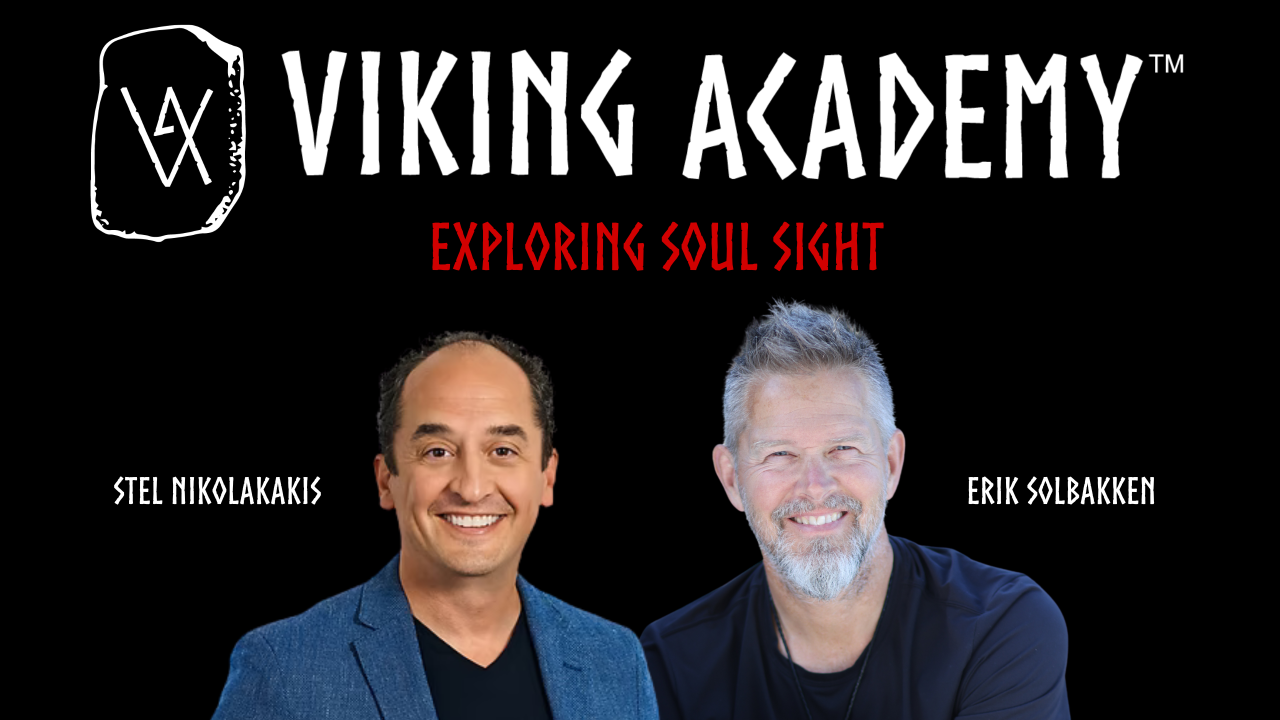
#30: Exploring Soul Sight with Dr. Stel Nikolakakis
What if clarity of sight could help you see your soul?
In this episode, I sit down with Dr. Stel Nikolakakis — Optometrist, Consultant, and Motivational Speaker — whose new book, Soul Sight: Lead with Vision. Live with Intention. Impact with Purpose. bridges the space between science, spirit, and self-discovery. Trained in the intricacies of the human eye, Dr. Stel has spent decades exploring how our physical sight and inner vision are deeply intertwined, revealing how we see not just the world around us, but who we truly are.
Through his groundbreaking Quantum Access Method, Dr. Stel helps people reframe the stories and emotions that once held them back, transforming trauma into wisdom and awareness into purpose. His approach combines neuroscience, emotional reframing, and spiritual insight to help others access higher frequencies of consciousness: what he calls Soul Sight, the ability to perceive life through the lens of purpose, presence, and possibility.
This isn’t just about seeing clearly: it’s about seeing truthfully: recognizing that every challenge, emotion, and relationship is a mirror guiding us closer to who we were always meant to be.
Topics We Explore:
- How Soul Sight helps you align vision, intention, and purpose
- The meaning of the Quantum Access Method and how to use it for transformation
- Why early experiences shape the way we “see” ourselves and the world
- Healing through reframing — turning emotional wounds into wisdom
- The connection between physical sight, inner perception, and spiritual growth
- How aligning thought, emotion, and energy unlocks your higher potential
Connect with Dr. Stel Nikolokakis: https://ca.linkedin.com/in/stelios-nikolakakis-88b71114
Get a Copy of Soul Sight: Lead with Vision. Live with Intention. Impact with Purpose: https://a.co/d/cV2ydlH
Learn More about The Viking Academy: https://www.vikingacademy.com
Episode Transcript:
Erik Solbakken: Hi everyone. Welcome back to the Viking Academy Podcast. Well, this week it's a buck and banger. We have Dr. Nick On the podcast, it's Dr. Stel Nikolakakis, but he like to call him Dr. Nick. We go off a chart here that I can't quite fully express and explain. He has a new book out called Soul Site. If you haven't read it, go read it, soul Site. Go to his website, drnik.ca, or amazon.ca or amazon.com. Get the book Soul Site. We are talking about what he calls quantum access method. It's a way for you to access the higher dimensions in the quantum realm to align yourself with your sole purpose. This was such an incredibly powerful. Podcast for me. It brought me to tears. I shit you not. It brought both of us to tears. It is so powerful if you resonate with this and you really want to know why you're here and what your purpose is, which is for me, the, the whole ethos of the Viking Academy. This is the podcast you wanna listen to. Holy hell, still is amazing. I can't say much more than that. Listen to the podcast. Enjoy. Let's go.
Stel Nikolakakis: Whats up.
Erik Solbakken: Whats up, dude. Whats up. Ah,
Stel Nikolakakis: I think that's how we start.
Erik Solbakken: Well, we the podcast. So
Stel Nikolakakis: tell me about the, ah,
Erik Solbakken: the podcast has already started, so yeah, so literally I've been just cleaning up. Nice,
Stel Nikolakakis: nice, nice place, dude.
Erik Solbakken: Thanks man. Thanks. Got my, got my Viking shield up there. Got my, Axe, got my,
Stel Nikolakakis: oh, unique
Erik Solbakken: ability, unique ability statement right there. Yeah. So that's to remind me of my mind, my body, and my spirit. Yeah. It's the idea. What do you think? I like the Dr. Nick be with purpose. That's good. That's my beauty. That's my beauty. Okay, let's talk about that, man. Let's talk about Soul site. That's why I got you back on the podcast. Like, dude,
Stel Nikolakakis: I listened. I listened to the podcast with Chad. Oh, recommend.
Erik Solbakken: Yeah, that
Stel Nikolakakis: was you guys, honestly, you pulled out stuff in him that I've never heard.
Erik Solbakken: Really
Stel Nikolakakis: just Well, because your questions, right? Like you're questioning and then you get engaged in one part of it going, okay, hold on. And you get outside. Go run. Okay, so how I take this? And he is like, well, it was really good.
Erik Solbakken: Right on man. Thanks. Well,
Stel Nikolakakis: it was really good.
Erik Solbakken: I'm hoping we can, we can pull. Let's pull another rabbit outta the hat with you and me talking. So talk to me. Talk to me. Tell me what's going on. Show me the book again. Show the,
Stel Nikolakakis: are are we on, right? Like, are we on?
Erik Solbakken: Dude, I told you the podcast started like we started right away. As soon as we started with the, we're doing
Stel Nikolakakis: the, it started at ah, ah,
Erik Solbakken: yeah, a hundred percent. Yeah. Yeah. We're not, this is, this is, I Don't Fuck around man. This is just, this is a conversation with me and Dr. Nick. Yeah. So show, show me the, show me the cover again for those who are listening, I go on the video. It's Soul Site, lead with Vision, live with Intention, impact with Purpose. Dr. St. Delios, Nicola Cki. Dude. And again, it stemmed. So talk to me about that. Where did the idea or this birthing of the book come from?
Stel Nikolakakis: Birthing is a perfect, word. Yeah. It was probably one of the hardest things I've ever done, to be honest with you,
Erik Solbakken: isn't it?
Stel Nikolakakis: Yeah.
Erik Solbakken: Yeah.
Stel Nikolakakis: And. It was probably 10 years in the making.
Erik Solbakken: Okay.
Stel Nikolakakis: And originally, Fabi and I, my wife and I were supposed to write a book together and we thought it was, would be a good idea based on our story and how much we help people in our own way to bring the, the mother and the father, the perspective of what we went through with, with Gabriel, who was born prematurely at 26 weeks, one day, two pounds. And, we lost his brother five days before, they were born. Okay? So Michael was still born and then Gabriel was born at that 26 week point. And because of all the personal development that we've done over the years and, our abilities to sort of overcome obstacles, and this was obviously the biggest one for both of us. we thought it might be a good idea to write the book. From the two different perspectives. We hired, a publisher and he asked us to write 10 chapters or just to list 10 chapters that were important to us based on our, the story. And Eight Outta the 10 were identical and we did speak to each other. Right. So it was, it was kind of interesting how congruent it was. But the two were too disconnected, where he couldn't put the story together. So then he finally said, what, we'll do two separate books. We'll have, the mom's perspective and then we'll have the dad's perspective and then due to finances and just time. And to be honest with you, I didn't wanna feel like I was in English class 'cause I hated writing, growing up. and Fabi iss a journalist, so she wrote her book back then, and then it's always been in the back of my mind to, to write it.
Erik Solbakken: what's her book called? What's her book called?
Stel Nikolakakis: From, surviving to thriving. Okay. mother's journey through infertility and loss. I think, I can't remember the second part of it, but
Erik Solbakken: Okay.
Stel Nikolakakis: And it's been up for a while, but, then, it's always been on my bucket list, right? Write, write a book. Write a book. And we both belong to Strategic Coach. And one of the things that they always talk about is the impact of writing a book. And again, I always thought it was just good for, business promotion, right? Like, it's like the best card business card you could possibly have. Yeah. That's not what ended up happening. It was totally different from what I expected. And then finally this year I just pulled the trigger and, and then decided let's do it. Right? And I had a book writer initially. She was amazing. And to be honest with you all, all she did was hold the space for the structure of the book to be created. And then I then had the ability to then put my, skills to work and make, make it happen, and then come up with this. Book that's here now, which it was a journey, let me tell you. And like I said, birthing was the perfect word. 'cause that's, and not that I know what it's like giving birth, but, that's what it feels like.
Erik Solbakken: Well, I've, well I've seen, we've, I've seen all my kids being born and, and I see how much pain the mother goes through. And so I can, I can totally attest to that. Like, when I wrote my book, it was so difficult. It's like, it's funny because Dan says Dan Sullivan, he says, writing a book is hard. Writing a hundred books is easy because if you do a hundred, you have to put a system in place and get a bunch of other collaborators to come in to help you with the whole thing. Right. so I totally can understand that now. So let's, I I'm really, I can't wait to read it. I can't wait to get the message in it. You're an incredibly deep thinker and. You're on. Every time I see you, you're just on the cusp of seeing something new. And then you explain something to me. And just like, sometimes, like just with Chad, you'll say something and it'll take a while for me to register it 'cause you'll be like seeing something that I don't see. And, and, and, and Chad had brought it to seeing di dimensional vision awareness is what he called it.
Stel Nikolakakis: .
Erik Solbakken: Bringing reality, bringing it down into this dimension, into this reality. Can you gimme a quick little, or maybe not quick, it's quick. So much quick. I wanna understand what the book, what, what's the structure of the book and the message behind the book. And, and I wanna dive into maybe some of the deeper concepts. 'cause I'm sure you're gonna have, I'm sure there's gonna be a bunch of times where I'm gonna read the book and I'm gonna have the head tilt wondering exactly what you said, and then la later it'll sink in. And then I'll go, oh, that's what he meant.
Stel Nikolakakis: Well, the, so the interesting thing, with regards to the concepts being. Wow. Like what is it that, he's talking about or Chad's talking about and, vision in general, what is it? And always trying to explain it. The one gift that the book gave me was structured to be able to then guide someone where they're at in terms of understanding, in this case, you're, you're bringing up, dimensional, vision and I heard the podcast and it was phenomenal by the way. And your ability to ask questions for Chad I just mentioned it was just incredible. and the main reason is like the way that you question you allow intangible assets or thoughts to come into tangible space. Okay. And, and if, if I can, I wanna explain what happened while I was listening to it and a conversation that I had about Chad with, What is it called? Di, some dimensional vision. What was it again?
Erik Solbakken: Dimensional vision Awareness.
Stel Nikolakakis: Dimensional vision. Awareness. Okay.
Erik Solbakken: Yeah. So seeing the multidi dimension, so there's multiple dimensions and his, the concept was, is everything, everything already exists,
Stel Nikolakakis: right?
Erik Solbakken: And alls you're doing is having dimensional vision, awareness to be able to
Stel Nikolakakis: Right.
Erik Solbakken: Collapse that dimension into this dimension. Right. Or to pull it down. Yeah. To bring it down into this dimension or
Stel Nikolakakis: bring it up. Alright. So, so here's, so here's the thing, and this is a conversation that we had post, podcast session with you, you and Chad. I asked him, and I said, so what you are talking about in the podcast was manifestation, right? And he's like, yeah, so you're manifesting something from an intangible source into physical reality. He goes, yeah, and I said, but here's the thing. You also mentioned, how about creativity and thoughts? How the thoughts have to be aligned in order to then manifest into physical reality. Okay? Now here's the thing. Most of our thoughts are running at an unconscious level. So if they're unconscious and we've been hit in life with certain things that are fearful, anger, sadness, attachments, any negative emotions or low frequency vibration, right? So if that's the case, how can we just think about things and then allow it to come into physical reality? Okay, so I'm gonna stop that thought for a second because what I want to do now that you brought it up, is bring awareness how to get up into that space of where dimensional vision awareness is to be able to access it. Because both of you were talking about, the, I think you used the knowledge of a radio and frequency and how it's always there, right? The, the, the, the sound of the music is always playing all the time, but until you dial into the frequency, then you hear it. But does that mean that it didn't exist before? No, it's always running. Okay. And now you tap into the frequency, but now the question is what specifically needs to happen in order for us to be able to tap into the frequency?
Erik Solbakken: Bingo. And that's, I think that for me, I like the way you brought up the word manifestation. I think manifestation in of itself as a word, is harder to think of than just bringing your frequency to a level where the thing already exists. So everything everywhere, all at once, right? Right. Like it's all there. And instead all you need to do is align your frequency to it, and then then you can pull it down into this dimension, into this reality as opposed to manifestation, which seems like. You have to somehow make it happen yourself. But we're not making it happen. We're channeling it back down through us b to happen. But, but the real question then becomes So, so I kind of like the difference between manifestation and collapsing a dimension into this reality. Yes. Which is, 'cause it already exists. Yes. So it seems, it feels to me easier because it's already there. I don't have to create it. It's like the creator created everything. He's now just given me the ability to go play with it.
Stel Nikolakakis: Right.
Erik Solbakken: It just feels easier. But the then what you're talking about is that's great. Now how do you do it?
Stel Nikolakakis: Right. And there, there was a conversation around the difference between the how and the why and, and in agreement why needs to lead.
Erik Solbakken: Why is, oh yeah. So Tammy Grantham, on the previous podcast, she talked about saying. Why is joyful and abundant, how is fearful and scarcity?
Stel Nikolakakis: Yes.
Erik Solbakken: And I was like, wow, that was just like that to me. Just, and that, that points again, back to all roads, which we met together on, which is Dan Sullivan in Strategic Coach is Dan is like an a world class philosopher and strategic coach is just a world class philosophy wrapped in a business blanket, but the who, not how. That's why, who not how resonates. Yes. That's why it feels so good, right?
Stel Nikolakakis: Yeah. Okay. And so, so think of, okay, so instead of the how, because if I say this is how you're gonna do it.
Erik Solbakken: Yes.
Stel Nikolakakis: We're missing it out. So here's the question Yeah. To the listeners. Okay. And this is how we tap into the why. Okay. How many of what your purpose is?
Erik Solbakken: Yeah. That's not an easy answer. Not an easy answer. Anybody if you're really, truly honest. And that's for me. The purpose of the Viking Academy is for people to go ex be explorers, be vikings, go explore your mind, body, and spirit so you can find out what your purpose is,
Stel Nikolakakis: right?
Erik Solbakken: Yeah.
Stel Nikolakakis: Okay, so, so what's your why or what's your purpose? Is the question that we're gonna start with.
Erik Solbakken: Yeah.
Stel Nikolakakis: Okay. Because again, it's about the listener now, and it's about them going through a journey with me and you facilitating the journey. How's that? Okay. I'm, I'm, I'm down there. And then the facilitation of the journey is gonna allow then to answer the question with regards to the book. So I have Soul Site, which gives me now an ability to have a structure where we can communicate what is it in the book that will allow people to understand how to lead with vision, how to impact with purpose, and how to live with intention.
Erik Solbakken: Okay.
Stel Nikolakakis: Are we good? Okay. Yeah. So, so now if we think in terms of why, okay, so 99.999% should be led by why you do what you do. Okay. And this is something that is ingrained innately in us when we're born. We talk about uni ability as strategic coach, but your purpose, your god-given purpose or universal given purpose, call it whatever you want, but your purpose and your, your unique ability you're born with, okay? It's hardwired in there. Okay? Now, as we go through life, we go through challenges, okay? Or what I call in the book, emotional bungee cords, okay? And we go through anger, sadness, hurt, fear, guilt, all these things because they're survival mechanisms, okay? And they're encapsulated in your story. So how do I start off the book with my story? Why? Because it allows other people to think about theirs. Okay for centuries, and God knows how long the power of the story and the metaphor is the best way in order to learn, understand, teach why? Because it automatically taps into unconscious awarenesses in that part of our brain. Okay? Just slow me down if I'm going too much. No, no, no. I'm
Erik Solbakken: just making notes here because there's a whole bunch of things that I want to kind of,
Stel Nikolakakis: okay. And I'll keep talking myself.
Erik Solbakken: No,
Stel Nikolakakis: just keep going. Interrupt time. Go, go, go, go. Okay, so, so now if we look at emotions in terms of now protective mechanisms, so think of fear and guilt. Okay? If we don't have them, we'll either kill ourselves or kill someone else. So they get embedded. But now they also mask a part of who we are, a remembrance of who we are. Okay? So over the years. Then what impacts us is we have, we're told what to do, how to think, how to be school, all these other things. And then our creative starts to then dwindle or be forgotten. So here's a question I typically ask when I'm lecturing. How many of you remember before the age of seven? First question, second question. What significantly happened? And we talked about this in the previous PO podcast, I think at the age of, of, 6, 7, 8, or nine. Okay. That stopped you from being creative, playing with dolls or superman or superheroes or whatever it is that we just had fun with. And back then it was just like anything was possible. We were dreaming, we were, playing, we were doing all these creative, fun things. And then something typically happens where reality sets in saying, Nope. Now you have to be serious. There is no tooth fairy. There is no Santa Claus. There is no. any, any like, imaginary friend, now you have to be serious and we forget. Okay. Now with that forgotten, you also get, and you forget a part of who you are.
Erik Solbakken: So do you, have you gone back yourself and figured out what happened to you at that age that stopped your creativity?
Stel Nikolakakis: Yeah, so what's interesting is in my, if you look at my life, I talk about it in the book where, everything was perfect. I class valedictorian, athletic, I was captain of every team that I was on championship teams, football, rugby, basketball, you name it. Right? and I always thought that my biggest and first challenge happened when we wanted to have kids and we had to go through three years of infertility. It's not when it started. Okay? My first. Moment happened the day that I needed to go see the optometrist. And I needed glasses 'cause I was nearsighted. I was the only one in my family. Okay. And it wasn't cool to have glasses back then, just like it wasn't cool to have braces back then. Now it's a little bit of a different animal. So here's me on the outside, super successful in every way. Right? Top of the class marks were amazing. Sports were awesome, but in the inside was a nearsighted kid.
Erik Solbakken: When and when did you get your glasses?
Stel Nikolakakis: , I was, nine years old. Eight, nine years old, somewhere around there.
Erik Solbakken: Okay.
Stel Nikolakakis: Okay. Okay. So, I, I look at what happened back then and was like, here's this event where it was hard for me right? Because of the whole thing about wearing glasses and being called four eyes. And, but I'd overcome it with other skills. Okay. But what people don't realize is what was going on internally. Okay. And the fact that I would go inside on a lot of things and how I felt, how I was who I became drove my results always. Okay. But there was always a part that was an inner 9-year-old that kind of stayed as an inner 9-year-old. And as I got older and going through personal development and, and being in, programs like Strategic Coach, and when they say growth a lot, they say growing pains. Well, what happens is that inner 9-year-old started to grow up, okay? And then that inner 9-year-old now with purpose starts discovering for what purpose did that happen for him? And what is it that I do now? I changed lives through vision and that moment was the turning point that is leading to what my purpose is now. But it came from a place of massive friction.
Erik Solbakken: Okay. I'm gonna take a jump up to a real meta high level here. Right?
Stel Nikolakakis: Go for it.
Erik Solbakken: Because. What I'm hearing you say, and what I've felt throughout my life is I've been, I've been frustrated. Like there's been a frustration that's been there and it, it, and I, and it comes out quite often. Even this morning, I was all frustrated. I was just, 'cause it's like there's something I'm here to do and it resonates with me at such a high frequency that when I get close to it, anything that gets in my way that's a blocker pisses me off and I get angry and frustrated and it's just, but there's always been a, an underlying frustration that I'm like, I'm not living the way I was programmed to live. Okay. So there's that, that kind of, for me, that underlying kind of gnawing.
Stel Nikolakakis: .
Erik Solbakken: But what I'm hearing you say is that the whole journey and the path of coming into this world, being open and. Saying, oh my gosh, here's this world. And you're creative and you're playing, you're, you're, you're, you're, you're playing with these imaginary friends and these dolls and all, and all of a sudden something happens in, in 7, 8, 9, boom. It crushes your creativity. Then you fall into conformity. You get reprogrammed. But all through life, I've been frustrated, and it's not until like I'm at 55 now and I'm finally breaking three, and I'm going Now this is what I'm here to do. The whole journey though is purposeful.
Stel Nikolakakis: Yes.
Erik Solbakken: That I, that's the meta, I guess I'm trying to get back to, is going to, there is an overriding plan to the life known as still, and this is how it's played out.
Stel Nikolakakis: Yeah.
Erik Solbakken: But then having seen it now, having seen it and sharing it with others, if we could come into this world knowing that everything that's happening is happening instead of to us, it's for us. Then I think you were the one who shared with me. He goes, but it's not happening to me anymore. It's happening through me. So that's, that's complete surrender of, shall we call it, the timeline of your life, knowing that you're going to your destination.
Stel Nikolakakis: Yeah.
Erik Solbakken: Right.
Stel Nikolakakis: Yeah. And again, the the one thing I wanna share, okay, and you're included in this, is there's a bunch of people that have intangible assets that we're trying to figure out how is it that we can apply those intangible assets so that they can make an impact. Okay. Based on that individual's purpose.
Erik Solbakken: And this is what you were coming back to saying, when I was having the communi, when I was having the podcast with, with Chad, somehow when we were having the conversation, these intangible assets got pulled out and. Exposed. Yes.
Stel Nikolakakis: Yeah. And, and again it was an amazing explanation into something that's massively intangible that we have all have access to. But the question is how do we provide a tangible roadmap to get to that frequency that you guys were referring to
Erik Solbakken: so that you can see the, see the,
Stel Nikolakakis: this is, this is Soul Site. This is
Erik Solbakken: Soul
Stel Nikolakakis: Site,
Erik Solbakken: yeah. Okay. Soul Site. So it's the soul site. How can you see so that you can elevate your frequency so you can at go into that frequency.
Stel Nikolakakis: Alright, good. You, so here, let me, let me throw something Maggie, 'cause I know it's gonna excite you. So again, I am a vision guy. Okay. So why would I call my book Sole Sight and Not Sole Vision?
Erik Solbakken: , well that's a good question. I, I'm gonna throw one out there. 'cause a vision is something that comes to you in terms of seeing a possibility and a creativity sight is seeing what's already there.
Stel Nikolakakis: Yeah. Right. So site is site. I'm seeing 2020. I see it. I'm seeing all these things.
Erik Solbakken: Yeah.
Stel Nikolakakis: But the key word in this is Soul Site. Okay. And the way I want you to think about this, have you seen the movie, inside Out?
Erik Solbakken: Oh yeah, of course.
Stel Nikolakakis: All right. So that's, I love that. For those of you that haven't seen it, it's a girl and all the emotions are looking through her eyes, looking out, okay? So everything's happening internally with the eyes, which are the windows outside of her soul that's running all these unconscious patterns and emotions that Disney's brilliantly created out of a movie or a story. Okay? So what you said is, so we're living life and it's happening for us. Okay, well what We're going through it. It's like, why is this happening to me? Why me? And all these other things start coming up, right? But it's part of the human existence of going through things that happen to us initially, but at some point it happens for us. When does that happen? Well, if we make the assumption that we're born with the purpose or we're born with unique abilities and now we're going through life, what happens if our soul is now looking through our eyeballs to perceive what is this perceived reality or how can we change or create the reality based on what our sole purpose is, our sole impact, and then our sole unique ability. Okay. So think inside out.
Erik Solbakken: Okay. Yeah, you just turned my brain inside out. 'cause I could go down so many different rabbit holes. Just as a, just a side note here. So for example, like with, I've been touching on an ethos going like. I believe that humanity needs an an upgrade. I think we're running on old software and we need to upgrade it. So, 'cause we have old programming, right? And so it needs to be upgraded. It's interesting, when you look at the Disney movies, they all used to be, the, the, the heroin and the heroine or the, the, the, the damsel and distress and the, and the mighty, prince comes to the rescue and then they flipped it around and said, no, now it's gonna be the princess. Saving the prince from the rescue. And inside out was the first time I think that Disney finally went. Let's look at what our overriding purposes and how our psychology interacts with that overriding purpose. That movie Inside Out is so deep and so off brand for Disney, I almost feel like it's an indication of. A shifting in consciousness on a human on over, over the entire planet because it's, it's just a manifestation that we're starting to think differently because now this, this new movie comes out from Disney and it, people might think, well, you, Disneyland well has nothing to do with upgraded consciousness. I would disagree. 'cause it's all part of it. Right. We're all part of that, that kind of overall consciousness. So, and, and then finding your purpose. For me, dude, like that's been my, like, that's been a driving force for me almost from day one. as a or from that kid. And I'm, I gotta go back and think about what the hell happened to me, where I've just constantly felt a little bit frustrated going, how do I fit in here? Like, my question's always been, how do I fit in? Because I honestly don't feel like I'm part of this world. Like, I don't, like I, I, I feel like I'm just visiting this planet. Because I look around and I see the way everybody's behaving and acting and carrying on, and we're social creatures to taking social cues. But I've been like, I've never felt like I fit in. Right?
Stel Nikolakakis: Yeah.
Erik Solbakken: Until I have a conversation, until I have real conversations. Like, I fit in with you, I fit in with Chad, I fit in with the people that have had on the pocket. All of a sudden it's like all of a sudden now I feel like I've, I I've, I've found my tribe or my people that it I fit in with. Do what?
Stel Nikolakakis: Yeah, yeah. okay. Let, let me, here, let me, let me set it up so that we can, we can have the conversation so that, we can meet all the listeners where they're at. Please do. Okay. Please do. And then this way, this way, 'cause I think there's a lot more people than just us that sometimes feel like we don't fit in. Right. And the one thing that I always try to do. Is to allow the other person to feel seen, heard, and understood where they're at. Okay. And speaking to their listening, so the, the, the, the thing with the book, and I'll go to in a second, why it was difficult is because I had to lay out everything in terms of my path from the challenge to starting to discover my purpose. Okay. Because I'm sure it's gonna be different five years, 10 years from now. But at least the book guides the, the reader to say, look, here's my story, but here's now where the story led to. Here's the impact that it's making. Here's who I've become and here's my unique ability and how it's being applied. Right? Okay. And what I've come up with is what's called the quantum quantum access method. And even that was purposefully created with those words. So I'm gonna go back to your podcast with Chad talking about how do you bring that frequency or the, all that stuff that exists, okay. Into reality. And if we think of the words quantum access method, now, there's a method to access that quantum frequency, wherever it is that you think is important to you, and more importantly, where it's linked in terms of how you feel connected to that idea. Okay? One of the things that we talk about in NLP is the bridge between thoughts, feelings, and actions that then bridge into results. Okay? So I'll repeat that one. Thoughts, feelings and actions that bridge or equal or lead to results. So let's break that down. Okay. So what thoughts are we talking about? Well, how many thoughts do we have in our mind?
Erik Solbakken: Ungodly amount.
Stel Nikolakakis: Ungodly amount. Okay. Crazy. So, so if, if we get into our heads and we start thinking about all the things that we think about. Okay. There's 1,000,000,002 that are out there, right? You and Chad talked about quieting the mind and being in a space when you first wake up and come up with an idea or a thought. And if you don't do anything about it, it becomes somebody else's idea. And then they make billions and billions and have huge impact. They're like, holy cow. I had that thought three years ago. Alright, so a thought's, one thing. Okay. How those thoughts get created and who you're surrounding with and how you're getting inspired and, okay. Matter. Why? Because it needs to be in a positive format. Okay? If the thought is negative, guess what? You're gonna create lower frequency. Now, here's the thing, sometimes we can't help those thoughts because we've already been hit with a negative emotion that drives that behavior and we don't know why. It's kind of like what you just said. Now I get this frustration, I dunno where it's coming from.
Erik Solbakken: Right?
Stel Nikolakakis: Okay. Now if we quiet the mind somehow, okay? Whether we meditate, whether we do the internal work, whether we reframe the past, whether we start understanding why things are happening for us, there's a whole bunch of different methods. The thoughts become clearer, okay? And the creative thoughts, oh wow, I just came up with an amazing idea. How many times has that happened to you? Oh my God, I just thought of something. Whoa. I don't know where that came from. Okay, that's one part. Second part, you have to have the emotions connected to it to fuel it.
Erik Solbakken: That I completely understand.
Stel Nikolakakis: Okay.
Erik Solbakken: I completely understand that.
Stel Nikolakakis: And, and it needs to be heartfelt. It needs to be connected. It needs to be, oh, it's just you can viscerally charge this thing 'cause you just know it's gonna happen. Or even better, it's happened already. Okay. And what does it sound like? What does it sound like for the non-typical ones like us? Oh, you're being unrealistic. Oh, come on. You're being too positive. Oh, stop that.
Erik Solbakken: Exactly. Exact. Oh fuck. You've been reading my mail, man. Holy crap. I'm sitting there, I see a vision for a client, like one of my clients and, and, and, or my business partner. I'm talking about this vision I have for the business and it's like, I can taste it, I can feel it, it's exciting, it's energizing. Let's go do this. He is like, oh, we can't do that. No, that's too much. Like there are, people are just like, no, no, no, we're not gonna do that. This doesn't go work. That doesn't work. And I'm like. How can they not feel and see what I feel and see, like if I had a, like, I wish I could have a way of transferring my excitement about something to somebody else. Do what? So they could see it. Do what? Can you not see it? Taste it, feel like, but
Stel Nikolakakis: okay, so can I, can I, I might challenge you a little bit here, but let's go with it. Ready?
Erik Solbakken: Yeah.
Stel Nikolakakis: If your excitement on your idea, okay. Is impacted by someone else's response that you're responding to. Now the question is, when's the first time that happened? What's the emotion of the impact of what their response is that's negative on you? Is it frustration? Is it anger? Is it resentment? What is it?
Erik Solbakken: Oh,
Stel Nikolakakis: okay. Because we have to label it. And then once we label it, now the question is, when's the first time that happened? Now, you, you may not be answering this right now, Eric, but I, it, it plays perfectly in how the book unfolds when you have that initial event. It's always in an unconscious state, so there's no way you're gonna remember it consciously. Okay. So let's say for example, do what the emotion was when the first response?
Erik Solbakken: Yeah, yeah, yeah, yeah, yeah. Sorry, I'm just, I'm, I'm having a big kind of aha moment here. I've always felt like my parents never, never bel believed, not believed in me, but yeah, believed in me or every time I'm, I live loud and large. Like I, I used to do that as a kid. I was loud, I was entertaining. I would just entertain and I would be out there, but I remember the first time I was told to stop it or that like to just, and then it was like, for me, it was the feeling of not being loved for who I was. That's it. It's the feeling of not being loved for who I am.
Stel Nikolakakis: Okay. So if, if you were to say, what's the emotion that's attached to that, what would you say it was? That's right, because not not feeling loved is still feeling loved in a different way. So now the question is, what is the negative emotion that you experienced with that in mind, with that context of not feeling like you're loved?
Erik Solbakken: , I think it all comes down, ultimately, it all comes down to a fear of not knowing who I am and what I'm here to do.
Stel Nikolakakis: Okay. It's
Erik Solbakken: fear. I think it's a fear thing. It's
Stel Nikolakakis: just so there's a fear thing, right? Yeah. So's a fear of not being li there. There's gonna be something, and I don't wanna get, get much too much because we don't want to. But here's the thing. If you think back to the first time you had that fear, okay? If you have to think about it, it's, there's no way it could be the first time, right? Because if it's the first time, you have no comparable to it, and it's the first time that your unconscious took it on. So when we're talking quantum access method or co vision, or in vision, or vision or all these other things that I talk about in the book. It's using tools to tap into that unconscious space to reframe that first unconscious event.
Erik Solbakken: Got it. And that's why it's such a hard, I'm having such a hard time coming back and finding that first event. It's a feeling, it's an inkling. And, but, but I tell you, I can definitely feel the negative energy whenever somebody doesn't believe in me or doesn't, doesn't see what I see. Or, yeah. And if, and I can sense that it has something to do in the back. Okay. Cool. Alright.
Stel Nikolakakis: Is that cool
Erik Solbakken: now? Okay. Yes.
Stel Nikolakakis: Okay. And, and, and what happens now is if we ever we of tapping into that event at an unconscious level, right. So for me, I use timeline therapy. I use what's called Olympic balance method. Hypnotherapy works as well. So, and neurolinguistic programming just depends on the modality. But now you have a way of tapping into that space at an unconscious level, reframing it, 'cause there's always a positive attached to it. Always. The second it gets reframed, every event attached to that emotion disappears. And what you're left with is the gift. Okay? Now at an unconscious level, right? So all of a sudden now you're running unconsciously the emotion that is fully engaged in the purpose of why you're doing what you're doing. Okay? Now, thoughts, click. Feelings have just been reframed. Click. Now you put the action in place when you have full alignment to higher frequency. Now, because fear has just become love, for example, okay? It's just gotten reframed. 'cause you're gonna see a perspective that's usually the opposite, which you've already worded. Let's assume that love was always there, but it's attached to this fear. Now the fear is gone, and what you're left with is the love that you are. Boom. You now have a the highest level of frequency access in terms of the feeling that you're putting to the thought of your purpose. As soon as you start moving into action, results have to show up. That is what you guys were talking about with, with Chad in terms of bringing things into, do you see the link? Oh, shit. So think of it as up. So we just went up and then what you guys were talking about is bringing it back down again in a cycle. And if you wanna explain it so you go ahead and explain it now, because if the listeners haven't listened to the last podcast, I highly recommend that they listen to both now, because I think they're gonna get a perspective of what Dimensional vision awareness is now with leading up to the awareness of what that dimensional vision is. Okay. The work that you need to do, okay, you have to work, okay, then you start becoming aware consciously of things you've already created. And we forget about that. And these are the positive things of thinking back over the last 10 years and going, tell me the amazing things that you've achieved. Well, wait, what? No, but let me tell you about the problems. No, no, no, no. Tell me about the amazing things that you achieved. Why would I start there? Why At Strategic Coach, it's always this talk about the positive focus is first, because it automatically starts bringing awareness of things that we've already done before, which increases the frequency of you and everybody else in that room. And now you have an ability to create a newer, larger cycle, the same cycle that you weren't consciously aware of before. Okay.
Erik Solbakken: Okay, dude. Holy shit. Okay. So if, let me see if I can just repackage and, and, and summarize what you just told me. So Chad and I talked about quantum. Vi dimensional vision awareness.
Stel Nikolakakis: Yes,
Erik Solbakken: it's awareness of the multi-dimensions, awareness of the fact that everything's already already there. And alls we need to do is collapse it. Say down into this reality. Quantum access method shows you how to access that to break it down, to bring it down into this reality, and it's all stems on. The access point is reconnecting with your sole purpose, and once you go back to that age 7, 8, 9, where that first negative association that we'll call it, the programming that happened to have you forget who you were and why you're here and what you're here to do, the process that you're talking about, the, some of the processes that you do to help clear that away, opens that channel up so that it reframes the pa the negative past experience. To take away the negative emotional feeling. So what you're left with now is all the positive, positive feeling, which is the key that unlocks the quantum realm. Holy fuck. Okay. So yeah, I'm a little, I'm okay. I want that. I want that.
Stel Nikolakakis: The thing is, you, you, you have it.
Erik Solbakken: I know I have it.
Stel Nikolakakis: Okay. I want to remove the, and the reason I, I'll tell you the reason why I know you have it. Yeah. And again, it's easier when somebody on the outside, okay, can perceive what this soul site is doing that he may not necessarily see yet and fully.
Erik Solbakken: Okay.
Stel Nikolakakis: Okay. I don't, can we say what you're doing in terms of coaching? Do
Erik Solbakken: all of it.
Stel Nikolakakis: Okay. So you're, no,
Erik Solbakken: this is an open book,
Stel Nikolakakis: man. Okay. I just want to say, so you No, no, no. We talk about it, right? You've taken, you've taken on the role as a strategic coach. Coach.
Erik Solbakken: Yes.
Stel Nikolakakis: Okay. And one of my colleagues who's also neuro visual optometrist is one of your, students.
Erik Solbakken: Yes.
Stel Nikolakakis: Yes. Okay. And here's now where I say to you, for what purpose did you take on this role as strategic Coach? Coach?
Erik Solbakken: Oh, I, to help people remove what's blocking them so they can create, express it. It's
Stel Nikolakakis: all, it's all, it's all the same thing, right? You got a whole room full of people that are like us, that want to be seen, heard, and understood at the deepest of levels. Okay.
Erik Solbakken: Yes.
Stel Nikolakakis: And if it's okay, I'm gonna read something and you'll see, here, let me read this, and then I think it's going to talk to a bunch of people that are listening. This is my chapter 10. Ready?
Erik Solbakken: Okay. Yeah. Yeah.
Stel Nikolakakis: Helping those who always help others. It's the title.
Erik Solbakken: Okay.
Stel Nikolakakis: Okay. And I may be speaking to somebody right now.
Erik Solbakken: Yeah. Mr.
Stel Nikolakakis: Yeah.
Erik Solbakken: I got it. Yeah.
Stel Nikolakakis: All right. You ready? Most poop, people who find their way to me share one thing in common. They're helpers. They're the ones others rely on. Parents, entrepreneurs, leaders, teachers, healers, caregivers and coaches, and strategic coaches.
Erik Solbakken: I think I've, I think I've got what you're getting at. I'm, I'm picking up what You're laying down here. Keep going.
Stel Nikolakakis: Yeah. The world leans on them because they show up strong, capable, and steady. Now let me pause there for a second. Okay.
Erik Solbakken: Yeah.
Stel Nikolakakis: Again, you don't need to respond to this if you don't want to, but, do people say to you, oh my God, you're so strong.
Erik Solbakken: Yes.
Stel Nikolakakis: , you're such a strong, you're so confident. You're so strong. Right?
Erik Solbakken: Yes.
Stel Nikolakakis: So they see the outside now, only where that strength cultivated from. And usually it showed up from a massive challenge that you've overcome some way or when there's that much energy coming out in terms of the strength that you are.
Erik Solbakken: Oh yeah. That's my, that's my fall into alcoholism and my recovery is that, that's a huge part of it. And all the failures I've had in my past and all the, the negative, all the negative things that have happened in my past is the raw material that makes me who I, all the positive things I am today.
Stel Nikolakakis: We good? And then the other thing is, I love the fact that you call yourself the Viking. 'cause again, it's the, the power.
Erik Solbakken: Yeah.
Stel Nikolakakis: , we've talked about this before, but there's ancient wisdom and power that comes through you all the time.
Erik Solbakken: Yeah.
Stel Nikolakakis: So here's strong, here's powerful, here's all these amazing strengths. Okay? But now you're helping everyone else. No problem. You've done the work to get to this point, which makes you a very credible coach, very credible in terms of the way that you ask questions on podcasts, interesting, unique, all these other things. The story of where it came from. Only, well, I shouldn't say that. You're willing to share your story because you just did. Again, it's like, listen, alcohol, all these other things, which then allow other people to go, huh, this guy's really relatable to me at so many different levels, right? Because if I'm an alcohol, if I'm, addicted to alcohol, now I'm gonna go, bro, help me out. 'cause I'm where you're at. And then you're gonna say, why is it important to you? Well, listen, I gotta, you're gonna hear the purpose of it, and all of a sudden, the soul's gonna be speaking to you. All right? So let's move on. the world leans on them because they show up strong, capable, and study. But here's the question I always ask. Who supports those? Who always support others? Okay. Helpers. Helpers rarely pause to ask that for themselves. They give and give until their body tenses their relationships thin or their soul whispers in the quiet hours. Is this all there is? Okay, now think about that question for a second. How many people do we know that look and are massively successful financially? For example, okay, but they're missing something.
Erik Solbakken: Oh, dude, that's like so many, so many entrepreneurs. They, they've got all this money, wealth, and then they get to the point and they're like, what's the purpose? What's the point?
Stel Nikolakakis: Right? They have all the time in the world, they have all the money in the world, and now they're going, now what? Okay. Now in coach, right? Dan came up with the four freedoms. So you got the, freedom of time, money, but on the opposite side, the freedom of relationships and purpose, okay? Which to me are more intangible than the time and the money. Now, here's the thing. If somebody's created that much financial abundance or freedom, usually the only way that can happen is providing massive value to get the energy of money coming back to them. So they're helping somehow.
Erik Solbakken: Yeah, I, I honestly, I feel like money and wealth is a scorecard. Like it just should, like how much money you make is a reflection on how much value you've created in the world,
Stel Nikolakakis: right? So it's there, but there's, what's going on internally is a whole different game, which is what we're talking about now. Okay, let me continue on the outside. They look unstoppable. On the inside, something is quietly unraveling. They may find themselves overworking, unable to switch off self-soothing with screens, alcohol shopping or chaos, stuck in chronic fight or flight patterns, feeling emotionally numb in their closest relationships. Okay? And I would probably argue that the closest one is with themselves. Okay,
Erik Solbakken: that's
Stel Nikolakakis: that. And then lastly, haunted by the unrelenting voice that whispers. You're still not enough.
Erik Solbakken: You've been reading my mail.
Stel Nikolakakis: I'm just, it's just a story, Eric. it's just a story. I
Erik Solbakken: think you're a stalker, man. You've been stalking me.
Stel Nikolakakis: So last little quick. Okay. This last paragraph, these patterns don't mean they're weak. They mean they've carried responsibility for so long that they've lost sight of their own needs. This is the paradox of the helper. They save everyone else while quietly running on empty.
Erik Solbakken: Yeah, yeah. Yeah. That, what, that would be my wife, Erin to a t. She is like the constant helper mode and she's so powerful and strong that she's just, yeah, yeah. It's both of us. I would, I would hazard a guess that it would be, at some level, I think it would almost be every person, but I don't know, like, 'cause I'm, I,
Stel Nikolakakis: I don't know if it, I don't know if it's every person per se. it may be, but I know for a fact, well, I shouldn't say for a fact, but entrepreneurs, okay. That have an impact and however it shows up, whatever scorecard it is. I would argue that they have a helper or an impact something in terms of what I just read. Okay. And again, you go back and I, I, again, I would argue that it usually stems from their story of something that they would've wanted or that they've experienced or, okay. And the reason I bring it up, we talked about it last time, but in, from a NeuroVisual standpoint in the optometry clinic, the amount of kids that we see with a DD diagnoses is unreal. Okay? And again, I'm not big on labels, but they tend to be the smartest kids in the class, and they usually tend to be the best entrepreneurs. Why? 'cause they've learned to strategize differently. Their neurology works differently. They, they visualize differently. They see things differently. But here's the thing, they spend so much time going, I'll show you guys what I would've wanted. Let me help all of you watch what I'm gonna do. Now at some point you go, okay, what about me? Okay. And the way that you do that, and I said, the relationship with self first. And I, I know you and Chad talked collaboration a lot. For me, the most important collaboration is between you and that inner 9, 8, 7, and 6-year-old version of you.
Erik Solbakken: I can totally see that now. See what I did there?
Stel Nikolakakis: Ah,
Erik Solbakken: I thank you.
Stel Nikolakakis: Yeah, baby, you go. But that, that's what makes you a great coach though, Eric. 'cause the thing is you're relatable, so many different levels and you share stories and you're real. Like it's not hidden behind any type of agenda. that the reality's gonna come out and this is exactly what happens with your questioning. 'cause you ask out of curiosity for you, okay? And then everybody can relate because now your curiosity and your stories penetrate. And I'm listening to what it is that you're saying and I'm like, holy cow, I just realized something for me. But how on earth does your story all of a sudden impact my story? Because there's gonna be relatability in terms of understanding, not just the challenges. I've never had alcohol issues. I can't relate that way, but I can think about the challenges that showed up that you go, oh, well, Stella's challenges weren't that big. Why? Because I needed glasses. What? It has to be big like this addiction in order to, to stand out. Okay. One of the things, and again, stop me if I'm going in too many different directions, but one of the things that I talk about in the book, I start off heavy with the challenge with the, my twins. One didn't make it, the other one did. But for the first time, I talk about the story of my oldest son, the one that didn't have the challenges, the one that didn't have all these emotional things that were attached to it says, who? Why? Because he's the captain of the football team now, and he's doing well in school and he's accomplishing so many things. He didn't take on any emotions in terms of what happened and the impact that it had on him. Why? Because it shows up strong. Sometimes it's the one that is never seen and perceived as the perfect one. Okay. That once they're seen and heard and understood at the highest level, make the biggest impact globally. Okay. So it doesn't have to be the biggest perceived challenge. We don't know what's going on in terms of what's going inside somebody's, somebody's psyche. And the thing that excites me with a lot of the global leaders right now and entrepreneurs, including Joe Polish with Genius Network, strategic Coach has the youth component. So, and then Chad now with Collab has collab youth, which Thomas, the old, my oldest son, is one of the first two that's part of the youth entrepreneurs and collaboration of the youth. genius Network has genius youth. Okay. Working with young people. Okay. And then Strategic Coach has a unique edge, which is a program for young people. Yeah. Okay. And it's brilliant because the thing is the youth is the change. But here's the thing. If we help the youth, guess what else? We help ourselves. Okay. Because there's an inner youth in each of us. Okay. And sometimes letting go and being aware of what the young people are doing, allow us to learn too. So that's a whole lot of different tangent, probably a different topic, but I think it's hugely important. 'cause, what the younger generation is doing right now for me is impressive. The, the young ones that I'm coaching right now, the under thirties, which I love, love, love the things that they're doing. you, it's kind of disruptive, which is kind of cool. 'cause I like that type of thing. Like the, the Greek Viking in me comes out with that. but I don't look at it in disruption. Like there's, it's, it's, it's, to me, the system needs to de. de it needs to get, de structured, I guess is the word, in order to structure this new, Better versions of, of area every area, which is what you alluded to before. So anyways, I'll leave it to you.
Erik Solbakken: Yeah, there's, there's a creation, destruction cycle that needs to happen. It's like anything, like all of a sudden now we're in the fall here and the leaves are starting to fall. Fall from the fall. Huh. I wonder where they came up with the idea of naming it fall. and, and everything's starting to degrade, or the forest fires come through in the summers and they burn everything down and everybody goes, oh, it's such a tragedy. I'm like, no, the earth is just cleaning itself. It's just, it's dying so that something can live. So when a tree falls in the forest, it sits there and then it degrades and then it puts the nourishment back into the ground. So then new life can be, be sprouted. So I'm totally on side with, with things needing to dis to die for other things to live. interesting that you were talking about the youth part. Chad Johnson, have you talked to him about what he's doing next? What he's looking at? He's. It, the book called The Preparation, and it's all about showing young men how to prepare for life and not to think about going to college and all the, the traditional roots. But it's that whole kind of coming back to the your sole purpose and your roots and becoming a, what is it called? A, a, a curious, courageous and dangerous man. Not in a bad way, but in a, in a, in a, in a viking kind of strong way, but, but connecting to who you are. for me, it's, it's all about like, who am I and how do I fit into this puzzle piece? Because you mentioned something about like, I'm relating to you right now with my stories and I'm being open and sharing about my alcoholism and all the rest of those things that have happened to me in the past. I used to be afraid to share with people truly who I was, and it has only been in the last little while that I finally just went, what? Fuck it. Love me or hate me. There's no money in the middle. And, and I'm, and I'm finally starting to get okay with that. But when I can just be myself and ex creatively express myself like this, I find it so energizing and joyful and easy. And the people that resonate, we resonate with me. I'm, they get attracted to me so I don't have to go out there and promote myself. Do what? Like, I don't have to go and promote and try and sell to people. 'cause I hate selling. I really do hate selling, but I love being who I am and just
Stel Nikolakakis: so, so
Erik Solbakken: radiating on that level.
Stel Nikolakakis: how you said, did I read your, your mail?
Erik Solbakken: Yeah, yeah. Yeah.
Stel Nikolakakis: Have you read my book? No, for sure. Right?
Erik Solbakken: I haven't read your book yet. No. Yeah, that. As your book, it's book out now. Right? Because when we book the have
Stel Nikolakakis: the podcast, you said it
Erik Solbakken: hadn't been published yet.
Stel Nikolakakis: Yeah, it was supposed to be published on October 25th. And I don't know, it just coincidentally it got published last week. So maybe it was, it was meant to be because we, we had to cancel it last podcast. It literally came out after. Yeah, I know, I know. After the cancellation.
Erik Solbakken: Yeah, yeah, yeah. Well,
Stel Nikolakakis: and now we're here.
Erik Solbakken: Timing's everything. I No Soul Site. I will be going for, I'll be buying that. Like after I get off the podcast, I'm ordering it like that's how quick it's gonna happen. But there's a chapter on who am I? I like that.
Stel Nikolakakis: Yeah. It's
Erik Solbakken: so, so let's get to, I wanna get into a little bit on how you help people unlock what you just said. Going through the Quantum Access method. you're, you're coaching and teaching people, or you do one-on-one. Do you do a group? Like what are you doing right now? And, and I'm telling you this because I'm very curious for myself. 'cause what you just told me, the transformation of going back and finding that, and do I want that? Okay. Like, so talk to me.
Stel Nikolakakis: , okay. So I'll, I'll read, so I'll, I'll read out what site, because it's an acronym too. Okay. Like, it's, it, it's not, again, site is the sole with the site, but what is the sole seeing? And it's, there's an acronym for site, right. Which I've IPD now. And, it's gonna get trademarked, but, so this is what say s survey the cracks. Okay. And one of the, and I don't wanna give the book away, but one of the, running sort of metaphors in the book is the doors to the unknown. Is the one. And again, as entrepreneurs we tend to act in spite of fear and go, okay, what's on that other side? Now, certain things in life, you have no choice but to cross those doors.
Erik Solbakken: Viking explorers completely in alignment. The Vikings went and explored the unknown. I love this. Okay, keep going.
Stel Nikolakakis: Okay.
Erik Solbakken: Yeah.
Stel Nikolakakis: See, this is why life having conversations with you. So you color commentate these things and I'm like, okay, I got another idea. The problem is I have 50,000 ideas in my head right now, and you're giving one hour on the podcast. Okay? Okay. The second thing is, the metaphor of the cracks, okay? And I'll use the example of a fellow. I don't know if he's a good coach anymore, but, mark Fujiwara is big, big, big. He's Japanese of descent, okay? He's Japanese descent. And, they have these unbelievable Japanese values.
Erik Solbakken: Yeah.
Stel Nikolakakis: Okay. And one of them, ugh, I'm forgetting it now, but anyways, I can't remember the name, but, NA Ichi Goji. Anyways, one of them is a value of imperfections. In other words, it's through the imperfections or the cracks that you discover, the gold. Okay? And one of the, the, the exercise that we did with him, which was amazing, is we took a, a, a bolt, like a ceramic bowl, a small bolt, and we dropped it on the ground and it broke into pieces. Okay? And then the whole process was to take the pieces and glue them back together with gold glue, okay? So that you have this metaphor of this, this bowl, ceramic bowl that you put together. And it's like now all of a sudden it's the cracks that you're aware of that you put together. Now that become the newer version of that bull, which is meaningful. It's got meaning to it. It has a way to express what those cracks were, what it, what it means to that person.
Erik Solbakken: Okay. And the beauty of the bowl is not in the bowl itself, it's in the fact that you've got the gold in the cracks.
Stel Nikolakakis: Yes,
Erik Solbakken: yes. That is the, that is the art. Yeah.
Stel Nikolakakis: Okay. So serving the cracks.
Erik Solbakken: Yeah, serving the cracks. I two I is imperf. Oh, that, so that's
Stel Nikolakakis: not that. Serving the cracks, serving the cracks is, is number one. That's s Got it. I investigate the unconscious.
Erik Solbakken: Okay.
Stel Nikolakakis: So here's the exploring Mr. Viking. Okay. By being open and understanding that there's two parts of our. Brain. I'm super simplifying this, but we're saying we have our conscious mind, we have our unconscious mind, the conscious mind. Most people know it's the reasoning mind. It's the analytical mind. Right. But the unconscious mind is where the emotions are. It's in the domain of the, of emotions, but, and also protecting the body. Okay. Or we call it the autonomic nervous system. The example I give is when you're sleeping, it's not like you're thinking about it. Your unconscious mind keeps you alive. Okay? Yeah. But it's in the unconscious where when we investigate is where the gifts lie. Okay. G, grasp the identity. So here's your I Am chapter. Okay. Okay. Once, if we don't do the exploring, unconsciously, you're, you're gonna run patterns and Lee Brower. Our coach, right. did this exercise with us and he said, I'm gonna say something and you're just gonna respond with one or two words after my statement. And he said, I am. And you come up with what comes afterwards and you'd be shocked how many people run programs of, I'm not enough, I'm stupid, I'm useless, I suck, da da da. Okay. These are unconscious programs. When you grasp the identity, the true identity, by exploring the unconscious and being able to then reframe it, which we talked about today, all of a sudden the I am changes unconsciously I am stupid, becomes I am brave, I am fearful, becomes, I am lovable. I am
Erik Solbakken: okay. You just, yeah. Okay. So you just, I gave me a huge unlock there. So. I've gone through and surveyed the cracks. 'cause that's part of the process that I do with my, the AA program. It's part of that. It's going in and surveying the cracks. Investigating the unconscious is figuring out what has been triggering or what has been driving my behaviors good and bad in the current moment based on the past. I call it traumas. I was gonna bring that up too. Like the word trauma has a what is traumatic to one person. Maybe not necessarily traumatic to another. like what you were saying. I go, okay, so you've got the, the, the, the, the glasses was an issue for you, but I might say, no, it was my alcoholism for me.
Stel Nikolakakis: Hey, you're back.
Erik Solbakken: We just, we disappeared for a split second there. they'll edit, they'll edit that out. Don't worry about it.
Stel Nikolakakis: Okay.
Erik Solbakken: , sorry. So where I was getting at was this, I was having this aha moment where what you said makes total sense because now when you say to me, if you said to me. I am blank. Fill in the blank, Eric. If you say I am, I would go, I am Viking. That's the, that's what I say now. Yeah. What are you? I am Viking.
Stel Nikolakakis: Yeah.
Erik Solbakken: It en it en encapsulates everything for me. And that is powerful, strong explora exploration. no fear of the unknown, or should I say fear of the unknown, but doing it anyways, right? Yes. and it's totally reframed the way I've, I've been thinking. So I, I get it and I, the answer is yes. I, ladies and gentlemen, I endorsed this message. Okay. So keep going, keep going. You got,
Stel Nikolakakis: okay. So, so again, I'll, I'll so grasp the identity, right? So again, like again, you say, I am Viking. I can feel it. Okay. I could feel it. It's like your whole essence. It's your whole being. Okay. But work backwards. Where did the cracks come from? Where were the cracks? What did you explore in that unconscious space? And then what got reframed to the I am Viking now. Okay, so that's three. Okay. You're gonna like this one. Ready? H harness the energy.
Erik Solbakken: , that one wouldn't resonate with me.
Stel Nikolakakis: Oh, yeah. Harness the ancient Greek and, ancient biking energy, baby.
Erik Solbakken: Yeah, let's go. Let's, let's get at her. Let's get at her.
Stel Nikolakakis: Okay. And again, think, think of this, okay. Again, I'm gonna go back a little bit and to the, the podcast with Chad, right? Energy, okay. Is a radiant frequency. Okay? I'm gonna, let's, I'm gonna go back to the frequency thing. Okay? So now think about, I am Viking. I'll use, I am Viking as an example. Okay? If you are radiating. That frequency of I am powerful, I am love, I am amazing. I am I, am I genuinely. Okay. What have you done to the energy? Is the frequency high or low?
Erik Solbakken: High
Stel Nikolakakis: If the frequency is at its highest level, have you just now answered the quantum field?
Erik Solbakken: According to my friend, Dr. Nick? Yes.
Stel Nikolakakis: Okay. So now you have access to what you guys were talking about. Okay. You've just opened up the portal
Erik Solbakken: and that's why
Stel Nikolakakis: Quantum access method.
Erik Solbakken: And so, for example, the Mastermind, the concept of the Mastermind is that you, once you bring a bunch of people together and they all start resonating at a certain level, it opens up the Mastermind. It brings that third eye that the creator, the creator is here. When two or more come together in my name, I shall be there. That sort of phraseology. It's one when we're talking and all of a sudden that energy keeps coming up and we feed and we feed and we elevate, elevate, elevate. All of a sudden you're like, you open that up.
Stel Nikolakakis: Yeah. This is collaboration, by the way. I don't like that word. And Chad knows this. Okay. It's between two or more people, places or things.
Erik Solbakken: Yes.
Stel Nikolakakis: What we're doing right now and where we're at in terms of these awarenesses. 'cause what you say is firing something in my neurology back and forth to, until finally it's like, holy cow. This is what I do when I coach. This is the Viking. This, and this is what Dr. Nick does. This is collaboration. You're collaborating frequencies.
Erik Solbakken: Yes. I see that. That's so cool.
Stel Nikolakakis: Okay. Now again, it's, it's, it sounds like, right now if anybody's listened to this going, holy cow, these guys are like firing on different souls. It's like, no, no. We've done a lot of work. We've done a lot of work on ourselves. We've done a lot of work on who we are, who we've become. Like for you to say, I'm Viking. Yeah, we feel it now. But that was a process. Okay. And because we have done the work, we're open to our stories and explaining everything, it's a lot easier for us to tap into those higher frequencies and residences. That's why it's a gift to be in a class like Strategic Coach or mastermind groups because it takes less time to maintain that frequency. It's no time flat at all. And then we come up with amazing ideas and we go home afterwards going, oh my God, I just, you inspired me because of something that you said, look what I did. How was your last quarter? Off we go. And then it, it's, it raises the awareness and the, the. Of, of self first. Okay. Then you share because it's safe enough that now it becomes something somebody else can understand at their higher level. ikigai is the, is the Japanese version of that, which is purpose. Yeah. And now you start discovering your purpose because of the frequency and where you're rating it at, radiating at, because it's a, a much higher level in order to find it. Okay. You, do you want me to go last one? Yeah. T
Erik Solbakken: please do.
Stel Nikolakakis: T is transform the future. Now we're talking vision. Okay. And again, think about radiating at the highest frequency or energetically allowing that harnessed energy to tap into the idea. Okay. And then bringing into physical reality. The future. Now
Erik Solbakken: see the, what I'm seeing right now okay, is I can clearly see why you went through what you went through and your entire lifetime and bringing it to hear, and it's something Chad shared too, but it's, it's a little different. I can fast forward and rewind your story now, and I just, I just did it with you. I went rero your story, and I went, oh, of course. That's why Dr. Nick is Dr. Nick, and then bang, and you're here and now you've got Soul site. And all of a sudden I went forward and went fast forwarded into the future of what's gonna happen with you. Like I saw it clearly, like I said. Fuck, this is crazy. Right behind me is my, is my unique ability statement, right. That I did with Julia Waller. That's the work you and I were talking about is getting deep into who we are and what we're here for, what we're here to do. Right. The unique ability statement there, it says in there, I have one thing that says I remove blockers so people can creatively express themselves. Right, because who you are is screaming so loudly. I can't hear a word you're saying. So the person's talking talkie. Talkie, and I'm like, that's not who you are. You're this one over here. Like this is who you are. Like I see it clear. I that just hap like, fuck. That's wild. You were doing this in one of the workshops too. I remember seeing you and all of a sudden you were like, you were like. There wasn't the last one. It was the one before when you were there and you were like, oh. And you were like, like your synapses were firing and you were like talking about all the things that we're talking about here, but not as coherently, like you were, you were expressing things and people were turning and looking at you going, what the fuck is he on? Like, what is he talking about? But this is what you were talking about, what we're talking about right now, but you've got it very clear. It's a structured, now you've clearly structured it and, and found a way to articulate, what did you call it before? The intangibles?
Stel Nikolakakis: Yeah. Bringing the intangible assets into tangible reality. Right. So that it's real.
Erik Solbakken: And the intangible asset being your life experience and culmination of everything you've done and and experienced in
Stel Nikolakakis: your my, my, yeah. But, and also my intangible asset is vision. Like, you can't describe vision, you have to experience it, right? It's like, you can't describe the Viking process. You have to experience it. And all of us that feel like we don't belong here and are weird, have these intangible assets that we, we need to put into physical reality. Right. And then the thing, again, the book, it was the hardest thing for me because the book was for me. I can communicate, I can express something in a way that I'm hoping is understandable to you and the listeners now instead of, I always had this, but I just didn't know how to put it into words.
Erik Solbakken: Yeah, yeah, exactly. That's what I'm saying is like that. I heard, I saw the, the frustrated and there was no, there wasn't any frustration. I heard in your voice you were more excited. It was like you were a kid that you just found something new and you were like, oh my God, you guys, I just found this and it's amazing and it's, I'm getting downloads and it's blah. And everybody's like, don't know what you're talking about. And now all of a sudden it's like you've, you've got a way to communicate that. And that's, it's funny, Nick, like, like the doctor Nick, that's your, like, that's your thing, right? Like that's your lo that's who you are, doctor Nick. Right. I haven't been able, I am just on the cusp and I've been, I've started calling myself Eric the Viking for a, about a year or two, two years now, and it fits and all of a sudden, but the Viking Academy for me still at this point is I'm still in that ineff. I'm excited about it. like you were in the, in the workshop, but I haven't been able to land the plane, so to speak, so everybody else can get on. I'm on the plane screaming at everybody going, this is amazing. Come join the plane. And they're all going, but you gotta, you gotta land the plane, Eric, so we can get on board. This is you landing your plane. So that, and then stopping and then showing people saying, here's where this plane's gonna take you. Do you want to come on board? And then the people can get on the plane and then they can take off. So there's like, in the marketing world, there's something known as landing the plane, which is, in other words, you have to land it to the tangible so the people can understand what it's. They can meeting them where they are, so to speak, if you think about it. And so this book for you has done that. It's brought you that the plane has landed, landing the plane. Now you can get the people on board.
Stel Nikolakakis: Yeah.
Erik Solbakken: That's fucking beautiful, brother.
Stel Nikolakakis: I,
Erik Solbakken: I'm so happy for you. Brings, it is almost bringing tears to my eyes right now. Like this is fucking awesome. This is amazing.
Stel Nikolakakis: Look, I got tears in my eyes now and, how do I, the intensity of the book wasn't writing and telling my story again. I've said it a thousand times and I'm, I'm past. It's like you talking about alcohol and all these other stuff, like, we've done it enough times that it, and we know the impact that it's gonna make.
Erik Solbakken: .
Stel Nikolakakis: The intensity of the book is seeing my purpose live now.
Erik Solbakken: Yeah, I see that.
Stel Nikolakakis: And, like I'll, I'll, I'll add or finish or whatever, with the word alignment and, the, the, the metaphor of, of the doors and, the fear of the unknown on the other side is the best way I can explain where this massive purpose is showing up in front of me. And it sounds crazy 'cause you go, oh my God, you're on purpose. You're on purpose now. It's like, no, no, it's the biggest set of doors that I haven't, or I'm crossing over now and there's not that many people that are there. Okay. And, being someone that, me, it's like 10,000 people around all the time, and now it's like, okay, I'm going into an area where there's, there's this aloneness, not loneliness, but there's an aloneness that I need to capture. And just putting everything full circle with go up. And then, the dimensional quantum vision, dimension. Sorry, the dimensional vision applied piece coming down. Okay. When, think of alignment, okay, you have your nervous system, which includes the emotions and everything else is aligned with your purpose. Then you have alignment of your internal story with your external reality. Okay? And then you have alignment of who you think you are with who you truly are. It's called a quantum rocket ship. And here's the thing, those doors are big. The opportunities are massive. And even though it's not easy, it's part of the journey. And the one thing I've always said, I eat my own cooking and I lead by example. So I'm getting on that rocket ship now, and it's in the form of a book. For those of you that are thinking, writing a book, I highly recommend it. Just the process itself is a massive personal development experience. And if anybody has any questions from this podcast or after they read the book or they want to experience something, in terms of these concepts. The book has allowed me to put an experience together for everybody in even 15 minute conversation to experience bits and pieces of what this is. but, you mentioned, or you asked me, is it one-on-one? Is it group? Is it, I'm trained to do it at every level. I prefer one-on-one now only because it's very experiential and it's literally life changing at another level, another degree. but the one thing that the book does is it opens up the possibilities of, going global stages. Now doing this, this in front of a thousand people, no problem. 10,000 people, 20,000. All it is, is a conversation. We just had it now.
Erik Solbakken: No, no, no, no. It's just a conversation to you. But to someone else, it's life altering. It's just, it sounds like it's just, it's because it's who you are now. It's radiating from you who you are. It feels easy for you. But it's not just a conversation, man, it's not for you. It's as easy as a conversation. But to someone else, it's like, it's completely transformative. It's huge. Like I, man, I don't, I don't know if I've had a podcast where I've come to tears like that. Like that's, that's like, this is how powerful I see what you're gonna do here and what the impact you're gonna have on people. Just the impact you've had on me, just in this simple conversation is not, it's not taken lightly, man. Like this is, this is incredible and it's who you are. And that's the, I think that, to me, that's the most beautiful part. It's just you are radiating who you are at that most authentic way. And I, I think those words, authenticity, and they, they're overused and they be con ruined, but you are. You are, you are Dr. Nick, and you have that site and you're sharing it. Man, it's the most powerful thing I've ever seen. I'm so fucking pumped for you, man, and ev and all of us. Like this is huge. It's fucking massive. So
Stel Nikolakakis: see, you make me cry for crap's sake.
Erik Solbakken: Book, couple vikings having a cry section together. It's just, that's the emotion coming out. Like, so let's, let's, let's wrap this in a bow here for the, for the listener. Where can they get a copy of your book?
Stel Nikolakakis: , you can, it's on my website, dr nick.ca. It's on amazon.ca. It's amazon.com. I think it's it on old
Erik Solbakken: psych.
Stel Nikolakakis: Soul site. Yeah. And, if you put Dr. Stella's, Nicola Cki, 'cause there's other soul sites out there, or lead with vision, live with intention and impact with purpose. But if you put my name in Soul Site, it'll, it'll come up on, on Amazon.
Erik Solbakken: Yeah.
Stel Nikolakakis: or just go to dr nick.ca. It's in there. And then there's a link that goes right to the Amazon link.
Erik Solbakken: Okay. and then from there, if they do wanna work with you, they can reach out Dr. nick.ca.
Stel Nikolakakis: Yeah.
Erik Solbakken: Okay. listeners, I highly recommend you get this book and you have this, I, this conversation has impacted me in such a huge way. you and I are gonna talk now after we go offline 'cause we're gonna talk about how we're gonna collaborate more on this to bring your message, to bring, to bring you out to the world so that people can have their soul sight that is so fucking. Awesome. I love you brother.
Stel Nikolakakis: , I love you too. Thanks Eric. This has been amazing and honestly, your ability to ask questions and elicit emotions for crap's sake is unbelievable. So thank you for what you do.
Erik Solbakken: Okay. Thanks for being on the podcast, man.
Stel Nikolakakis: Thanks.