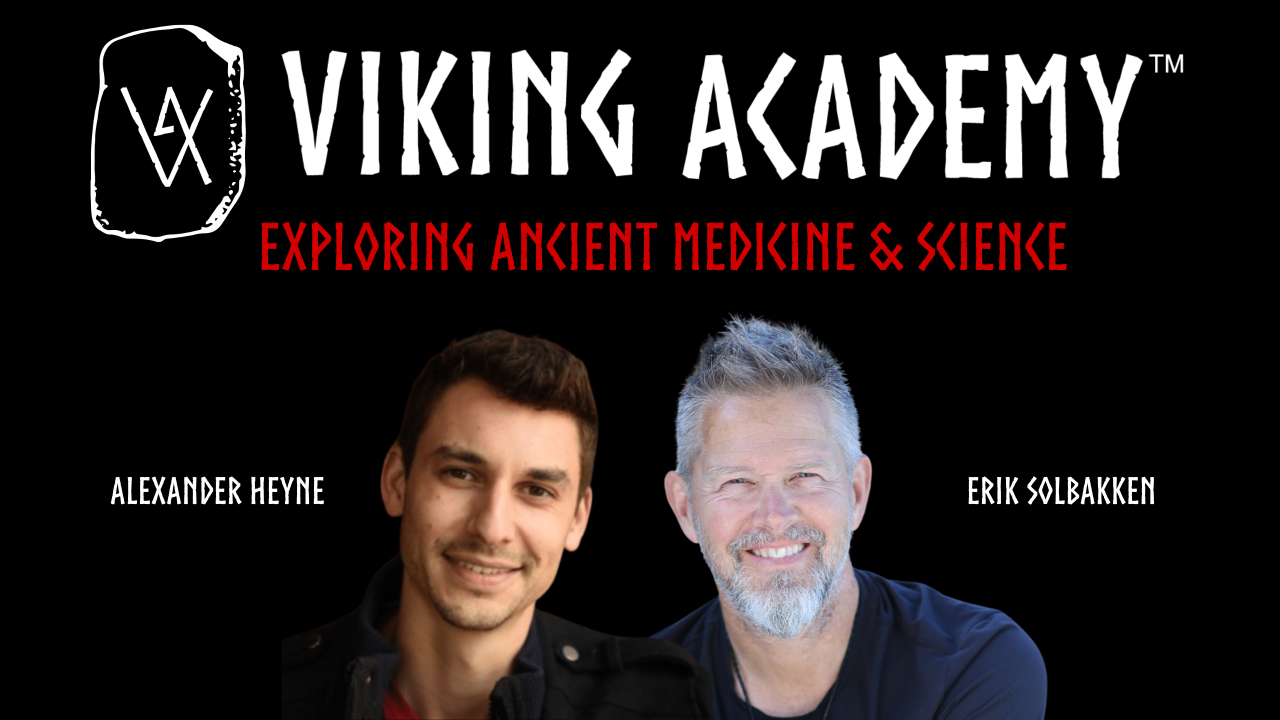
#25: Exploring Ancient Medicine & Science with Alexander Heyne
What if ancient wisdom wasn’t old-fashioned — just overlooked science?
In this episode, we sit down with Alexander Heyne, a specialist in Traditional Chinese Medicine whose journey began not in a lab, but with a health crisis that modern medicine couldn’t solve. His search for answers took him from GI specialists’ offices to a small clinic run by a French herbalist, and eventually to the mountains and monasteries of China.
With training that bridges East and West, Alexander brings a rare perspective on healing — one that blends proven ancient herbal formulas with modern medical insights. His work challenges the “all or nothing” mindset in healthcare, showing how integration can lead to better results for everything from chronic gut issues to women’s reproductive health.
Guided by a sense of dharma and a passion for helping people reclaim their health, Alexander has built a practice rooted in results, intuition, and respect for centuries-old medical traditions that still have the power to transform lives today.
This isn’t about choosing tradition over technology — it’s about combining the best of both to achieve what neither could alone.
Topics We Explore:
- How a chance encounter led to a life-changing discovery about Chinese herbal medicine
- Why many life-altering treatments never make it into Western doctors’ recommendations
- The problem with “all or nothing” thinking in healthcare
- What dharma is — and how to know when you’ve found it
- Stories of patients who avoided invasive procedures with natural treatments
- How to combine ancient formulas with modern approaches for powerful results
Connect with Alexander Heyne: https://modernhealthmonk.com/
Learn More about The Viking Academy: https://www.vikingacademy.com
Episode Transcript:
Hi everyone, welcome back to the Viking Academy podcast. Today we have Dr. Alexander Heyne. Now Dr. Alexander Heyne is a specialist in Chinese herbal medicine.
The best part about this is him and I just met. We hit it off like a house on fire. And I really wanted to get into his brain and find out where the intersection of traditional medicine and Chinese medicine mix.
But what happened in our conversation was he took me down a completely different path explaining what he does and how he lives his best life, how he lives his dharma. He feels like he's completely in his dharma groove, shall we say? And I found that incredibly powerful.
And so we have this great conversation about finding that groove, finding basically your purpose. It's the ethos of the Viking Academy. Where is that space for you and how can you find it?
We also talk about a couple books that he wrote. One called Milk the Pigeon. Yeah, try and visualize that one and not kind of start giggling.
But Milk the Pigeon, very powerful book, and the other one, Master the Day. Dr. Alex is probably my newest best friend, and you're I hope he's going to be yours as well.
Let's go explore this uh podcast with him and find out what your dharma is because that's what I really want for you in the Viking Academy for you to actually explore and find yourself which is what I'm doing for myself. So there you go. Without further ado, let's go explore.
Alex, welcome to the podcast. Yeah, thanks for having me here. Um, so you and I met in Santa Monica, uh, at all great places where I seem to meet all the really cool PE kids as a strategic coach.
And you and I, um, you know, I always go to these things with a three intentions. Like there's these three things I have to get done. And one of them was I wanted to find some more people for the Viking Academy podcast.
And you and I literally connected like at the last second. Yeah. And all of a sudden it was like, "Oh, [ __ ] You got to be on the podcast." And you're like, "It's gonna be awesome." So, so, um, so thank you for that.
Thank you so much for that. So, dude, give give me a background again of your your experience because you weren't trai you originally weren't going to go down and doing what you're doing right now with tradition with Chinese medicine. Tell me tell me a little bit backstory.
Yeah, I mean the backstory was, you know, as a kid, my default sort of tug was reading these stories about like these traditional healers, right? I loved reading about like Native American healers. I loved reading about like the Daoist healers.
Like this archetype of like some soldier goes off to a battle, is wounded, and then ends up in the bottom of a creass, and like some Daoist hermit revives him. That was like the stuff that like turned me on as like a 15-year-old, right? All these old ancient stories.
And so as I got older, I was like, well, I've always been passionate about medicine and healing, but what is like the intersection of medicine and that? So I always assumed I was just going to go into like an integrative medicine field. So I was like, well, I'll go to medical school, then I'll just go into something more integrative, whether it's research or maybe I can study with Native American healers or something.
And then in the weird, you know, in the way that life and fate often is, destiny is, uh, I got really sick in my early 20s with a lot of GI problems. And the GI problems. Initially, I started by just going to every conventional doctor I could see, dietician, nutritionist, GI specialist, and uh not only were they not able to help, they weren't even really able to give me answers.
And that was sort of like a very u it's a very trying moment when you feel like you have your whole life cut out for you. You know the path, right? And then suddenly your gut is telling you, I don't think this is the right path anymore.
And that that wasn't a pun either like because for the listeners GI means gastrointestinal issue, right? Yep. Yeah.
Because just remember like there everybody doesn't follow the acronyms, right? But that's what you're the only reason why I know what you meant by GI because we actually I actually had a G a specialist on the podcast about GI. So okay, it was working with GI specialists.
Anyways, a sidebar, but anyways, keep keep going on that. So something was telling you that that you weren't getting healed properly. Yeah.
And I think it was just it was sort of just the discouragement, the feeling, the thinking of just like I'm going to dedicate the next 15 years of my life to this and it didn't even fix my problem. Right. So I was feeling very discouraged, but I still had all these health issues and I was trying to figure out where they're coming from.
So one day I'm just sitting in a cafe and I'm talking to a barista and he looked like he looked like my age. He was maybe in his early or mid20s at the time. And uh he looked very weak.
He was like even using crutches just to walk, but he didn't look injured. And he said, 'You know, I've got this thing called I have inflammatory bowel disease. It was either Crohn's or or ulcerative colitis.
And he said, 'I developed a unusual reaction to one of the medications and I developed autoimmune hepatitis. And he's like, none of the doctors can do anything now, but I saw this traditional Chinese medicine practitioner. He's a French guy around the corner.
And while he didn't cure the problem, he he got me more clinical results than any doctor I've ever seen. So, I go to see this French guy. Sure enough, you know, he gives me an herbal formula for my digestion.
The next 30 days were the best it had ever been in like 25 years of life. And I just left there thinking, how is it that the GI doctors, the specialists didn't know this? They would not have recommended this.
They probably thought it was purely quackery and a bunch of BS. And I'm about to dedicate my whole life to being one of those GI doctors. Uh, and it was like a crisis of faith for me.
So, after that, I basically ended up I bought a one-way ticket to live in China. Uh lived there for a little while, came back, and then did my doctorate in traditional Chinese medicine because of that. Wow.
You know, the the um the story is so similar to a lot of the people that I've had on the Viking Academy um that they've started down a traditional route and they thought this is the way to go and then it didn't work. I actually we just had on a Dr. Jeffrey Gladden and Gladden Longevity.
He was actually uh I think if I'm gonna remember this correctly, it was like a brain surgeon. Like we're talking topnotch and he was having problems with his health and his medical profession said, "Oh, you're just getting older." And he went, "Well, this is bullshit." And he shifted and moved and so he started this longevity program. So he walked away from this huge practice and an entire hospital.
He walked away from that. I hear um people that are like traditional nurses have now moved on and now they're spiritual healers. Um myself I you know I'm traditional CPA and the numbers guy and now I'm like no Viking Academy like I want to explore the mind, body and spirit.
So there's there's a shift. I really feel there's a more of a mainstream shift from shall we call it the heavy traditional professions to more of what we'll call the woowoo space right like in like in this spiritual interconnectivity of tradition and and and that's what I really want to get into with you as well is this the n more of the traditional healings like how did we how did we get lost from this stuff because this is stuff like this is ancient healing that you learn, right?
Then what and where we're trying to do all this cutting edge stuff and the cutting edge stuff isn't working and the ancient stuff is, then why the hell did we shift? Like why did we move away from it? Money and investors probably.
But I think, you know, I think a lot of what we see is, you know, if if you look at medicine for example, right? Like I started off as a very intuitive kid and then going up to the doctoral level, it it trains you out of using your instincts, right? Because if you go to someone and you say, "Hey, I have a feeling this is how we treat this condition." You know, you go to a normal doctor or you go to a colleague and they'll say, "Okay, prove it.
Show me a research paper. Show me some science. Show me some data." Right?
So, you're they're actually training you out of using your intuitive faculties as a as a culture, right? So, the culture of medicine has become so heavily data and researchoriented that there is no room for really intuition. I mean, that's I think that's a big piece of it.
If we're removing the bias side, I think it's actually trained. Like you see these kids by the end of their medical program, they're hyper cerebral, right? And they've lost like the human component and also the intuitive component, which is important in in medicine.
Okay, that all of a sudden I've my head's starting to explode because I'm to see the connections now with um with all of that because that's something I say in one of the programs that I have with the accountant success formula. They say accountants have been conditioned to behave a certain way and then trying to get them to go it a different way. They're like no they won't do it.
It's like Pavlov's dog. You ring a bell and they they salivate. Right.
And and and the thing that we've missed and I think that we're starting to come back to is that now we're saying trust your inner guide. Trust that that that that voice from within. I just had Dr.
Tom Garcia on and he was a again another one of these examples chiropractor turned uh fire circle using plant medicine. So he's using psilocybin and taking people on these journeys to connect reconnect with that inner voice. Sure.
So it's that inner voice that's missing. So even but we can take it down to kind of a terra firma level going look it you've you're all data driven now and it's not getting results. Well that should the data should show them that they're not getting [ __ ] results.
Like that's the ironic part and that that you're seeing actual results with the the more intuitive teachings. Yeah. I think it's I think the two go side by side, right?
Because I mean if you look at even the history of masters in various fields, the initial draw towards their profession was intuitive purely, right? That's that's the biggest thing. Their initial tug towards that profession which led them to be an icon in history in human history was purely intuitive.
It was a gut instinct that drew them there. So to negate that and just to claim that it's like you know we should just be data driven or research driven is missing even one of the biggest things that the meta high 10,000 foot view right that whether it is a a monk or it's a neurosurgeon or it's an artist or a musician they felt that tug and that tug is not something you can explain logically right but it is what ultimately becomes like their destiny in a way yeah that this reminds me of the story of the uh Moses going up on the mountain and seeing the burning bush right he turns and he sees this thing it's Whoa, what's that?
And it catches his attention and he goes towards it and and because he and when he goes towards it, the bush says, I am I am that I am. Like he reveals itself as God. Like so that is almost like symbolic of the fact that trusting that thing that captures your attention.
Yeah. Is the thing that actually is what you're here to do. Right.
Right. But then we put layers upon layers of conditioning on top of with the research and the rest of it. So, so, so you're, so here's a chance encounter.
You meet this guy, he gets he tells you what's going on with him that he went and talked to this French doctor and then you went around the corner. You get the results from him. Yeah.
Okay. And then then what happens? So, after that, it was around that time where I bought a one-way ticket to live in China, thinking I'd just become like a monk and just focus on martial arts for uh five or 10 years.
Um, and ironically, while I was in China, I did find some practitioners, but the best ones I found were not until I came back to the US, but that tug to go to China, I figured, you know, look, the 9 to5 I was I was an undergraduate bio and premed student. And then, uh, I just picked the first job I could get, which was like a teaching assistant in a high school. And I was just like after one year of that, I'm like, man, this is what people do for 40 years, you know, not a not a chance in hell.
I'm going to go take the risk of my dream. Awesome. So then when you were in China, what did you find?
So initially my goal was I'm like, let me take some time off to be to study meditation like with monks and study martial arts. Um, and at the time, believe it or not, those were the two priorities. It actually wasn't the medical side at the time.
I was just grateful that my GI was doing much better. It wasn't necessarily all in about medicine. It was more on the martial arts side.
So, I uh I met up with the I got an introduction to this guy who is a bodyguard for the Communist Party. And the training was like really like the old school Chinese training. It's all in the park all seasons, right?
I'm in Beijing, so it's near Mongolia, so it's cold in the winter. And you're just training outside year round. So, this is like you're outside, you're training in the park.
He loves messing up and knocking out the white boy just for fun, right? Just because I'm like the zebra in the crowd of of Chinese kids. And uh you know basically while I was there it was interesting because there's it's similar to our culture where you know traditional Chinese medicine comes from Asia right East Asia but you have a lot of people there who would rather take a pharmaceutical too because it's fast and there's uh little effort required.
Um, so I think what I found there was that you have a combination. There's a lot more east west integration like you if you're getting if you have cancer in lots of hospitals like in China, you can off the bat they'll do integrative combined care. And they have studies on for example if you take this traditional herbal formula with chemotherapy.
It decreases the side effects of chemo and even enhances the efficacy and doesn't damage your organs as nearly badly as it would. So they've done a lot of those trials for a long time. And I think seeing that integration was sort of, you know, like if you're a woman, I just was looking at research the other day.
If you're a woman with breast cancer, this is specific kind of breast cancer. I don't know off the top of my head the stage and the the kind, but the research found that this traditional herbal formula was so protective to both your cells and the mucosa and the tissues that it it minimized the damage from the chemo and radiation and decreased your chance of dying by 40%. But no one, no goncologist in North America would ever tell you to try the formulas we prescribe alongside chemo.
So this research exists, but it will, you know, it just blew my mind that that actually has already been done and that this is just not common practice in the west. You have triggered again something else in my head that it's this all or nothing thinking and and I got to watch myself, right? I like I have an all or nothing personality.
I'm either I have two speeds, go or stop, right? So it's all this or all that. And I'm even listening to you and I'm going even in my brain I was going okay is it all traditional Chinese medicine or is it all new age numbers and and and this all or nothing thinking is what needs to be broken even for myself but I'm hearing it's not all this or all that.
It's yes to both. Like take the best of both put it together and have it do what it can do. So, it's not like, you know, it not sitting here vilifying the traditional uh shall we call it medical profession, right?
Because they're just doing what they think they can do to make it work out well. It's got it it's got its downsides because of the pharmaceutical push and all the money that's involved in it, but it's not all evil. It's going to have some good parts.
And then you have the traditional Chinese medicine which can't necessarily be as save you as much as you know the the the new the new age technology. So, if you can take both and put it together, that's uh you know, and I think that's where, you know, I I keep thinking about this ethos of the Viking Academy and why am I why did I start it and what's going on in my head and I just keep thinking about this programming that we've been programmed over and over and we're just walking around with this programming.
We need to upgrade our programming. People, some people call it enlightened. We need to become enlightened, but I like to think of it as programming and to see life for what it actually is and take the best from both sides.
So, you saw that you saw that opportunity to take both and put it together, right? Exactly. And it was just a, you know, even going back to that day where I saw that French doctor, my first my first emotional feeling was anger.
Like, why did the GI specialists never even mention that this was an option, right? If that's all it took, if they could have that formula the French doctor gave me was from 1100 AD 900 years ago. What the [ __ ] And if you imagine that this GI has probably seen billions of dollars of research just in the last 10 years of loan alone into GI procedures, new medications, different ways to do colonoscopies.
If you imagine they've done that much research, billions, and no, not a single person recommended something that actually fixed or helped. And that this formula that cost 50 100 bucks for the month was able to fix those GI problems. So I I didn't feel like mind-b blown.
I felt really angry. I felt anger at the profession. I felt anger at men of the spe if you ask the specialist who is this profession credible?
He'd be like it's garbage. It's absolute hogwash. It's pseudocience.
And yet it fixed me and I use those same formulas every day in my clinic and we see the exact same results. These people have been to some of the best GI specialists or other internal specialists in LA. The formulas still are able to fix those problems.
So I left that discouraged. Well, one pretty sold on the fact I couldn't because of the cognitive dissonance. I couldn't possibly go to conventional medical school, but also very uh angry as a patient that that was not told that that was an option that worked.
So now that's that's what you're doing is you're showing so you're showing them here's an option here for you. This is something to do in connection. And and here's the other question.
Do you work collaboratively with the other uh doctors on the other side? Are they open to working with you and like a combined approach with these with your patients or are they more still kind of telling you to go piss off type of thing? It depends on the person.
What I find is that usually a lot of them are open to it but they're just too busy. Right? So we don't there's really very little collaboration.
It's like they came to me with a bad diagnosis of Crohn's disease or ulcerative colitis and we have a a year before they're put back on steroids or they're going to get their colon removed, right, for ulcerative colitis and let's let's see what we can do. So, usually not, but it's I think it's more so because uh they're more overworked and they just it's just another thing, right, to have to talk to some other provider. They don't know who I am.
They don't know the results I can get and and vice versa. I think it's just more so out of busyness and and stress as opposed to uh lack of interest. So, I just had this vision of creating that one that hospital kind of like what Dr.
Gladden is doing with Gladden Longevity. But imagine if you had this one place where it was all under one roof and you walked in and it was a collaborative approach based on all the different methodologies that we've learned over the ages and said how can we apply these to this specific person in this specific instance to give them the best results. I mean, I think, you know, when you think about the way the universe works, it all takes all these unique abilities and they put it together to create what unique ability teamwork, which they talk about in strategic coach, um, which I love because I I love the philosophy of it because that's what the universe does.
Imagine if humans actually behaved that way. Like what a what a what a shocker, right? Sure.
Like I mean it's it's it's a kind of sounds like a John Lennon song. You know what you know um you know the the peace loving tacos everybody holding hands and getting along but I'm talking about like terra firma actually what if we actually work together instead of fighting each other right like what if you actually got a med like a true medical like a traditional medical doctor and doing traditional medicine or not traditional but doing you know today standard of care yeah standard of care and and and you put the two together like have you ever thought about opening and and creating that business.
Sure. Yeah. Down the line.
No doubt. No doubt about it. I mean, UCLA does have an East West Center for Medicine in the hospital here in LA.
Okay. So, I don't know to what extent it is. It might just be acupuncture because there's lots of research on acupuncture these days.
Um, but definitely longterm that's the goal and it's sort of uh trying to figure out the best way to do that. I mean, right now it's starting off by just changing my private practice into a clinic and just doing that on our own and having those good records and cases. But long term, no question.
No question. That's like the Mayo Clinic, right? They've they uh became this worldwide leader because they were innovative and they were working on uh new things and more research and and that kind of thing, right?
So, okay. So, let's take you back to uh you're you're in China. You have this aha moment like holy crap.
Um then what happened then? What what did you what what what happened from there? Yeah.
Well, I think I I came back and basically I was like, well, what do I do now? Right. I had this year I realized you know martial arts were never really my passion to the extent that I thought like I think if I was thinking what's the thing that I can be the best at in the world and also help the most and I realized I didn't have the work ethic to train martial arts like 12 hours a day but medicine I could study 12 hours a day and it's fun and easy for me.
So I think when I came back that's when I realized it was time to go down that medical path. Okay. What what what was the martial arts which was the one that you were I was studying mostly Baguazhang.
I don't know if you know it. It's internal. I have no idea what that is.
No, it's a So there's what they call the three internal martial arts are Tai Chi, Xingyi, and Baguazhang. If you've ever seen like the Ip Man movie, you know, he walks in a circle like this. Yes.
Yeah. That's Baguazhang. So Baguazhang has this kind of circular footwork.
Uh and so it's a very unique distinct kind of internal martial art. Oh, cool. Okay.
Right on. Um so so then you then you came back. Um, and when you came back, what what was the what was the reception to your friends and family when you came back and said, "This is what I want to do.
This is what I experienced." I mean, I think more so surprised like you know, you you encounter again the brain of the the consciousness of the average person is like, well, why don't you just become a real doctor and make a ton of money and be financially secure, right? That's like the classic parental uh choir, right? Yeah.
So, it's just like, uh, why don't you just become a real doctor, make a lot of money, be secure, then you can do whatever you want. And, uh, but I knew that wasn't going to make sense. I mean, I knew it would just be 10 years off the right off the path that I wanted to be on.
Um, and so when I decided when I was thinking maybe I should just go back to China for that education because at that point I spoke in and read Chinese. Um, actually one of my friends stayed there and enrolled at the the Beijing School of Traditional Chinese Medicine, the big university there. And he said, "You know what?
If I were you, I'd go to Oregon because there's this guy who's like a a legend out there and he started a school out there that's more Chinese than the Chinese schools themselves. Oh, really? So you like did So you went to Oregon?
I went to Oregon. Yeah. Did my doctorate up in Oregon and that's uh my mentor, a German guy had uh a health crisis in his late 20s and um he left a teaching position instead to to go to China and try to treat his health issues.
Okay, cool. So then, so you went all the way to China to find out about Chinese medicine and then flew back to the States and went to Oregon to learn about Chinese medicine. Yep.
And the the funniest part about that is there's a lot there's a lot of those full full circle moments in life, I feel like, right? Like the irony of meeting that French guy, he he lived his office was like a mile from my parents' home where I grew up and I never would have known. I mean, I flew all the way to China to find this kind of thing.
And uh this French guy was was a mile down the street, you know, and then it's like I go back to China, I think, well, I'll live here for 5 years. And then sure enough, back in Oregon was a some of the most legit education I was able to find. That's so cool.
So, so here's the the thing that it's been rattling around in my brain. It's just that I really believe or I'm becoming to have more uh strong feelings around this is that, you know, we're the only species on the planet that doesn't know why we're here. So, we're born and then we don't know what the hell we're doing.
So, we have to go figure it out. And that's that's the process of exploring, discovering, and that's the adventure. Like and so for yourself, do you feel yourself in that, shall we call it, the pocket of where you should be?
Or do you feel like there's always there's something else you're supposed to be doing? Like do you you know, as an entrepreneur, I I call it the itchy bitchies and twitchies. Like you're like, h something's not quite right.
Like it just it doesn't feel right. Something needs to be adjusted or aligned or fixed. And I'm always every time I see anything, especially in business, I'll look and see stuff, I go, "We got to fix that.
We got to fix that. We got to fix that." Yeah. Same thing with myself.
I'm in a constant state of self-reflection going, "Am I am I doing what I was here to do?" Sure. Right. And so, I'm curious on yourself.
Like, how do you feel? Where do you resonate on that? Yeah.
I feel 100% alignment. I'm exactly where I'm supposed to be doing what I'm supposed to be doing. That's beautiful.
No question. Yeah. No.
None whatsoever. No, I haven't had a doubt in years. Oh, dude.
So jealous. Holy. No, I just need some rocket fuel and some investors.
Well, well, let's see. We We're going to drum that up. Let's drum that.
Well, dude, like literally when you were explaining that, so there's my mind at the business side and it goes, what about this, you know, a place where you could have both and a com combination and everybody's working together to to solve these people's problems, right? And it's like the one thing you're never going to have to worry about is is uh running out of of of customers when you're in when you're in the medicine field. Yeah.
You know, we're all, you know, we're getting sick and and and the aging population. I mean, that's the other thing, too. The baby boomers coming along, man.
Holy crap. Sure. That's a big bubble.
But talk about supply demand curves splashing together. That's right. That's right.
Well, now though, people are more lost than ever because of like all the content on social media, right? So, they're hearing all of these new fads and everyone's got their own angle and people are actually actually, I think, more confused than they've ever really been. Uh, so I think that's going to be an interesting interesting piece, too.
There's so much marketing out there in terms of content. Yeah, that that is a and then all of a sudden using AI and Perplexity, you know, all these different tools and then going on and punching it in and then AI or the AI comes back and tells you, oh, this is definitely what you have and this is what you need to do to fix it. Now, AI doesn't do that.
It always curves it. Says, by the way, I'm not a medical professional. But it also it it um self-d deludes itself like it it has, you know, um um I can't the word I'm looking for.
It it'll all of a sudden just make up [ __ ] right? And you'll look at it and go, "Yeah, that's not right." Right. If you know what you're looking for, sure.
You know, it's not right. So, so for yourself then, what do you what do you what's the vision you have for what you're doing then? Like what what's the vision of grand vision?
Yeah. I mean, going forward, I think in terms of my own you use like the term unique ability, right? I think some of my own unique abilities are I think uh writing books.
I tend to like writing books that tend to be received well. So I think being a good voice specifically from the profession of traditional Chinese medicine, you know, like I had a it's just to get really like the the vision, impact, and income surrounding this profession is my main goal because in the same way that I didn't know 15 years ago this was a viable option and profession for my GI problems, most of the world still probably doesn't, right? I mean, I had a young girl recently come in.
She's a in medical school herself going to be a dentist or orthodontist and she had a really bad Pap smear, right? Twothirds of her cervix was covered in precancerous cells. They're like, "We need to do something called a leap procedure.
It's horrendously barbaric." They they shave and burn off, cut off the top layer of the cervix. They have to redo it multiple times. It has a almost certain effect on her fertility.
They're like, "We don't know to what effect it will affect your fertility." She's only 26. Besides the fact that it's barbaric. Uh she came to me because I treated her sister and she said, "Hey, you know, I know what they're going to do.
I really don't want to do this." And I said, "I can't make a guarantee, but I have seen something I've an internal medicine we've compounded treat this before." So, she had quite a it's a it's the ranking scale for how much what percentage of the cervix is these precancerous cells. And hers was quite bad. So, I treated her with a formula, internal medicine formula we compounded for four months.
And I said, "Take it for six months, then get another Pap smear. Let me know how it is. So, she had moved states, had a new job at a new uh dental office.
Saw a new gynecologist and they had a new Pap smear. Pap smear came back 100% clear. 100%.
Her gynecologist said he had never seen that in his entire career. Ever. Never seen it happen.
Never seen it happen that quickly. And I didn't, this wasn't a guess. This wasn't an accident.
I learned that from my mentor, another traditional Chinese medicine doctor that said this can treat cervical dysplasia and all kinds of uh fibroids, cysts, and also bad papsmears. That woman was going to for sure get this LEAP procedure, this electrosurgical procedure, probably multiple times, have an unknown effect on her fertility. And there are tens of thousands, maybe millions of women in the US alone that get that procedure every year who have no clue that I exist or that there's an alternative that exists.
And look, maybe the worst case scenario is they need to do that, but at the very least, imagine if all of them took that formula for six months beforehand and then we could see how many of them still really needed it, right? So, in my brain, I'm just thinking, what can I do that gets things out on a megaphone? Yes, dozens of books, yes, thousands of podcasts, but the integrative hospital is a great thing.
I would love to do something like the Mayo Clinic, but really heavily focusing on the traditional Chinese medicine formulas because in my experience, there's nothing like them. There there's we have no competition in my field. There's no functional medicine doesn't come close.
There's no other traditional medicine that comes close. There's no alternative that comes close in the efficacy that are used in hospitals and other countries that can do this. I just haven't seen it in any other kind of alternative to the norm.
And so I think the world needs to know that this is a real option for them. Um and to try to show them case by case what it can do and what it can treat or prevent. Wow.
That's that's insane. That that that could that that is such a massive shift between oh we're going to come in and burn and cut away your inards and to taking the herbal medicine and having it completely cleared up. Y it's like so it's so let's go back to this explorer ethos like this Viking academy.
I keep coming back to this is like if you don't explore, if you're not curious and keep exploring and find out what your options are and find out what's out there and what especially what's in there, what's in you. That's the whole thing. It's that explorer mindset, right?
It's like don't just stop and accept it. Keep going. Keep exploring.
Keep looking. Right. Which is which is I love the fact that you did that.
I was I was looking on your website. You said the Sage Project. Like that's what you've got.
Tell me about the Sage project. That's that sound really cool. Yeah.
Well, in the same vein as trying to look for, you know, these who are these alternative doctors that are credible that are treating these things. You know, the Sage Project is, like I said, ever since I was a kid. I don't know if reincarnation's real.
If it does, my life makes perfect sense. If it's not real, then my life makes no sense. And it's a very weird random life of some, you know, uh, white boy born in Connecticut that somehow became a Chinese medicine doctor and booked a one-way ticket to China.
But I've always had a fascination with reading about like holy people and mystics. So that was like one of my earliest childhood callings. By the time I was maybe 18, 16, I had a thousand books in my little uh room in my parents house and it was all in mysticism and about holy people.
So I have a very bizarre childhood calling and an interest in that. So one of my initial foray in China was to look for some of these holy people. And uh one of the best places if you ever get a chance go to the sacred mountains of China, the Buddhist or Daoist mountains um if you've ever seen actually here you go you see this painting behind me.
Yes. Yes. So this one I was staying in a monastery about 5 years ago in the Sichuan province and these paintings that you see that are like these mystical peaks and like hermits living in the cave.
Uh they're painted what the actual mountains look like. So, one of them is Hangan, which is Yellow Mountain, and Hashan, which is Flower Mountain. Hashan has this perilous plank walk, which is literally 2x4s with a four or 5,000 foot drop.
And you walk along 2x4s on the edge of a sheer cliff face to a hermit's grotto. And uh so I would go to these holy mountains to try to look for, you know, dowists or Buddhist monks or people that were recluses and that kind of thing. And so the Sage Project was a fun little um vlog.
I I would vlog basically my trips to Taiwan or to southern parts of China to try and look for these people. And uh thus far in those trips I haven't found a holy person. But have you found yourself?
I I think you know I like this word dharma a lot. Comes out of like the uh I think it's the Indian tradition. I like the word dharma a lot because it's like a purpose that supersedes just like your career.
It's like your divine purpose, right? So my profession is no question my dharma and I think the way I know that or the way that a person knows that is uh is peace lack of restless lack of like restlessness lack of that like is this the right path should I be doing something else is there another thing out there for me like the lack of questioning piece to me is the best barometer that you're on the right path that it is aligned like with dharma uh that's the way I personally think about it because that's how that is how I feel dayto-day it's sort of a question of It's not like am I looking for the path?
Am I looking for the thing? It's sort of like I'm excited to go down this path and see what I can build of a lifetime. You you you know, if if I take that definition that you just said there about dharma being that you're at peace and that you're not feeling like you're not questioning the rest of that, I'm clearly not in my dharma yet.
There's no [ __ ] way. Like there's no like I mean and I think it's the thinking I I honestly and I it's funny I just said that I think it's my thinking that's causing the problem. Sure.
Because it's the overthinking the overanal analytical that too much cerebral and not enough heart drawn. Like I'll tell you right now, um, if you want to know where my happy place is, it's behind the drum kit singing heavy metal as loud as I bloody can in front of 500 plus people. So, and and it's funny because we actually, you know, hopefully, you know, that this follows through, but there's this big festival in Victoria called Rifflandia, and there's about 12,000 people there, and we just got asked to play.
And so I get a chance to play in front of 12,000 people. Um, man, there's no question in my mind that's my happy place. That's awesome.
Like that's ultimate. There's no there's no there's no Yeah, that's it. That's that's that's it right there.
So, um, all the rest of the things are I just I I feel that kind of angst and it's like, oh, I want to fix this or it doesn't feel right and there's no kind of groove, right? But you've it feels like and I and I agree with you. So I think if you know reincarnation is true, your life makes a lot of sense because you you basically came out thousand books in your in your library seeking you know the the the sages the the mystics and and now you're just in that in that groove place.
What have you always felt that way or was there a point where you you felt like you found it? You know what I mean? Like I'm I'm thinking about the listener here similar to myself saying like what what can we what could we give them as an opportunity to say hey this is what you look for right this is this is the thing that turned it for me or or did it ever turn for you where you're always on that path no I think um I think my 20s were definitely very much a lost decade for me trying to figure that out right I think going to China was a big piece of trying to see if this was the thing for me but I think you know I think about a lot like dharma and like the right path almost like dating.
Like when you're with someone that's probably going to be long term, you hopefully feel some degree of peace and certainty, right? It's not like this super volatile thing. It's not like this super hot, super cold, always changing.
Am I sure? Am I not sure? We have a fight, then I go home and I'm like, I'm not really sure about her.
Or she goes home, I'm not really sure about him. Like this volatility. It's just more so like this peace when it's right.
Um, I can't speak for everyone's relationships, but I think uh, in terms of dharma, I think, you know, in a couple ways that you're on the right path, whether or not you want to use that word, I think one is there's an intense draw towards it, right? Like if you put people, you know, it's like going back to the dating analogy, you have like a bunch of little kids in in like preschool or whatever. It's like as a parent, you might be like, "Oh, these these 10 of these little girls are so cute, but your your little boy doesn't fall in love with all 10 of them, right?
There's like a couple he has a crush on, and it's like, why does he have a crush on them? There's some kind of tug there. Maybe it's just maybe it's just chemicals, maybe it's not.
But I think in life it's there's a natural draw. Like on Saturday morning, would you want to be naturally doing this for a couple hours? Do you feel like a natural draw that it's not forcing yourself?
You don't have to achieve, but there's just a natural interest like I could sit down an hour or a couple hours a night in this activity or this project or this process or studying this and I'm like really elevated emotions. I feel more energy. I feel more intrigue.
Uh I don't get fatigued as easily. I think that's one sign I think. So that's one piece.
You feel a tug. And the second piece is I think you feel elevated energy when you're in the right sort of profession. Uh the third is I think you feel a natural desire to just sort of evolve and grow and see where it can go.
You feel more creative. You feel more inspired. You feel a lot more lit up by nature.
There's a great um personal growth book by Earl Nightingale. I don't know if you know this guy from the night. Oh, of course.
Yes. Yeah. Yeah.
And and uh he says I think it's the book The Essence of Success where he says, you know, it's amazing. You'll see a guy work 30 years at a career that he was programmed to do by society and then he retires and in 5 years he achieves more than he did in the prior 30 years of his entire career. And the reason is just it's passion.
It's interesting to him. He'll study more. He'll think more about it.
He'll put more time into it. He'll be more resilient when things don't go well. It's not just like this is the end.
It's like I'm still interested in this topic, right? So, I think those kinds of things are really good like your your radar for if this is the right next thing for me, right? I don't know if anything's ever final, but it's sort of just the next step on the path.
Yeah. Have you ever listened to Earl Nightingale do the audio books? Like he's done think and grow he does a think and grow rich by Napoleon Hill.
That dude's got like the killer voice. Oh, the killer voice. I've only done his audio.
I've never bought a book. Oh, yeah. Yeah.
Yeah. You got to listen to him. Oh yeah, Earl Nightingale was just Oh man, you listen to his voice, you're just like, "Oh yeah, you're the dude.
You're the you're the [ __ ] man." The perfect 1950s announcer voice. I know. He's just he's awesome.
But um yeah, I I love I love that. Um you know, for me, I've always been I've always been feeling like I haven't quite been on the right path. For me, I've always just something has felt like just a little bit off.
And I think that's a drive that I've had inside of me to go and find that. And then once I start expressing myself in an authentic way, I remember getting shot down by people around me because I was acting like not everybody else. And so it was more of a like, oh, stop stop being that way, Eric.
Right. And that's why now I'm like embracing the Viking, right? I'm I don't give a [ __ ] if somebody doesn't like Eric the Viking.
I don't like Vikings. Oh, too bad. That's who I am now.
Like it's I finally got to a point where that that is. And it's it's not so much a nephew to everybody else, but it's just kind of a realization that like life's so bloody short, why are we spending it doing things we don't want to do? Yeah.
And that doesn't doesn't fulfill us. Like it's that that living with passion and purpose for me is so important and finding that spot where you feel like like all the things you just said and it's like the unique ability, right? Julia Waller from Strategic Coach.
I did a deep dive with her on this and it's all the same things. It's like it's got the tug. It increases the more it feeds you more energy than you put into it and and you always want to keep getting better at it.
Sure. And then the final kicker is that everybody finds it incredibly valuable and you're thinking, "I'm just breathing." Right. And everybody's like, "No, no, no.
This is amazing." You're like, "Well, this just feels like I'm breathing. It's just like it's just who who I am. It's like a natural expression." I love the fact that you've known this from the get-go.
Um, and that you've grooved it through because um, I wish I well I say I wish I had. This is part of my journey. That's the other thing, too, is I think I get to I get to experience my own journey and I'm just being open and honest because told my listeners that I said, by the way, you know, it's not like my [ __ ] don't stink, right?
I'm going to tell the truth on these podcasts. I'm not going to pretend to be all things to all people. But here's here's the thing.
You you talked about earlier in the podcast and and and you kind of jumped uh you kind of did a precursor on it because I wanted to ask you this because one of the books that you wrote is called Milk the Pigeon. I'm sorry, man. I cannot get the picture out of my head right now.
I'm just How am I going to milk a pigeon? Like what the [ __ ] is What is There you go. You figured it out.
That it comes from an old English expression which means to try to do the impossible. Oh, it's like akin to trying to milk a pigeon. Oh, okay.
Because that's I always, you know, I've got I've got three kids, right? So, I always come up with really bad dad jokes. So, when all of a sudden I'm like, you know, the kids were I'm going to You want some almond milk?
Yeah. And I said, you know, it took me a long time to milk those almonds and I'm pouring. I'm like, dad, stop it.
Anyways, so we're milking the P, which is impossible. So, tell me tell me about the book because I'm very curious about that. Yeah.
So initially the name came from this blog I started when I moved back from China. And the blog was just called milk the pigeon and I started the blog because when I came back from China I had just lived this epic year where I was completely following my like if I had cancer and died next year this is what I would do. So I come back home after this incredible adventure.
You know I lived 10 years in one year and I come back and all my friends are the exact same. My family is the exact same. Life is the exact same.
Everyone's their little cubicle corporate drones sitting with their heads down in their cubicles. No one is doing anything interesting. No one's taking a risk on their dream.
Nothing. So this blog started as me a process of me documenting me doing all the impossible things on my list. What are all like the biggest goals and dreams?
Like want to move to China and study with monks and mountains? Done. Going to do that.
What an epic story that would be. So, I just started blogging about my at my adventures basically to do all the things I wanted to do on my bucket list. And I called it Milk the Pigeon because so many people were like, you know, I was at that age now, 24, 25, where they're like, when are you going to get a real job?
Uh, when are you going to settle down? Why don't you just get your corporate job, get a finance job, and just make some money? And uh and I was so rebellious.
I hated that. I hated hearing that. So milk the pigeon became let me try to do the impossible which is I'm going to I'm going to be the only person I know who's going after their dreams in life like the biggest dreams.
Every dream I write down on that paper I'm going to do it. I'm going to document it. And then these articles were just going viral on the internet.
It wasn't my plan but there was just so much emotion. Like literally, you guys have one life and you're sitting there in your freaking cubicle on your phone half the time and doing two productive hours of work and then you've convinced yourself it's too risky to go out and do something you really want to do. So these kinds of very impassionate, they're kind of like these monologues or these rants that I wrote, they just went viral.
And so what happened was eventually this blog became like the overarching theme was um helping 20somes figure out what they want to do in their life effectively. And so that became a whole business on its own. I was coaching people.
We had group coaching programs and eventually I wrote this book which was like all of the things I wish at 20 someone would have given to me. And it's designed around three big questions which I think really humans have at every stage but it's what's the purpose of my life? How do I live a meaningful life?
And basically, how do I live like an incredible life? And so those three things like what do I do with my life? What should I do with my life?
And how to live an incredibly interesting and meaningful life. Um that became the three segments of the book like work, purpose, and really your ultimate higher level, you know, destiny, if you want to call it that. That's so that's awesome.
That that now you got now you got me fired up. Now you got me fired up. I'm I'm about that.
You know, I was just thinking about it as you were explaining it going away to China and my I have my son's 22, Jake, and he um he hasn't been gone to university and stuff. He said, "Dad, I want to go and travel the world. I come back.
I work for a bit, saves up his money, and then goes to he's been down to um down to South America. He's going to push even further. He's been Mexico." And then and he's going to keep going.
And I'm like, "Go do it. Just go do it because you know soon enough you get the mortgage, you get this, you get that and all of a sudden you start going, "Man, I really wish I had gone and experienced life." Um, when you were explaining all that, I could feel the energy around that and I could also feel the the staleness of coming home and seeing it all the same that had that's the one thing I love about travel, right?
And that's one of the things that I've been, you know, thinking about for the Viking Academy is creating what's known as Viking raids. I was thinking about doing Viking raids and what's your thoughts on this? Yeah.
Not sure if we talked about it, but it's like what if we went and did VI I'm going to call it a Viking raid. We go to another country and we experience that country's culture and how they approach the mind, the body, and the spirit. And just like the Vikings, we'll go experience that.
Take what we want and bring it home with us. Yeah. And then you can go experience all these things.
And and you you were telling me too, you've got another couple trips planned too, don't you? Yep. Like where are you going next?
So I'm going to a bachata festival in Greece at the end of the year. So I try to go somewhere every season for two weeks. Two new countries on my list.
That is so awesome. That's so awesome. What kind of festival did you call it?
Bachata. So I'm like a Latin dancer as one of my little side random passion projects when I got to Los Angeles. So bachata is like a it's like a new it's like a very very sensual salsa.
If you Google bachata sensual you'll you'll have a field day. Oh wow. So one of my trips at least one or two of them is they call them um their festivals.
They have basically the best Latin dance teachers from the world fly in. Yeah. And then it's the morning they give workshops.
The evening you dance till 5 a.m. These uh social dances. Wow.
That that so two things there. One is going and experiencing all these things. But it's the every time I come home from a trip anywhere I've been, I get home, it's always refreshing to come home.
But the thing that I don't like is when I hit the airport in my local area because soon as I get to the airport in my local, especially I hit Vancouver and then Vancouver jumps over to Victoria. Soon as we land in Vancouver and you go out of the international terminal into the local terminal, everybody's wearing gray and blue. Everybody's blah and they're just like there's like no vibrancy.
There's no energy. There's no there's no passion. Do you know what I mean?
Exactly. That's what it felt like when you were explaining coming home from China and then coming back. It's like all of a sudden you were living in color and you come home and it's in black and white.
That's a great way to put it. That's a great way to put it. Yeah.
And I think that's the contrast. You know, you see that a lot with like um people who are expats, right? They go off on this grand adventure.
They come home and they get clinically depressed because they're like everyone's the same. The Joneses are still arguing. The Mitchells are still threatening divorce.
It's like all the same thing as when we left, right? And I just had this amazing adventure with food and culture and a new language and all these experiences. And I think you know you come back and you start to see that like that that sheep quality that most of humanity has right where the fear of taking the risk on their dream supersedes really just the everything they've wanted to do right their fear is bigger than their desire to do take a risk on their dream and most people never conquer that fear which is why 30 years later they're in the exact same life and when you see it from the outside it's both incredibly sad to But that's the that's the hardest thing, right?
It's the fear that keeps people the same and keeps them stuck. And inside they could be an Oprah or a Steve Jobs or a you know a rock star. Yeah, that hurt, man.
That you just you just stung. That stung. That last one stung for me.
I cuz literally those were my two choices. I remember coming out of high school and I had two choices. One, go to university and get my CPA designation, or number two, join this band and travel all the way down because we had gigs.
They had gigs lined up all the way from Victoria to LA, all the way up at the Oregon coast, all the way through, right? That was my choices and I had to choose. Now, I chose the route of going to university, getting the degree, becoming a CPA.
Also, I think the reason why I did that because I knew that if I went the other route, I would have been dead. I would have pulled a full Kurt Cobain and I would have been done drugs and overdose. I know for a fact like that that's why I'm reviving it back in in in later in life and and starting to do that that sort of thing.
But the the thing that I the thing that I love is that you're you're you're out and experiencing it. But you said you go every you said every two weeks you like sorry when do you how often are you doing every quarter? So every three months you go away for two weeks.
Yep. And I pick two two countries that I haven't been to or two bucket list experiences I want to do. Uh and I find that one it's an it's a really helpful reset as an entrepreneur who historically overworked way too much.
So I needed it for my health as soon as I could afford to do that. But then I realized my best ideas come then when I'm not working. I come back with so much inspiration about so much I'm so energized in terms of the things I want to change in my personal life in my business.
Uh if there's anything I need clarity on, I've gotten clarity, right? The transit time is my favorite time for writing and thinking and reflecting. And then of course there's the reality that I'm going to die and the date of my death is unknown.
And so there are these, you know, I don't have kids, I might as well go do what I've been wanting to do. And whether that is posting up in a little village in China and working on a difficult medical problem and drinking some regional tea with some monks, or it's going to Norway for the Northern Lights, or it's going to a bachata festival on an island in Greece. I think these are the things that uh ultimately make life worthwhile.
When I look back at the end of the year, I started doing this because I realized when I do my quarterly and annual reflection, sometimes the only thing I remember were the trips I took just cuz the day-to-day life I forget. Right. Right.
And my life is good. My life's good. I'm not doing work I hate.
But like the day-to-day life is just you're just in it. It's just, you know, so you just like how did how did the year 37 of my life go by? What did I do?
Like I I danced bachata. I just you know what I The only thing I remember is the trips. Those those are what stand out as peak experiences experiences.
Right. And so I love the fact that you've created a you've created a system of doing that. Like I always just say like willpower I believe willpower doesn't work but systems work.
Like you've got a system you say every quarter I go away for two weeks. Sure. Like so that's your bang.
You're actually you're ensuring that you go and do those things. It's funny just every time you do it, you come back go, "God, I I I'm How come we forget?" I That's another psychological question in itself, like how do we forget how energized and how wonderful it feels to get away and see some new culture and how things are. And so I know I I think sometimes it is just like the the mundane human existence of like it's like money, right?
It's like, well, let's say just as one person, let's say I spend 5,000 and in my brain I'm like, well, you know, for my PhD, I still have a little bit of student debt. A responsible decision would be to put that to student debt, right? Or like, well, you know, I'm not married.
I don't have kids. A responsible decision would be to start putting that towards a home instead of going to Iceland for two weeks. So, I think sometimes the voice of uh your dreams and the voice of reality, quote unquote, are sometimes battling like that in your brain.
Um, but I think that's that's on a linear level, right? Because on an exponential level, what if you go on this trip and you get your next biggest insight for your most successful program or product yet? And that's often how life is, right?
Or you meet the person you marry because on a trip, some chance encounter. So, yeah. And and I mean that's the that's the that's the baseline for uh strategic coach is that free days when we're talking about going away on holidays are not a a reward for working hard.
They are rechargeable days. So you go and recharge and when you come back from that you will see things differently and you can become more productive. So, it's not uh you're going away for two weeks and that's your reward for working hard.
It's the other way around. Going away for two weeks gets you recharged. And so, when you come back into work, you're you're full of energy and and away you go.
And you're over and then you work and then your battery level drops down. It's like, well, I got to fill my battery again. I better go away for another two weeks.
But you're combining it with seeing bucket list places doing amazing trips um doing d sexy dances in other countries like like dude that you you that sounds amazing. It's it's I started doing it a few years ago because I just had to think like what is my current definition of like the rich life? Yeah.
And then and also just what what would excite me more than anything? I feel like that's such an underrated question. Like what would excite me to do more than anything?
No bumpers on the uh bowling alley. Like what is the thing I most want to do that would just like just excites me, right? And that was the thing I came up with and I think people should ask themselves that question more.
No kidding. So you could Yeah. I you've just re rejigged some thinking for myself like big time.
Well, and we're actually heading we've decided to go and do this. We're going to go take a trip. We're going to go to Europe.
We're going to London and Glasgow and Edinburgh. We're going to drive up through the mountains and fly down and see Paris. And these are a bunch of places we hadn't some of the places we haven't been.
My daughter's never seen any of it. We're like, "Let's just go. Let's go experience this.
We need to, you know, trips to Disneyland all the time. It's got to stop." My business partner said that. He goes, "You got to stop taking that kid to Disneyland.
You got to give her some culture. Take her somewhere else." I'm like, "Okay, this is good, right?" Yeah. Yeah.
Um, so it So, let me let me ask this other thing because I I wrote down a bunch of things that I I did want to ask you about. The other one the other book that kind of popped out to me was Master the Day. Yep.
And what what is that book about? Yeah. So, I think in my early to late 20s, as I was helping uh as I was trying to find my way, one of the stops that I made was I was a personal trainer.
And I think as I was training people, I was realizing that, you know, yes, people want to get fit or lose weight, whatever the physical thing is, but also there's so many things they want to change in their life. And I realized changing your life is really it's all the same thing. It's whether you're changing your financial future, your weight, your relationship status.
And what I realized was that people have a kind of fantasy about like when I'm 40, my life will be here, right? When I'm 30, I'll be married and I'll have this six figure, whatever it is. And the fantasy is disconnected from the reality of making that happen.
Like if you talk to like an actual Olympian and you're like, "Oh, which was more strongly correlated with you becoming like the fastest runner in the world?" Was it like you trained six hours every day, six days a week, or was it like you visualized and thought about your goals? A lot of them will say they do both, but on a material level, it's they took some kind of daily rituals approach to the life they want. And so this idea of master the day came from this repeated conversation I was having where I was like if there's not one hour on your schedule today attached to one of your core goals you claim you want then you're not [ __ ] serious about it.
You know like you say you want to write that book and you don't even have one hour dedicated to today to writing that book. Like when's it going to get written? One hour on Sundays?
Like maybe in this quarter? Maybe in three weeks. So I found the easiest way to help people conceptualize that was you know that like that John Wooden quote make each day your masterpiece masterpiece master the day means if there's a goal or dream out there that you want the fastest way on the material level to make that happen is there should be at least one hour every single day time blocked for that one goal and if you do that you are guaranteed going to make more progress in the next 90 days than you did in the last year and I think that's how we get out of the land of delusion if I want to build a business, if I want to find love, if I want to heal from heartbreak, if I want to get fit, whatever it is, one hour a day attached to that goal, we'll make progress.
So, I ended up calling it master of the day for that uh that purpose. Oh, my that is a massive takeaway for me right there, man. I'm just I'm writing it down on a piece of paper here.
I'm like looking at it going, "Yeah, be curious. I'm curious to see because I've got I as an entrepreneur I've always got tons of goals and like lots of goals but then I'm like yeah you're right if you're not if you're not dedicating every day to do this then you're not serious about it. It kind of reminds me too like the AA um the recovery movement like it's one day at a time and every day you're ser you're doing every day every day every day you're just you're you're applying the principles every single day and and um and then you what you do is you build up this tolerance over time like you know I recovered alcoholic and drug user and all the rest of that I play heavy metal in the bars and people are drinking and doing all sorts of nasty stuff around me.
It doesn't even phase me, but I've got 17 years of every day doing work on it. Do you know what I mean? Right.
Yeah. Yeah. That's a great example.
And it's like, you know, there's a I think I call it wedding day syndrome where it's like we have this fantasy of uh you know, we spend all this time, all this money planning like the the wedding day, right? Yeah. But the actual marriage is the marriage is the years is the years and years ideally, right?
If it works well. And so it's like the reality is the the money and the time and the effort shouldn't be going towards the wedding. It should be going towards the marriage of the people, right?
Are we good for each other? What do we have to work on? Are our values aligned?
What do we want the next 10 years to look like? So the wedding day we think, oh yeah, we get married and then that's in all the Disney movies. That's the ending.
Yay. Happy, right? But it's like that's just the beginning.
And then it can get really messy or it can get really great from there. Uh right? And so this fantasy of it's just like one day and then yes, I made it.
I lost the 20 pounds. Yes, I wrote the book. Yes, I have the $5 million investment portfolio, but it's it's all of the other days that make that one day happen.
And it's that, you know, likening it to business. It's like that over that 15-year overnight success succession or success success issue or success story. Sorry, I'm tripping over my [ __ ] words here.
Yeah, it's like it took 15 years, but everybody thinks it happens overnight. It doesn't, right? And that's the same I want to come back this kind of bring it back terrair town to this uh discovery platform.
This like searching out your mind, your body, and your spirit. It's an everending life story. Like you're not done.
Like Alex, I know you're not done. Like you're just you're still in that phase of exploring and discovering and searching and and and that's the adventure. That's the fun part, right?
That's why you keep traveling around the world. You're seeing new places. You get new insights.
That's why you keep working. You're going to strategic coach and working on your business and your thinking, right? Like that's that's why, you know, as soon as we talked, I went, "Holy crap, I think this is my brother from another mother.
We got to have conversation. We got to have a podcast." Y um and and the one thing I want to do though here is I want to leave the listeners with some some uh resources here because I noticed on your website there are some you have something called four daily rituals that can add years to your life. Yep.
Yeah. So there's a couple of things. Um people are always interested from a traditional Chinese medicine point of view where unique specific health symptoms are coming from.
So we actually put together like a free root cause quiz. It's just like a like a little 10page handout. You can look scan through your symptoms and actually it'll show you according to my profession this is what we diagnose as the root cause of that.
That's pretty interesting for people. I think that's at dr alexheind.comquiz. Um and then it also links to I mean we put out a lot of material daily short form and and weekly long form videos on YouTube.
It'll actually link to a lot of our top videos on those exact topics. So if people are trying to get some of their concrete health issues under control, that's a a good way to check that out. Yeah.
Cool. Yeah, because I'm I' I was looking at that. I'm going to go when you get to the website.
Um it the popup came up about four daily rituals that can add years to your life. I'm all over that. I'm going to be taking that myself.
Um dude, any any parting thoughts before we we wrap up this podcast and it's not going to be the last conversation we ever have, but any any parting thoughts that you want to share with the listener? Yeah, I think wherever people are right now in their life path or life journey, whether they're just sort of waking up and they're dusting off the uh you know the the frost and the the mold and the mildew and they're trying to wake up to do the life that they actually want to live and they actually want to do.
I think the hardest thing is going to be being brave enough to go down the path you want to go down because there's going to be a monumental amount of gravity that is keeping you the same person, right? The gravity of your culture, maybe the gravity of your family, maybe the pressure from everyone around you that wants you to stay the same. Partially because they're afraid to see you change, and partially because people hate people who have achieved their goals and dreams.
And it's the sad truth. People hate successful people more than they hate almost criminals because they could be successful, too. They could take the chance on their dream.
And so I think remembering that you have to escape. It's like that uh that gravity of escaping the the atmosphere that like a rocket has. It's going to be incredibly hard at the beginning because you'll you'll feel the pressure the push back from people around you.
But you have to just stay connected to whatever that internal feeling that internal GPS is that's saying, you know, I have a feeling that this is this is the path for me. In the same way that I felt like this is crazy booking a one-way ticket to China. This is nuts.
It makes no sense. But on a gut level, this is the most exciting goddamn feeling I've ever felt in decades. That's how you know it's pulling you on the right path.
And that's how you know it's the path you have to go down. And you have to be brave because the the courage is the hardest thing to get. Okay.
So then to end off the podcast, say tell everybody to go live their best life in Chinese. Go live your best life. I have no clue how to say it.
What I'll say is instead I'll say Jio. Gaio is like when someone's running and you're like, "Yeah, go go go go." Gio, Jio, it means like add add oil, add gas. It's like What else say I wish I wish you guys on taking the chance on your dream.
All right. I love that, man. Thanks so much for being on the podcast.
Yeah, thanks for having me here. Gio, everyone, let's go. Thanks for listening to the Viking Academy podcast.
Make sure to leave us your honest feedback by leaving a review on Apple or Spotify and hit subscribe so you never miss an episode.