
#9: Exploring the Deep Parts of Yourself (and Find Healing) with Michelle Madrid
I sat down with Michelle Madrid, a transformational self-help author, international speaker, and life coach who blends her professional training with her personal experience as an adoptee. Michelle’s journey—from confronting past traumas to embracing the beauty in brokenness—has shaped her mission to empower others to unlock their fullest potential and live with resilience and hope.
In this conversation, we are exploring how to discover the power of reconnecting with your inner voice, the importance of allowing yourself to grieve, and the role of community in healing. Michelle also shares how facing life’s challenges can lead to transformation and why your past is not a burden, but a gift that helps uncover your unique strengths.
Topics We Explore:
- Healing begins by feeling grief, releasing burdens, and embracing brokenness.
- Trust your inner voice and connect with stillness and spirituality.
- Find your tribe for support and mutual growth.
- How to explore limiting thoughts and deconstruct mindsets
- Pain has purpose; life happens for you, not to you.
- Be the hero of your story and approach life with childlike curiosity
Connect with Michelle Madrid: https://themichellemadrid.com/
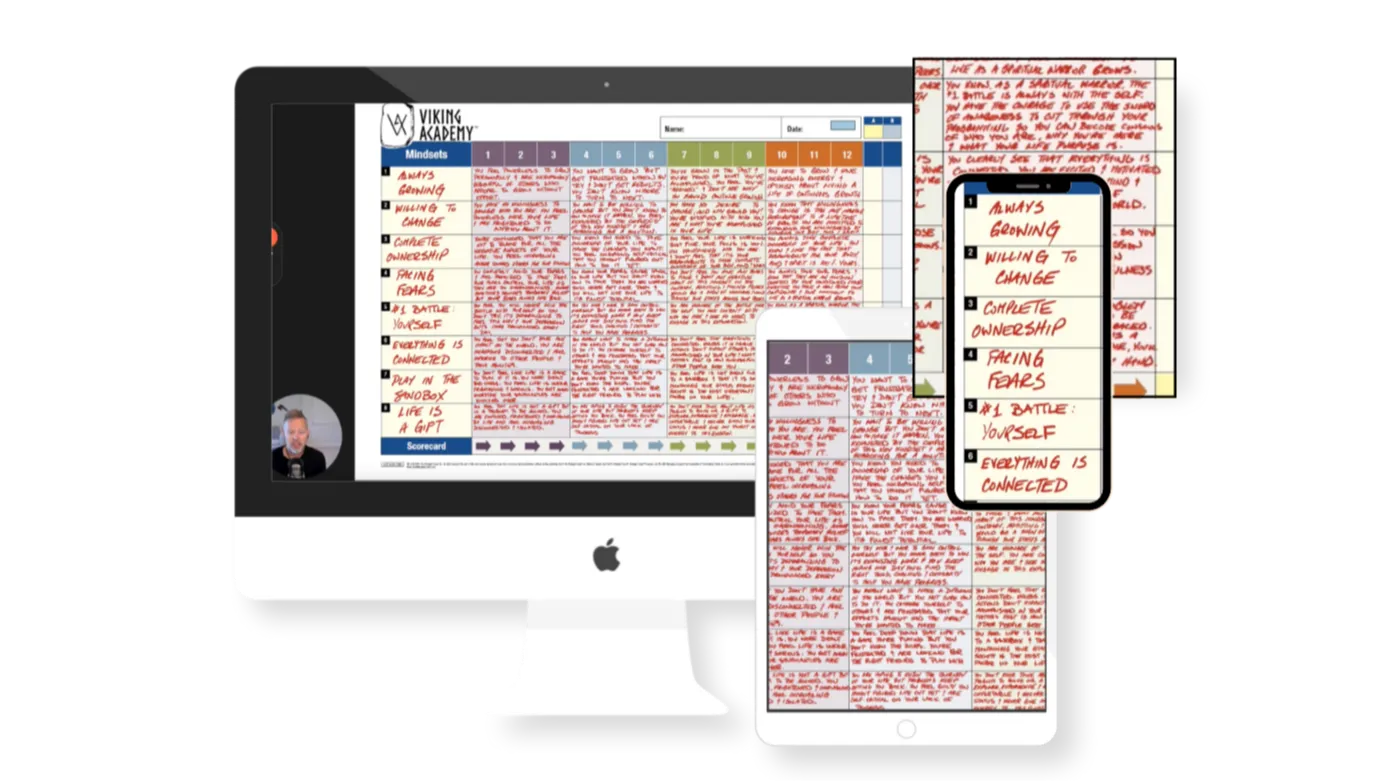
Learn More about The Viking Academy: https://www.vikingacademy.com/scouting-party
Episode Transcript:
Erik Solbakken: Hi, everyone, and welcome back to the Viking Academy Podcast. Today on the podcast we have Michelle Madrid. Now, Michelle is a transformational coach. She works specifically with females who are adoptees. Now, this is a very interesting niche. I've never heard of anyone doing a niche specifically to women adoptees. And the reason why she's done that is because that is her life experience, and we go into quite a bit of detail in terms of what happened in both our pasts to move away from, say, traditional, heavy professional careers to more of a transformational space.
Erik Solbakken: You're gonna find out that she was actually a TV host, so she did TV journalism, and it sounded like she was very successful in that.
Erik Solbakken: But what's really exciting about this is she's found way more passion and purpose having gone through her own journey of pain and self-discovery, and we go through quite a few different areas on how she found that, and I share the same on mine, to bring her to a place now where she's specifically positioned to help this niche of people, which is the same thing that I'm doing with the Viking Academy, is I'm looking to help Viking Academy members and those that want to become explorers to find themselves.
Erik Solbakken: Explore yourself. Explore the inner nature of your mind, your body, and your spirit to find out who and what you are. Well, Michelle encompasses this with perfection. I hope you really enjoy this episode as much as I did recording it, and so there you go. So let's go explore. Michelle, welcome to the podcast.
Michelle Madrid: Thank you so much for having me. I'm thrilled to be here with you.
Erik Solbakken: I'm really excited about this because we've never met before. We were connected by Carey Oberbrunner. Carey Oberbrunner was, pivotal in helping me launch one of my audiobooks and getting the Viking Academy website and podcast process up together, so I'm internally grateful for him, and I'm assuming that you also have some experience with Carey as well.
Michelle Madrid: I do. In fact, I met Carey, the fabulous Carey, the big-hearted, connector Carey. He's so good at connecting souls and igniting souls, of course. But I met him, I think it was back in March actually, not that long ago, at an A360, gathering with Peter Diamandis, and I got up early one morning to go and listen to Carey present and, after his presentation, we just connected and it's been a really beautiful connection and I'm very grateful that he introduced the two of us, and that we could be here together for this conversation.
Erik Solbakken: Right on. So, yeah, Abundance 360. I've never been to one. What are they like?
Michelle Madrid: It is, amazing. It makes my brain sizzle because you learn so much about AI and what's not only coming, but what is already here that we might not be aware of in terms of AI and also just medical advancement, you know, our health, longevity. There's... It is just a wealth of information, learning and growing, and of course another place to meet incredible people doing incredible things in the world, so I'm always grateful to be in that setting and allowing myself to learn.
Michelle Madrid: You know, always sitting down at the table and reminding myself I'm worthy of being here. I have something to contribute, and I'm also going to stay open to learning and growing and evolving with all of these other beautiful souls, hearts, minds.
Erik Solbakken: Yeah. You mentioned You have a reason for being here, and that's, like, there's part of the ethos of the Viking Academy that I have come to completely envelop and integrate in myself, and I want my fellow explorers, my fellow Vikings to take this as way is that there's, the universe made everything for a reason. That means every single one of us are here for a reason. But if you don't go out, engage it, and explore, you won't find out what that reason is.
Erik Solbakken: So I, that's why I love that you are, an avid explorer and learner, is that's, I see we're gonna connect really well on that level. So I want to get into kind of the details of what you do and what you're, what you're bringing out to the world. And I'm very curious on finding out how you found your way to this as well, because that's something I want our listeners to be able to go, "Hey, you know, the path is never straight.
Erik Solbakken: There's, it's always all over the map." But I'm very interested first of all in what you're doing, what you're bringing out into the world, and then a second part of that is, like, how did you get to that point? So let's do with the first one. Like, what does Michelle bring to the world, other than a beautiful smile and a lot of energy?
Michelle Madrid: Ah. Thank you so much. Yeah, you know, what you just, shared is, really resonates with me, because I've always considered myself a tracker of truth. And as a, as a kid who was in foster care in the United Kingdom and then adopted internationally and, I lived with a lot of secrecy around me. I felt enveloped, in secrecy for a very long time, and stepping on that path to discover my own truth was absolutely key for me.
Michelle Madrid: And I hope that's what I bring to the table, and offer to this world, at this stage in my life. I am, I am someone who truly believes in the importance of unlocking the boxes that we hide away, those experiences, those truths, that shame, those limiting thoughts, all of it, that we lock away and hide away in thinking that's going to keep us safe. We don't have to engage with those parts of ourselves.
Michelle Madrid: We can just move forward and leave them locked, and then understanding that they don't stay locked, and they grow deep roots. And the roots of those things, those locked away places, get very heavy. And, it takes our breath away. It takes our power away, our joy away, and it's really important to get back to those places. So as a recovering television news journalist, that's really what I am, I stepped away from that world, in 2000-ish, and, I began to do The work of discovering me and really going deep into what does it mean to be me?
Michelle Madrid: Because I didn't know. You know, I think I entered television news for a lot of reasons. I love telling stories. I love writing. I love engaging with people. I love using story to right wrongs, or find a place of justice in the world. But I also joined into that, community, of television news, a journalist, because I do believe as I look back at that time in my life, I was so searching for identity.
Michelle Madrid: And I thought, "Well, if I have this, then I'll have an identity. And if people like me on the screen, then maybe I can start to like myself." Not I'll be certain to like myself, right? But maybe I can start liking myself. If they see me worthy of listening to, tuning into, on a, on a news broadcast, then maybe I can convince myself that I'm worthy, that I have a voice. And although I was really good in that career and I really enjoyed it, I learned a lot, I grew, I met fascinating people, it didn't help me feel worthy on the inside.
Michelle Madrid: It didn't help me necessarily believe that I had a voice. So when I left that career, I really engaged in the journey. I stepped onto the path of self-discovery and really asking myself, "Who am I without all of this around me? Stripped of all of this, who am I in here, and how do I begin to claim that identity for myself?" And really look at the things, the narrative that I've been given in my life and question, does that narrative really resonate?
Michelle Madrid: Does that really hold truth for me? I was so hungry to get to a truth that I could feel aligned with inside of myself, and that journey was hard It has been beautiful. I've been on my knees, you know, like walking through the broken parts of myself, but emerging into a truth that has given me a lot of power, direction, clarity in my life to help others. So the work that I do today, I'm an author.
Michelle Madrid: My book, Let Us Be Greater, was published 2023, October, about a year ago through New World Library. And I help to guide and coach adult adoptees, who very much feel lost, disconnected to their identity, their voice, their truth as they travel through this healing journey of really coming home to themselves, reconnecting and reuniting with the deepest part of their truth, who they're here to be, what they're here to do, and to do that fearlessly, like a warrior.
Michelle Madrid: Because, you know, I believe that we are the heroes of our own lives, and we have to be the hero of our life. We have to participate in our own rescue. I am such a believer in that because I've learned it firsthand.
Erik Solbakken: That, resonates completely with the Viking Academy. You know, we have this ethos that, you know, take full responsibility for your own life. That's the first thing, right? You know, and then, you know, improve yourself and your tribe and leave your mark on the world. That's the Viking Academy logo. I don't know if you've, you saw the rune in the Viking Academy, logo. That's of the VA. It's a rune that I created, and those are the three ethos, that's the ethos of the Viking Academy itself.
Erik Solbakken: So I completely identify with what you're saying. Now, there's so much to unpack in what you just shared there. Like, and I'm not... I'm making notes here feverishly going, "Okay, what do I want to go down first?" But, it's interesting just as a parallel, I've had lots of meetings with people where we've had careers. I was a career as an accountant. I had a career. Walt Hampton was on, and he was a, he was a lawyer.
Erik Solbakken: And then I had a, another fellow on, Don Barden, and he was, an M&A specialist and a professor, and then he's transformed. There seems to be a, an underlying through line with all of us that we were doing one thing And we thought we were being successful. We thought we were getting identity there, but it felt not quite right. There was a restlessness that I felt, and that everybody I've talked to, is this restlessness going, "This doesn't quite...
Erik Solbakken: This suit doesn't fit right. Like the mask that I'm wearing doesn't quite feel like me." And then going through some heartache and finally going, "No, I gotta really find out who I am and why I'm here." And that sounds like the path that you went through with... You know, 'cause come on, TV journalists? I mean, on the... Most people would be like, "They'd kill for that job." And you're like, "it just didn't fit," right?
Erik Solbakken: And so does that, it sounds like it's the same path.
Michelle Madrid: Yeah, because I... Very much. Very much so. I remember feeling like it feels like I'm in shoes that don't quite fit, and they're squeezing me, and they're reminding me that maybe there's something more, and I'm ignoring that. I'm ignoring that feeling. And I'm looking at the woman on the TV, I'm looking at the woman on the billboards, the woman on the coffee mugs, and I myself am saying, "Who is that woman?
Michelle Madrid: I don't have a clue." And it hurt me in the deepest parts of myself that I was ignoring that voice for a very long time. And again, I received such rich gifts, rewards from being in that career, and I totally believe that it set me on the path for where I am today. But I could still be doing that today and still feel as lost, I think, as I was at that point in my life.
Michelle Madrid: I couldn't ignore the discomfort any longer, and I had to find the bravery to say, "I'm going to step out of this because I am, I'm worthy. I'm hungry. I desire to connect with this person, that I see in the mirror each and every day, and I don't wanna leave this earth not knowing who I am. I don't wanna leave this earth thinking I never really lived out my truth.
Michelle Madrid: I didn't even know what that was, and feeling so disconnected, from myself." And that was a journey that was, yes, in part, due to my story of being in foster care, being removed, being disconnected from my first family, and then internationally adopted, disconnected from my first country, being given a narrative that didn't quite fit. You know, it felt like, I would be told all the time, "Well, adoption means love. You don't need to look back.
Michelle Madrid: You don't need to ask questions. You don't need to wonder." But inside I was grieving so deeply. I felt so broken inside and so unworthy because someone let me go. Someone gave me away, and it made me feel like there was something wrong with me. And then I grew up in a, an adoptive home where, my father was... He struggled with alcohol addiction. And I thought it must be something wrong with me, because why would he need this, you know, alcohol each and every day if I was somehow enough?
Michelle Madrid: I always felt like somehow it was me, and I needed to look at that. I needed to unlock that box and really look deep into that. And so yeah, it wasn't easy leaving something like a television news career, which like you said, so many people would like, you know, give their arm and their leg, to have that career. And it wasn't that I didn't appreciate it. I just realized at some point I needed to love me more, and that I needed to have some faith that taking this leap was gonna lead me to a place that was even greater, and that I had to do that for myself.
Erik Solbakken: Do you feel now, as you're working in this space with, specifically with women adoptees, trying to get them to reclaim their power and... By the way, I love your website. Thank you. I went on your website. It's absolutely beautiful. I love the different fonts and the scripts. Anybody listening here, we're, we'll put the link later, but I just wanna let people know is go to themichelle madrid. Com and check it out.
Erik Solbakken: It's amazing. As you're in this new phase of your being, don't you feel so much more comfortable in your own skin?
Michelle Madrid: Yeah. I feel so comfortable in my skin now. I know who I am, and I'm not ashamed of anything that happened in my life that has brought me to this point. I... You know, when I was in television news, I never spoke of being adopted. People likely didn't even know. I never shared about growing up in a home with a parent who's addicted to alcohol. I never, I never spoke of those broken parts of my story because I really believed it made me lesser than, and if surely if they find out these things, they're not going to want me on their television program, you know?
Michelle Madrid: We tend to think that people out there are perfect that we see, right? But we each have stories, every single one of us, and within those stories, there is brokenness, and I thought that the brokenness made me weaker. But part of the journey to emerging into who I am today and feeling comfortable in my skin and loving me is understanding that there's miracle in the mess And there's power in the brokenness.
Michelle Madrid: Had I not taken the time, the years it took to look into those places, and I'm still looking into them, right? There's always layers to peel back. Healing is a lifelong journey. But if I hadn't taken that time, I wouldn't have found those powerful bits of me. I wouldn't have found the clarity that I needed to understand what is my unique offering to this world. And I think doing that work has brought me to this place where I can say, "Hey, this is me, world, and I'm gonna share my story, all of it.
Michelle Madrid: I'm gonna share the brokenness. I'm gonna share the messiness each and every day." because I think it's important. I think it's an important offering to give, to others so that they too can understand that is such an important offering to give to themselves. And we do that for ourselves, but we also do it for the collective. I think it gives another person power to say, "I can share that part of myself, too." And that's transformational.
Erik Solbakken: I see that happening all over the place. Like, your story resonates so much with mine. Like, I was a chartered accountant. Everything had to be perfect, correct, and right. You know, one plus one equals two, unless of course you're a really good accountant, then one plus one equals whatever you want, the client wants it to be, right? Yeah. You know, that's the difference between a good accountant and a great accountant. They'll say, "Well, what do you want it to be?" -...
Erik Solbakken: But I had this facade as well and, you know, from my story, I actually am a recovering alcoholic, and I never talked about that, and I hid it, and I didn't want people to know about it. And when I started my business after leaving accounting, I still never talked about it. I wasn't open, and I felt like I was still hiding a part of me, and that's why with the Viking Academy now, it's like, no, everything's on the fucking table.
Erik Solbakken: The F-bombs, the horrible stories, the struggles that I go through, and it feels so much more freeing to just be yourself. This authenticity, like that we talk about, be authentic, but at the same time, be situalay- situationally aware when you don't need to be authentic at the time. Like, I don't want an authentic-minded brain surgeon who just doesn't feel like working on my brain that day. No, that's not authenticity. That's like, do your job, right?
Erik Solbakken: But being yourself, I can feel the freedom that you're releasing as you're expressing your journey because it's the same thing that I've been going through, and I've seen so many others go through it. Now, there's one other part here, and I'm, I wanna see if you're noticing this as well. I'm also seeing that people are moving away from the traditional heavy professions, heavy industries, so we'll call it lawyer, accountant, TV, journalist, which I wouldn't have normally have thought of that as a heavy kind of a traditional heavy, profession because it's like, "Oh, you're cool.
Erik Solbakken: You're on TV and you're talking." But no, I'm... Now I'm seeing it now. It's more of a heavy profession, to where's the transformational journey? Walt Hampton was a criminal lawyer, and now he's an interfaith minister. I was a chartered accountant. Now I'm doing The Viking Academy to help people searching their mind, body, and spirit. You are this incredibly successful TV news person, and now you're helping adopt... Women adoptees reclaim who they are so they can express themselves fully.
Erik Solbakken: Like, do you see the... I see it happening everywhere. Yeah. So there's a, there's a change in consciousness across the globe.
Michelle Madrid: Oh, my goodness, and I hope so. You know, it's... One person said to me one time, "I just wanna start leaning into where I'm broken because I feel if I do that, then I'm gonna really start, getting very clear on what I am here to do." And we so often wanna run away from those parts that feel broken instead of leaning into those places. And I think when we do, we really start to feel that transformation.
Michelle Madrid: We start lightening up. We start freeing ourself forward, I think, to really hear that unique, again, unique offering, the unique gift we have to share with the world. And once you feel that, I-- there's no turning back. There was no turning back for me. So grateful for the career that I had, but I couldn't go back to it. I just couldn't because I found such freedom and such power in what I'm doing today.
Michelle Madrid: And in my view, there's nothing more powerful than being a source of helping, allowing someone to give themselves the permission to explore these places in a safe setting, and then freeing themselves up to transform their lives to become who they are uniquely here to be. There is nothing more rewarding for me than this work. And, you know, as I help others, I'm continually also helping myself. And it's a beautiful sort of symphony of flowing together and supporting one another and evolving and living how I would term it as just soul forward.
Michelle Madrid: I wanna live soul forward, and I think that's a beautiful way to live. And I know this because I didn't always live that way, and it felt confining, and it felt darker, and I feel like I've stepped into a place of not just feeling lighter, but also where everything just feels brighter on the landscape. There's more promise, I think that I see, and I see a lot more of me, and I know there's a lot more to explore.
Michelle Madrid: There's a lot more to do. The potential just goes, you know, it's exponential
Erik Solbakken: Yeah, it does when you finally step into who you were meant to be. Yet in the paradox, and I want the listeners to really catch onto this, the messiness of my past is what I needed to go through to unlock who I am today. So if you're going through that messiness right now, just go through it, 'cause it's part of the journey. It's part of the whole process to finally get to this kind of...
Erik Solbakken: I'm calling it an awakening to, you know, I've been kind of sleepwalking almost through life, doing what other people want me to do or what I think other people want me to do, because it's all in our heads, right? It's all that. To finally open up and then go, "Well, this is what it's about," you know? I've been doing that, connecting the dots and going, "Holy crap, it's the Viking Academy. Of course it's the Viking Academy.
Erik Solbakken: This is great." I'm gonna put in heavy metal music, I'm gonna talk about my alcoholism, I'm gonna talk about business, 'cause I love business. I'm gonna talk about the fact that I'm a recovering accountant, you know, on multiple levels. Like, it's freeing. I also want to make sure that we stop and kind of go back into that process that you talked about, because there was something you said in there about the shadow, the dark parts, and being not afraid to go in there.
Erik Solbakken: Because I mean, for the listeners, they're listening to us go, "Okay, well that's great, Eric and Michelle. You guys have found your passion and you're all pumped up and excited and it's rainbows and unicorns", which of course we both know it's not.
Michelle Madrid: Mm-hmm.
Erik Solbakken: But what did you do... And I'm very curious to find out this. What specifically did you do to start looking into these shadow, these dark corners? Like, what specifically did you do to start facing those fears that, or those demons that you didn't realize you were looking at? Like, when you finally turn and you look at them, you realize, "Oh, I didn't realize that was actually there." And then when you really look at it disappears.
Erik Solbakken: But what did you do specifically to heal yourself?
Michelle Madrid: Well, the first thing I did was give myself permission and to understand that there were things to heal. And I began to look at and contemplate the idea that there might be a lot of grief stuffed inside of myself, stuck inside of myself, that I hadn't allowed myself to look at, to openly grieve. Because, you know, as an adoptee, you're told, "There's nothing to grieve. Just be grateful. Oh, you're so lucky.
Michelle Madrid: You have a you know, forever family." And it's not as... Like, as an adoptee, we don't see that. We don't hold gratitude for the lives that we have. But there was something that happened. There was something that happened before. You know, I always say something had to come apart- For something to come together, and that's how adoption happens. A family had to come apart for another family to come together. And what we have not been able to explore as adoptees and as people too, oftentimes we're not...
Michelle Madrid: We don't feel like we can explore those parts of ourselves and the grief that we might hold, the shame that we might feel over something. Because what if we did that? What if we truly looked at that? Who or what might I lose? How might I be rejected again? And so I had to understand and get very clear with myself that the worst, most tragic abandonment is abandoning myself That if I look into those boxes and I get real with myself, and I dive deep into the darkness, into the shadows, and if I lose something or if someone doesn't wanna stick around, okay, bless them.
Michelle Madrid: I'm gonna move forward because I'm no longer willing to lose myself. I'm not gonna do that anymore. I'm not gonna live a life that's not true to who I am. I'm gonna discover all of me. I'm gonna unlock, open up all of me. So I started, you know, allowing myself to grieve things that I was always told weren't really there to grieve, right? And that was getting really truthful with myself. I allowed the, that part of me to open up, and then I started questioning the limiting thoughts that I had.
Michelle Madrid: You know, why do I have this thought? We know, you and I know a thought, you know, thoughts are like building blocks, and beliefs are thoughts on repeat. It's what we think over and over again. I'm not worthy. I'm not enough. I should be ashamed or what have you. It becomes the belief system that creates our reality, and I wanted to deconstruct all of that, and I started doing that. And then I started really putting down the burdens that were never mine to carry, and I think that was really when I started to free myself up.
Michelle Madrid: I looked at the secrecy around my story as a child, the shame that my first parents held for their own stories and how I came to be. I had placed all of that on my shoulders. I started to let those things go, and then I started just to reclaim little bits and pieces of myself, my truth. I tattooed my original name, Julia Dawn, on my arm. I did, I did things that would, that would come to me in the stillness.
Michelle Madrid: I would listen to my voice, and I would start doing things to honor me, my fullest story, and not leaving any chapter behind. And little by little, chapter by chapter, word by word, I started creating a bridge back to myself, if you will, where I've been able, I think, to merge these two worlds of, you know, this little girl, Julia Dawn, who once felt so left behind, unworthy, and this girl, Michelle, who I became after adoption.
Michelle Madrid: I've been able to merge them, and I feel whole, and that's been the journey of just honoring step by step what's come up for me
Erik Solbakken: Did you take all this on by yourself, or did you get someone to help you?
Michelle Madrid: There's been so many angels who have stepped into my or onto my path. I remember I embarked, after I left news, I moved to New Mexico, to Santa Fe, New Mexico, and I started this journey of healing, and I met angels along the way.
Michelle Madrid: You know, it was my intro to, acupuncture and laying on a table and listening to a healer talk to me as she would, you know, progress with the acupuncture treatment or, and starting to unbox like, oh, these maybe physical problems that I'm having, autoimmune issues, the, things that were coming up for me, that they might be starting from a place deep inside of me, and I need to look at that holistically.
Michelle Madrid: A Mori healer I sat with one time in a, in a healing session, and he said to me, "Disease is housed in the bones, and we have to go deep to find it and to release it." And I realized I had felt a dis-ease with myself all of my life, and it had resulted in an autoimmune disease. I really believe there's power in this. And so I started connecting how important it is to go deep within ourselves, to do the healing work starting within because I think what we transform within, you know, inside of ourselves, the outer world will then respond to.
Michelle Madrid: I really think that the shift in energy from within is a powerful force, and I started to see myself as a hero And I started to see the connection between mind, body, spirit. It blew my mind. I wasn't broken. There were broken parts of my story that I had kept so locked away. My body was trying so hard to hold it all together. What if I just let it? What if I let it go?
Michelle Madrid: What if I let it flow? What if I did that in safe settings? What if I created a network of support? And if I felt safe to say, as you said, you know, "Here I am world, here is all of me, and I'm gonna heal all of it." It has been really transformational. And so yeah, you've gotta have a support network. I used to think you had to do everything in isolation.
Michelle Madrid: I told myself as an adoptee, I entered this world by myself. I mean, technically my mother gave birth to me, but then I was hurried away and, you know, my birth father wasn't there, at, in the hospital. And so I created this belief that I entered this world alone, I'll leave it alone. I don't need anyone. I can't trust anyone. You know, love is fragile. Love doesn't stay. All of these limiting beliefs.
Michelle Madrid: I had to, had to get real with myself. Yeah, love does stay. And the place that I start proving that to myself is to love myself, scars, flaws, and all. It all starts with me. Participate in your own rescue. I gotta love me. I gotta delight in me. I've gotta be in awe of myself, my journey, not in an egocentric way, but in a way where I am delighted by the challenge to heal, to grow, and to emerge into the next version of who I'm here to be.
Michelle Madrid: And I, and I hope that helps in some way sort of clarify. It's, it has been, you know, it's been a long journey, but I've I'm learning to say yes to these opportunities. I've learned to say yes to people who step into my life for a reason, who they're here to teach me something. And I find that as a blessing, a little pebble along the way, to stay open, to stay open to the possibilities of my own healing, and how that not only transforms my life, but the lives of others
Erik Solbakken: You know, you said, in the beginning, first you had to give yourself permission to do, to search. So you need to have the self-awareness that there is something that's, shall we say, broken inside of us or that's blocking us from who we really are, right? And so you have to give yourself permission to actually go explore, right? You've gotta give yourself permission to go there. Then you need to go there, and the thing that I think you've also highlighted here is you're not gonna go it alone.
Erik Solbakken: We don't go and do it alone, and this is something that I've been saying, you know, with, you know, alone the Vikings were fierce, but together they were unstoppable. You know, as a tribe, as finding your tribe and your people is, like, it's, it is an inside job shared with others. And so as you're doing the inside work and you share it with others, that's where the magic and the healing happens, and that's what does, happens in the recovery movement is that you have to do the work, but then you go to meetings and share it with others, and that's where the magic happens, right?
Erik Solbakken: And so, And you said something else in there that I really kind of wanna, I wanna dive into this a little bit more, is you said you started listening to that internal voice.
Michelle Madrid: Mm.
Erik Solbakken: And for myself, I've found that again, when I you know, I relate it back to recovery and alcoholism, and there's a saying that says, "God couldn't win if he were sought." So basically seeking a higher power, seeking that and what I've found is it's an internal voice. It's this internal voice that comes from within which is part of the underlying intelligence of the universe. It doesn't seem to matter what I call it, Allah, Buddha, Brahma, baby Jesus, doesn't care.
Erik Solbakken: But as long as I'm seeking it, I start hearing it more and more, and you start following that internal voice. But you can't hear it with all the noise of all the other stuff, so you gotta... For me, I had to go through the work of clearing away the wreckage of my past and heal and then start seeking this higher power and having that voice, and it's coming through. How have you found your internal voice, and how is it speaking to you, and are you listening to it?
Michelle Madrid: Mm-hmm. Yes. Oh, yes. And I'm I'll dive a little bit deeper into that, but I just wanna say really, resonate with what you said about just the power of the collective and having a tribe, having a community, connecting with other adoptees and, that this has been the power of social media for me. Creating that, building upon that community has been lifesaving. And it's so rich. When you can say and know and feel that someone else out there understands your unique experience and can say, "Oh, I've felt that way, too.
Michelle Madrid: I've been there, too. I've been there. I get it. I'm here with you. I stand with you and for you," it's, it gives you wings. And so I say that just to send out love to my adoptee community. They mean everything to me. Listening to the internal voice, getting quiet, sitting in stillness, not easy to do, and I used to be really uncomfortable doing it because I could feel, my internal knowing, my intuition, my innate knowing bubbling up, and I sometimes didn't know how to handle it, and I would get fidgety.
Michelle Madrid: And I think it's just continuing to stay with it as a practice. It's building that muscle. It's allowing yourself to sit with what might feel uncomfortable, breathing through it and asking yourself to please reveal to me what I need to know. I do believe that's God. And, it's beautiful. That internal voice is so powerful. Seek it out. I do that each and every day. Before I got on with you, I sat and let my internal voice be a, Be clear in this conversation.
Michelle Madrid: Let it ring true. And when you begin to listen to those parts of yourself that we're so, conditioned to lock away, you know, mute, there's such a powerful, I think, knowing, again, that bubbles up. I always say it's like bubbling up within me, and it is a source of guidance, and I've learned how to trust that guidance. Our intuition is... I always say, I, you know, if I'm going into meditation, that's, you know, meditation is powerful.
Michelle Madrid: Walks in nature are powerful. Feeling a connection to something bigger, greater that is here for us, with us, that was here with us before we even stepped into this physical form, as I believe, and it will be with us when we trans- you know, when we, when we move from, this physical form and into another life. And I believe that connecting, tapping into that spiritual part of myself has been really key because it's so pure and it's so beautiful, it's so expansive.
Michelle Madrid: Another thing that really works for me, is time with my horses. They're magical and powerful, and they teach me so much about trust, and, trusting my intuition, but also trusting them. They've taught me. They've built a bridge back to trusting myself and others, and that internal voice is absolutely key, I think, along the journey of healing. Don't you agree?
Erik Solbakken: Well, it's 100%, and it's... The interesting thing that I've been exploring lately, well, not lately, it's been going deeper, is I've seen a underlying thread. So I've read the Bible, the Bhagavad Gita, the bronze text of the bronze or the Colburn Bible, the story of the Buddha. I mean, I keep exploring more and more spiritual teachings and I see this, there's a through line. They all have a through line, and there's this, there's...
Erik Solbakken: Ultimately, there's an intelligence that you can tap into internally. Jesus said it like, it, "Go to your... Don't stand there like the hypocrites and preach to everybody. Go to inside. Go to your inside." That's where you're gonna connect with this inner connect with God, is what he was saying.
Michelle Madrid: Yeah. Yeah.
Erik Solbakken: Once you understand that it's actually inside of each and every one of And you start searching for it, and you start exploring it, and it starts revealing itself to you. You realize that all the stuff that happened in your past that went real sideways... Like for me, when I look at stuff that when I was doing stuff that went really sideways, it was bad, always if I remember, I go, "Mm, I remember my intuition telling me, this is not a good thing to do, Eric.
Erik Solbakken: You shouldn't be doing this." But I did it anyways. Like, there was another part of me that was just like, "I'm gonna go do this anyways." and I go, "Man, imagine if I had actually listened to that intuition back then." But it's always been with us, right? And I find that it also ties in with a sense of wonder and childlike curiosity. Like, being- Mm... Childlike, not childish. So when, we came in, when I came into the world as a child, it was like, you see babies, they got big eyes.
Erik Solbakken: I'm like, "Whoa, I love babies." I go talk to them like, "Hey, welcome to the planet." And they're just looking at me with these big eyes, like, looking around going- "What the fuck is this place? This is crazy." And I'm like, "I know. It's nuts, isn't it?" Yeah. Right? There's this wonder and joy, but then what happens is all those traumas and those layers of conditioning happen over our lifetime, and each one of us has our own unique experience.
Erik Solbakken: But when you can talk to people that understand you, like you found your tribe of adoptees, and that is my experience through that, you all of a sudden have a connection. You go, "Oh, yes. Okay. Let's break free from those conditionings to completely become who we're supposed to be today." And then when you completely become who you were supposed to be today, you become childlike. You're, you got this sense of wonder.
Erik Solbakken: You're like a kid again. You're like, "Oh, let's go play," right? Like, for me, these interviews is not work. This is not work. I'm sorry. I'm having a great time chatting with you, and I love exploring, and I love being able to express. I'll drop an F-bomb here or there, or I'll talk about the business, or I'll talk about my alcoholism, or I'll talk about my previous marriage and my kids and the pain that I have of not having been around their lives and all the things that happened.
Erik Solbakken: You just, this joy opens up.
Michelle Madrid: Mm.
Erik Solbakken: You know? And for those that are listening, if you're not in that space right now, I know sometimes it can be hard to listen to two people like Michelle and myself go, "This is amazing!" And you're going, "Oh, that's great. I feel like shit right now." Well, guess what? We felt like shit before, too, and it's part of the process. And again, I didn't like hearing that when I was in the middle of it as well.
Erik Solbakken: But find your tribe. Do the internal work, find your tribe, and you too will find out who you are and why you're here, and then you can have the same kind of explosion and passion and purpose that you and I have now talking on this podcast about the wonderful realization of who we are and why we're here
Michelle Madrid: Yeah. Absolutely. That's so well said, and it's, and it's an important understanding to arrive to. And I loved what you said about being childlike, not childish, but childlike. Every single day, you know, entering your day with awe, curiosity. Curiosity is the key, I believe. It's so important to stay curious in our lives and to keep exploring. You used the word explore, and yes, I wanna be an explorer.
Michelle Madrid: I call it being the pioneer of my own life, leading my life well, listening to myself, surrounding myself with a tribe that lifts me up, and not being afraid to do that inner work and peel back the layers, unlock the boxes, and free yourself up, as I said, you know, earlier, just to step into that space of living in awe of this life we've been given with all of the setbacks and the obstacles and the traumas and those hard, darker moments.
Michelle Madrid: Yeah, they exist and they're real. But I think hopefully you and I can stand as some testimony of we can get through those times together. We can. And there are people who care, and they've been there too, and they wanna help support you along the way. Because on the other side, when the light starts to flicker and you go, "Oh, I remember that. I remember that. I used to feel that deep inside of myself.
Michelle Madrid: I remember that as a little girl, feeling so lost, but somehow believing there was that little light inside of me. If I could just hold onto the flicker, if I could just make it through, I could really arrive someday." Didn't know what that meant. I didn't know what that looked like, but to a place where I could step into this full illumination of who I'm here to be. And I think that I've, you know, I'm here, you know?
Michelle Madrid: And the journey continues, and it's worth it. I think it's worth understanding, yes, there is miracle in the mess, but you gotta look at the mess to find a miracle. You gotta look at the broken parts of your life, of your life experience to find the promise. And but I promise you it's there. I promise you that it's there.
Erik Solbakken: There's another incredibly powerful point inside this conversation, is that the stuff we're talking about in the past and the messes and the pain and the suffering- We're not saying it shouldn't be there, let's try and avoid it. I actually look on my past and go, I needed to go through that to get to be who I am. I actually don't regret my past anymore, nor do I wish to want to shut the door on it.
Erik Solbakken: It's actually all part of the experience of what Eric got to experience. The universe made one Eric and gave me those, all those unique experiences. No other human before or after has ever experienced Eric. No other human before or after has ever experienced Michelle. That's the gift the universe gave to you. They the universe gave you, your experience, the whole way through. It's all part of it. So looking back on it going, I get it now.
Erik Solbakken: I understand why I had to go through all those things, 'cause that was part of the whole trip. Mm-hmm. Like, there's no, there's no... Like, if a movie comes out and it has no villain, no hero, and there's no conflict, there's no audience. There's nobody watching the movie. There's nothing. Like, so we're wired to need conflict and strife, and a hero and a villain, and a, and a that's the story. Mm-hmm.
Erik Solbakken: And that's a human story. So when you're if you're going through this right now, and you're going through the muck and the mice, just know that we're gonna hold the space for you, saying, "That's what you need to go through right now."
Michelle Madrid: Yeah.
Erik Solbakken: Right? Yeah. Just keep going through it. Just keep going through it, because eventually you're gonna get to the point where you're gonna go, "Ah, that's why I experienced that crappy thing."
Michelle Madrid: Mm-hmm.
Erik Solbakken: It was for me, not to me. That's a lovely phrase that I keep reminding myself, the life doesn't happen to me, it happens for me.
Michelle Madrid: Yeah. That's a, that's huge. It is absolutely huge. And when I, when I heard Many years ago, I was like, wow, it's not happening to me. It feels like it's happening to me, but it does take time and reflection and the willingness to look at those moments in our lives that have been challenging and that have hurt us, disappointed us, and how might this be happening for me, right? That experience. What was it here?
Michelle Madrid: What is it here to teach me, to show me? How is it here to grow me? I think those are key quality questions to ask ourselves, when we're going through those times that feel more troubling. And again, like you're saying, like you're suggesting and offering, staying with the feelings. We so quickly wanna turn away from them, numb ourselves out in whatever way that looks like so we don't have to feel it, but you have to feel it to heal it.
Michelle Madrid: There is no other way around it. To heal it, we gotta feel, and that's what I learned. Don't be afraid of the feeling. Let it wash over you like a wave. You may tumble under the wave for a while, but you will come up for air, I promise you, and you will see the shore, and you will swim toward that shore, and you will stand back up, and you will walk taller and stronger.
Michelle Madrid: And that's what I had to learn. For a very long time, I really tried to run away from it all, ignore it, try to be perfect because I thought if I was perfect, then I couldn't be rejected, and I'd always be loved, and perfection doesn't exist, and I fell short every single day. And then it was like, "Well, I'm not enough. Something's wrong with me." Nothing was wrong with me. Nothing was wrong.
Michelle Madrid: Nothing is wrong. I'm a human being going through this experience, and, you know, like you said, there are mountains, there are valleys, there are beautiful green pastures, there are-- there's rocky terrain. We're gonna slip, we're gonna fall, but oh my goodness We're gonna get back up. But surround yourself with people who say, "I see you, I hear you, and there's nothing that you can tell me that's gonna make me turn away.
Michelle Madrid: Again, I stand with you. I stand for you, and I know and I believe in you even if right now, right now, you struggle to believe in yourself. That's gonna come. It will come. But let me support you in that way. Let me remind you of your worth, and of your unique offering to this world." We can only find it, isn't it interesting, our unique offerings when we look at those broken parts.
Michelle Madrid: That's what's so fascinating to me. I ran from it for so long, and those boxes were rattling inside of me. Come on, open me up. Open me up. You know? I've got, I've got some truth to share with you. I've got a direction for you. And I finally got it when I just got up the courage to start unlocking those places. It's fascinating to me.
Erik Solbakken: Isn't that an empowering thought in itself? And I want the listener to really soak this one up. You said a phrase here, "You have to feel it to heal it." I love that. I love that. But it's actually the messy parts of our lives. It's the pain and suffering. It's the dragons. It's the demons. It's the... That's the truth. That's the teachers. Those are the teachers. Those are the things that are telling you something, like, when you're like, "Oh, don't look here." Well, that's telling you to go look there.
Erik Solbakken: And so it becomes the Viking mentality. It's like they wanted to... They were so passionate about life that they were willing to die with a sword in their hand. That was their ultimate goal, was to die in battle. Let's go. Because they were gonna go to Valhalla. But they lived with passion. They ran into the battle with ferocity, not afraid of the demon because they actually knew that's where the growth was.
Erik Solbakken: And so we metaphorically take that Viking mentality and exploring yourself and realizing that you have to feel it to heal it, so go face those fears, go face those dark corners, explore it. Pick up your sword and your shield and go to battle with yourself, and you will find that the battle was always in your head. It was always in your mind and in your head. It was actually made up. And once you realize that, there's this freedom to just go, "Oh, well, I just made up that crazy story.
Erik Solbakken: Okay. Well, let's just not believe it anymore." But you can't just hide from it. You have to, you have to feel it to heal it. That's the most beautiful thing. That... I love that. I'm gonna take that one as my takeaway for sure.
Michelle Madrid: Thank you.
Erik Solbakken: So I wanna make sure that before we close off the podcast, Michelle, that people know where to find you, and specifically what you provide for female adoptees Give a little explanation of what you do and where they can find you.
Michelle Madrid: You got it. And quickly, I just wanna say, I wanna take away with me, go to battle with yourself, and then I wanna add for yourself. Go to battle with yourself for yourself. Be the hero of your life. Be the hero of your life. Folks can find me at themichellemadrid. Com and on Instagram @themichellemadrid. And I provide one-on-one coaching, group coaching. I have online products as well, to help you begin this journey of what we've just been discussing, unlocking the places within ourselves that keep us locked out of our own lives, locked away from who we are here to be, who we're here to become.
Michelle Madrid: Through my coaching, my guidance, also through my writings, my blog, my book, Let Us Be Great, are here to offer tools of support to help people really come home to themselves, to reunite with themselves, their truth, and start igniting that place of connection again, that light within themselves. And it is one of the most, awe-inspiring moments, experiences when you see those lights start to flicker again and when you see people beginning to realize, "Oh, okay.
Michelle Madrid: I've never looked at this before. I've had this place of shame inside of me for a very long time, and it's really been weighing me down." I like to help people put the baggage down. Put down the weight, the burden that was never yours to carry, my dear friends. Lighten yourself up, free yourself forward, and step into who you're here to be because you're a once in a lifetime event. Show up for that event in all your truth, and let us see you because Eric and I, we wanna see you.
Michelle Madrid: The most beautiful gift you'll give to yourself, to others, to this world, and, it's a beautiful exploration.
Erik Solbakken: And on that, remember that you are a once in a lifetime event. Beauty. I love it. Thank you for being on the podcast, Michelle.
Michelle Madrid: Oh, what a sheer pleasure, my friend. Mwah. Sending you love.
Erik Solbakken: Go explore, everyone. Thanks for listening to the Viking Academy podcast. Make sure to leave us your honest feedback by leaving a review on Apple or Spotify, and hit subscribe so you never miss an episode.